Male Allies for Gender Equality commit to action during the 16 Days of Activism against Gender-Based Violence
Posted: 17 December 2025
Australia Awards alumni from across South Asia and Mongolia came together on 9 December 2025 to mark the 16 Days of Activism against Gender-Based Violence. The online event, jointly hosted by Australia Awards – South Asia & Mongolia’s Male Allies for Gender Equality alumni network and Regional Women in Leadership Network, served as a space for alumni to reflect on responsibility, accountability and action, moving beyond awareness towards sustained cultural and institutional change.
The event also served as a platform for the Male Allies for Gender Equality alumni network to present their newly formed commitments to the greater alumni group and for attendees to hear from a feature speaker. The event was crucial in reaffirming the role of men as allies in advancing gender equality and preventing violence against women and girls.
The keynote speaker was Arman Abrahimzadeh, a gender-based violence prevention advocate from Australia and co-founder of the Zahra Foundation, a not-for-profit organisation dedicated to supporting women and gender-diverse people affected by domestic and family violence by promoting economic empowerment and safety. Its mission is to create an Australia where all women affected by abuse can rebuild their lives with confidence and independence. Arman was elected as a Councillor in the City of Adelaide in 2018 and served as the Deputy Lord Mayor in 2022.
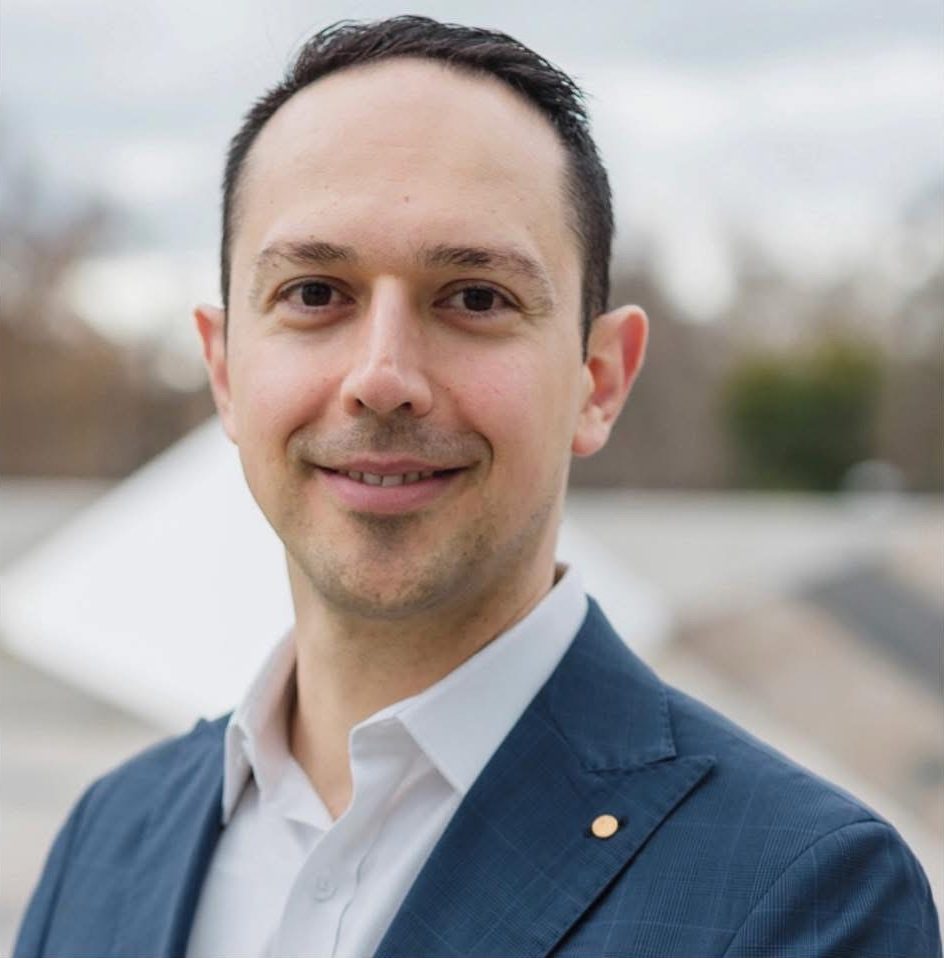
Keynote speaker Arman Abrahimzadeh.
Through his keynote presentation, Arman shared his family history from his childhood to his young adult life, outlining the cycle of threats and abuse his family suffered from his father. This culminated in his father killing his mother, Zahra, in front of 300 witnesses. Arman and his family established the Zahra Foundation to ensure that her legacy lives on.
Arman’s remarks highlighted the importance of accountability, early intervention and men speaking to men. As he took the alumni through his life story, he was vulnerable and brave in delivering his message that allyship is not passive, and that silence in the face of harmful behaviour allows violence to manifest and persist.
The session was moderated by Rakshya Risal, a gender equality and social inclusion practitioner and Australia Awards alum from Nepal with extensive experience working across prevention, advocacy and policy-focused initiatives. During her time in Australia, she also volunteered for the Zahra Foundation, contributing to their ongoing events addressing domestic and family violence, survivor-centred responses, and systems-level change. Her work spans community engagement, training and strategic advisory roles across diverse cultural and regional contexts.
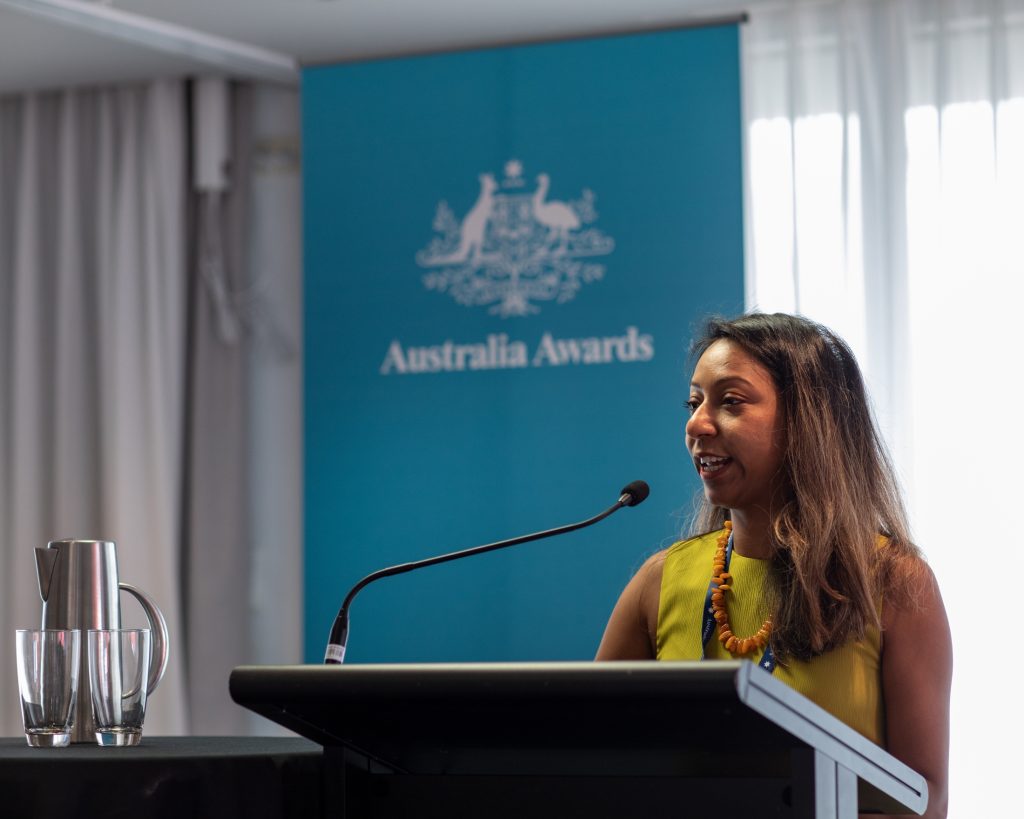
Alum Rakshya presenting at the 2024 Scholars Forum in Canberra.
A question-and-answer session with Arman after his keynote address covered workplace dynamics, including how male peer reinforcement and unchallenged microaggressions contribute to inequality. Alumni considered how men can interrupt these patterns by modelling respectful leadership, amplifying women’s voices, and creating space rather than seeking visibility. Alumni from across the region shared reflections from their own contexts, including a call for more targeted support for women leaders, particularly in regional and remote settings.
Alumni Dhiraj Pradhananga from Nepal and Madura Thivanka from Sri Lanka, representing the Male Allies for Gender Equality alumni network, shared insights from the Learn, Reflect, Act: Men for Safe and Inclusive Workplaces workshop held earlier in 2025, which guided participants through a structured male allyship process.
Dhiraj reflected on how the workshop challenged the notion that gender inequality is a women’s issue, highlighting that harmful norms also affect men and society at large. One of the most significant lessons, he noted, was recognising that remaining silent when witnessing harmful or sexist behaviour is a form of complicity.
“If we see something wrong and stay silent, we support the problem,” he shared. “Being a male ally means speaking up, even when it is uncomfortable.”
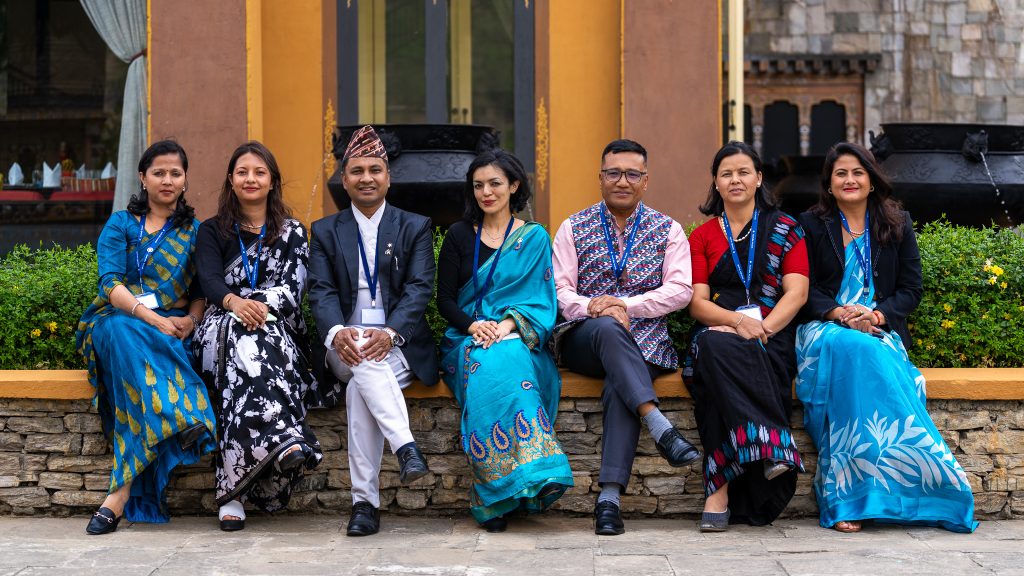
Alum Dhiraj (third from right) pictured with fellow Nepali alumni and participants and members of the Australia Awards – Nepal team at the 2024 Regional Alumni Workshop on gender equality in Bhutan.
Madura framed gender equality as a human rights issue, emphasising that rigid gender norms not only disadvantage women and gender-diverse people, but also constrain men by enforcing expectations of dominance, emotional suppression and invulnerability. Reflecting on the training journey, he described how participants were encouraged to examine their own emotional expression, understanding of consent, and responses to power and privilege. He stressed that meaningful allyship begins with personal transformation and continues through consistent action.
“This is not about perfection,” he shared. “It is about progress, presence and participation. Allyship is a daily choice.”
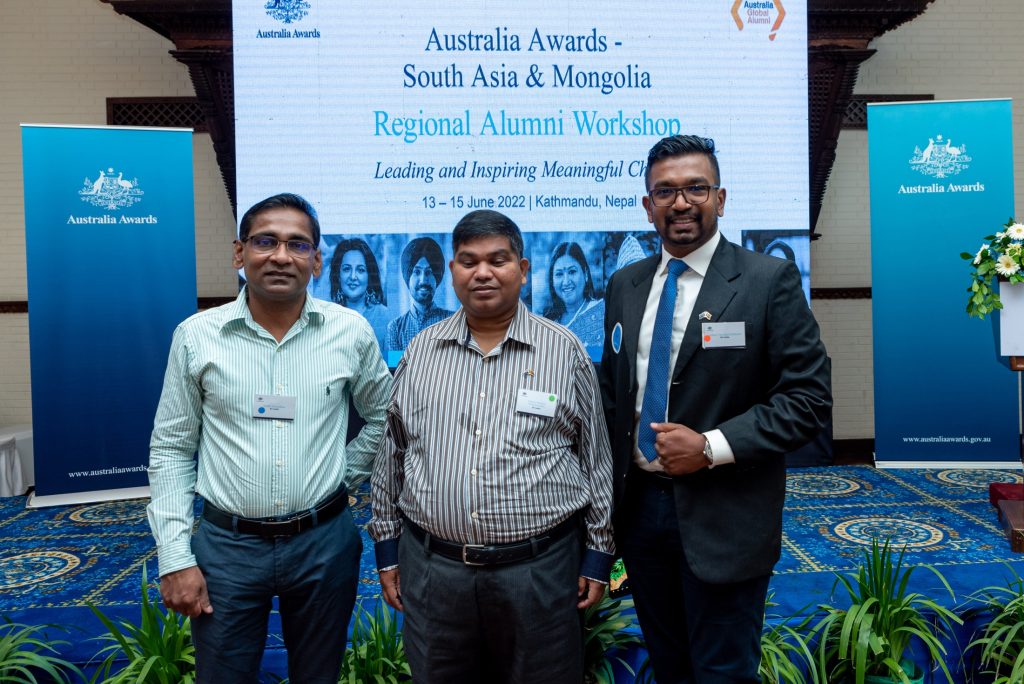
Alumnus Madura (right) pictured with two other Sri Lankan alumni and participants at the 2022 Regional Alumni Workshop held in Kathmandu, Nepal.
As a key outcome of the earlier workshop, participants collectively developed a Male Allies Commitment document, designed to translate learning into practical action. These commitments, which the Male Allies for Gender Equality alumni network representatives shared at the online session, provide a framework for accountability, helping male allies navigate their roles in workplaces, homes and communities.
Among those highlighted by the representatives were commitments to acknowledge male privilege and actively challenge bias; to practice active listening, without interruption or defensiveness; to challenge sexist or harmful comments and behaviours; to promote accountability and inclusive organisational cultures; and to challenge traditional gender norms through everyday actions. The representatives also noted that the commitments signal seriousness and intent towards women colleagues and peers alike that male allies are committed to sustained change rather than symbolic gestures.
Closing the online session, Dave Gordge, Deputy Team Leader of Australia Awards – South Asia & Mongolia, highlighted that the commitments developed by the Male Allies extend beyond gender-based violence alone; they aim to support gender equality and the rights of women and gender-diverse people more broadly. He also emphasised that the initiative has been developed in consultation with members of the Regional Women in Leadership Network, ensuring that allyship is shaped alongside and not separate from women’s voices.
The Male Allies for Gender Equality alumni network is a bold, member-led initiative under Australia Awards – South Asia & Mongolia. It brings together male alumni who are committed to advancing gender equality, challenging harmful norms, and fostering inclusive environments across the region. Through learning, reflection and action, this network empowers men to become active partners in building a more just and equitable world.