

Alumni learn about policy and practice from women with disability
Posted: 10 May 2026
On 25 March 2026, the Alumni Disability Advisory Group hosted a powerful online panel discussion following International Women’s Day titled ‘Untold Stories: Women with Disabilities on Policy Change – What Works and What Needs to Change’. Alumni Supun Jayawardena from Sri Lanka and Tara Devi Giri from Bhutan moderated the discussion between two panellists: Duptho Zangmo from Bhutan and Dr Samitha Samanmali from Sri Lanka.
Ms Zangmo is a Lecturer at the Royal Institute of Performing Arts in Thimphu, where she teaches English and supports the preservation of Bhutan’s rich performing arts traditions. Born blind, her lived experience has shaped her lifelong advocacy for inclusive education and equal opportunities.
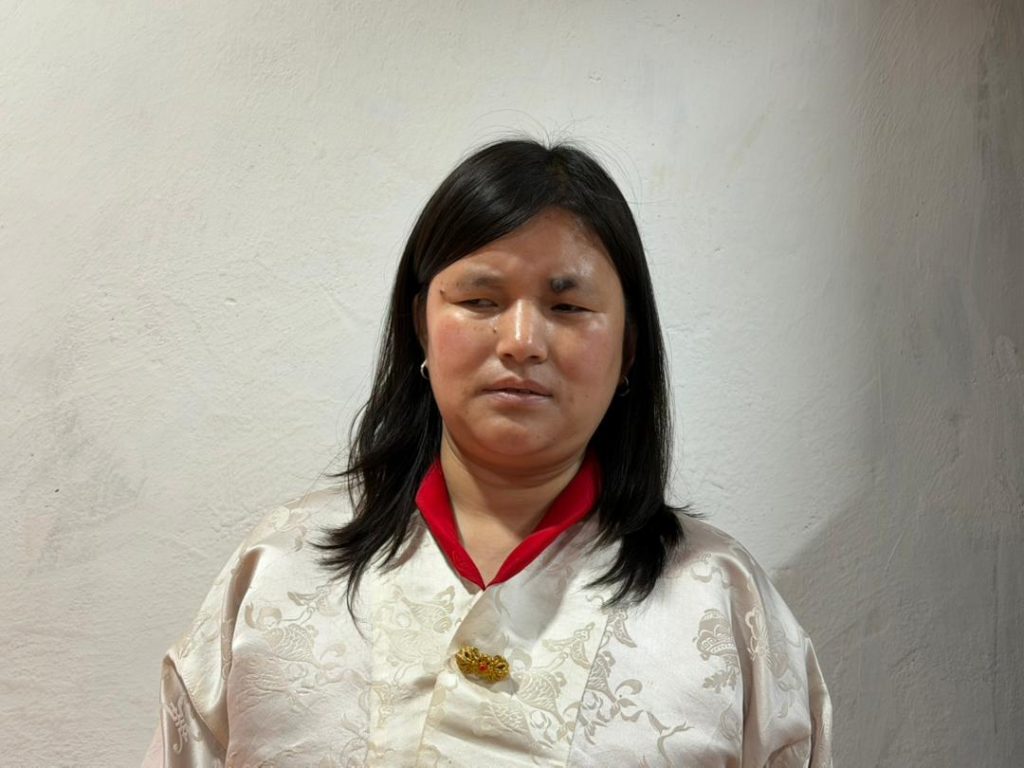
Panellist Ms Zangmo from Bhutan.
Dr Samanmali is an Australia Awards alumna and former member of the Australia Awards Alumni Disability Advisory Group (in 2021–2023). She is a medical doctor with extensive experience in public health, rehabilitation and disability inclusion. She is currently undertaking a PhD at the University of Queensland, where she recently received the Global Change Scholarship.
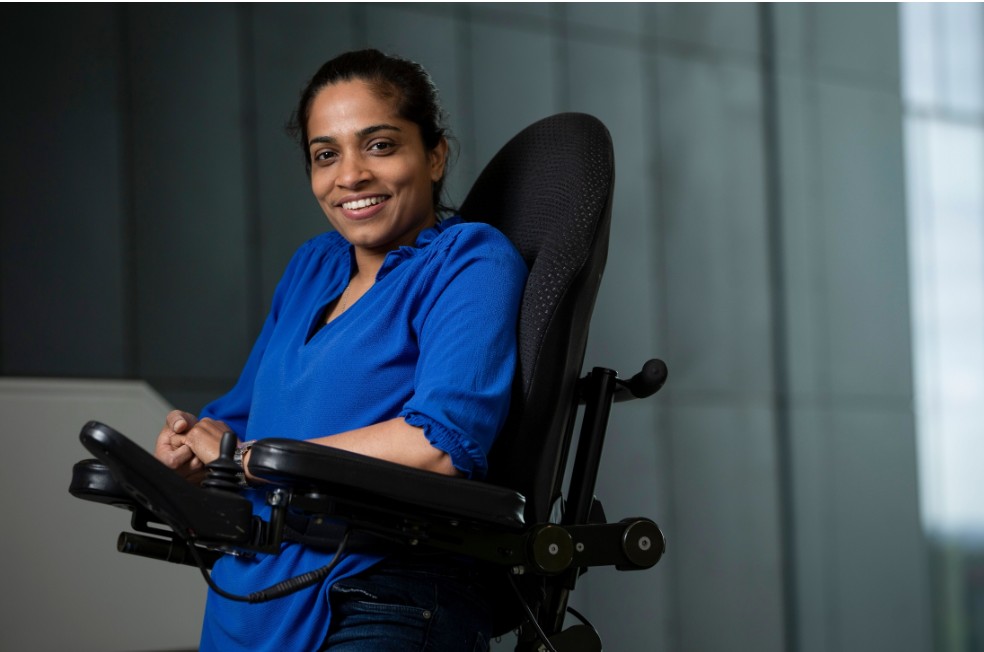
Panellist Dr Samanmali from Sri Lanka.
The two panellists’ discussion provided a vital platform for women with disability to share lived experiences, examine how policies shape everyday realities and critically reflect on where implementation continues to fall short.
Opening the event, Supun highlighted that women with disability are often described as a “marginalised group within a marginalised group”, noting that disability policies—while well-intentioned—can inadvertently exclude when they are not informed by lived realities. Tara, who is also a disability rights advocate, framed the discussion by emphasising the importance of moving beyond policy language to ask harder questions: Who benefits? Who is left behind? And how do policies translate into lived inclusion—or continued barriers—on the ground?
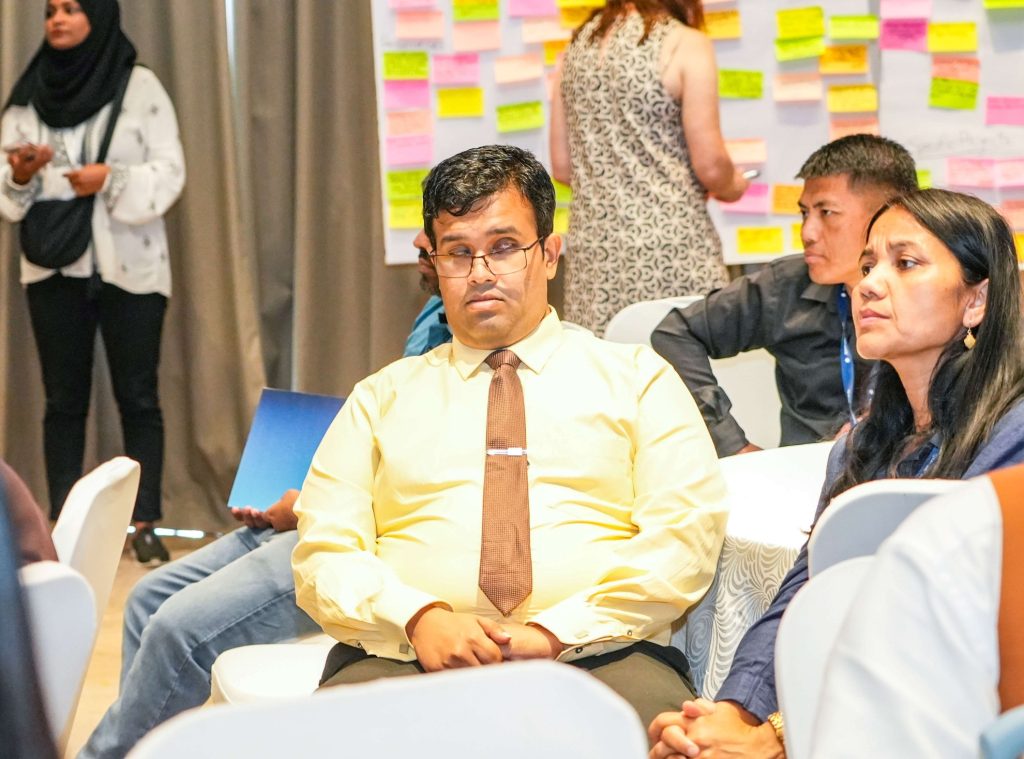
Moderator Supun (middle) participating in the 2025 Regional Alumni Workshop in Colombo, alongside fellow moderator Tara Devi (right).
Ms Zangmo shared her journey as a visually impaired lecturer and a board member of the Disabled People’s Organization of Bhutan. While acknowledging Bhutan’s early investments in education for people with visual impairments, she spoke candidly about systemic gaps that persist despite policy progress, particularly for women and girls with disability.
“Policies may look strong on paper,” she said, “but the real challenge is meaningful implementation—especially in education, employment and leadership.”
She highlighted issues such as limited access to assistive technology and accessible textbooks during secondary education, attitudinal barriers that underestimate the leadership potential of women with disability, and barriers to justice such as difficulty reporting gender-based violence, particularly for women with communication disabilities. Other inequalities include career advancement and gaps in employment quotas. Ms Zangmo stressed that women with disability often fall between gender policies and disability policies, and called for stronger intersectional approaches and greater representation of women with disability in decision-making spaces.
The second panellist, Dr Samanmali, shared deeply personal reflections on navigating healthcare systems as a wheelchair user, first as a medical student, then as a doctor in the Sri Lankan medical system. She outlined persistent challenges faced by women with disability in healthcare systems, including physical barriers such as inaccessible buildings, venues and examination tables; inaccessible transport limiting access to medical services; communication barriers for people with hearing or visual impairments; and limited awareness of disability-related secondary health conditions among primary healthcare providers. She also mentioned the stigma surrounding sexual and reproductive health, driven by assumptions that women with disability are not in need of such services.
Dr Samanmali pointed out that while Sri Lanka has disability regulations, weak enforcement continues to undermine access and equity.
“Policy without practice serves no one,” she said.
A Q&A with alumni after the panel reinforced that change does not rest with governments alone. Institutions, organisations and individuals all play a role—starting with basic accessibility checklists, respectful attitudes and willingness to learn. Both panellists stressed the urgent need to shift public attitudes from a charity-based model of disability to a rights-based, inclusive development approach.
A key highlight from the post-panel discussion was the identification of education as the most powerful driver of long-term change. From inclusive school curricula that normalise disability, to professional training that equips healthcare providers, educators and policymakers with the skills to deliver inclusive services, knowledge leads to greater understanding. By centring the voices of women with disability, this discussion reaffirmed a simple but transformative truth: policies work best when those most affected are heard, valued and empowered to lead.
The Alumni Disability Advisory Group supports disability-inclusive practice across Australia Awards – South Asia & Mongolia. It works as a consultancy group to the Program, bringing together nominated alumni from each country to develop innovative solutions that help remove barriers to participation in the Program.
Main photo: Moderators Supun (front row, left) and Tara (back row, right) with former and current members of the ADAG at the 2025 Regional Alumni Workshop.