

Alumni strive for climate resilient energy solutions
Posted: 17 June 2026
In advance of World Environment Day 2026, Australia Awards – South Asia & Mongolia’s Champions for Environment and Climate Action alumni network, in partnership with South Asia Regional Infrastructure Connectivity (SARIC), brought alumni together for an online panel discussion on ‘Scaling Clean Energy Solutions for Inclusive and Climate-Resilient Communities’. The event took place on 27 May 2026, with over 80 alumni attending to hear from panellists representing Nepal, India and Mongolia.
Mongolian Australia Awards alumna Nasantogtokh Sainbuyan (Nasa), an electrical engineer and renewable energy expert, moderated the session. She currently works as an energy tariff auditor and United Nations Development Programme (UNDP) consultant in Mongolia. Nasa is also the founder of the GER non-governmental organisation, which works to improve clean energy access and air quality in Mongolia. Her chairing of the panel ensured a structured and insightful discussion, guiding both panellists and participants through key topics.

Moderator Nasa pictured at her workplace.
The panel featured two Australia Awards alumni: Dr Anusuya Joshi from Nepal and Erbar Agarjav from Mongolia. Dr Joshi is an environmental scientist with expertise in community-based renewable energy and waste-to-energy systems, while Erbar is a housing planner focusing on energy-efficient housing and urban sustainability. Joining them on the panel were SARIC alumni Dr Biraj Singh Thapa from Nepal and Richa Parmar from India. Dr Thapa is an associate professor at Kathmandu University, specialising in green hydrogen and low-carbon energy systems, and Richa is a renewable energy specialist and Deputy Director at the National Institute of Solar Energy in India.
The discussion opened with each panellist sharing practical examples of how clean energy initiatives have transformed communities. Dr Thapa discussed Nepal’s green hydrogen initiative, where surplus hydropower is converted into hydrogen and ammonia. The success stemmed from institutional collaboration between agencies that previously worked independently, bridging gaps between energy production and fuel demand. Dr Joshi highlighted solar irrigation systems in Nepal, which enabled farmers to transition to commercial agriculture, thereby improving their incomes, reducing their carbon emissions and empowering women through employment opportunities.
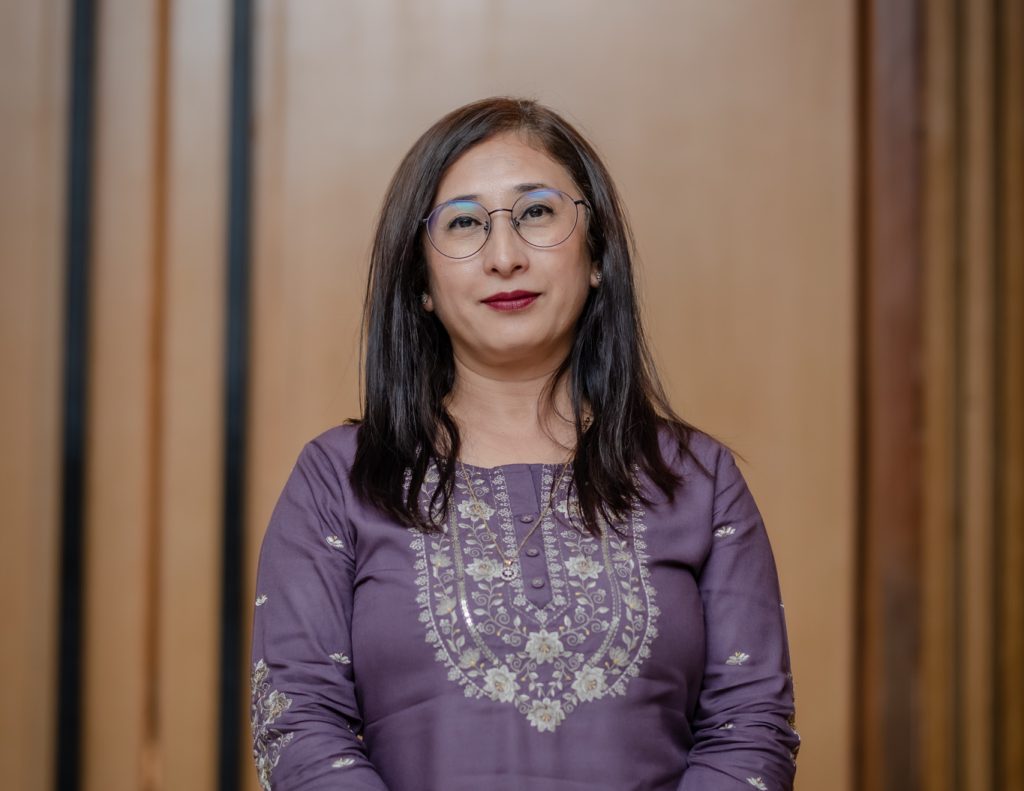
Panellist Dr Joshi from Nepal.
Richa focused on India’s solar programs, emphasising how policy frameworks, quality standards and financial mechanisms such as subsidies have driven the expansion of solar irrigation and microgrid technologies. Erbar explained Mongolia’s unique context, where renewable energy must address heating needs due to severe winters. He also stressed the importance of increasing affordability, improving housing insulation and changing public perceptions about renewable energy.
Next, the panel explored why energy access does not always translate into sustained adoption. Richa identified key barriers, such as limited awareness of subsidies, lack of technical understanding, high upfront costs, and challenges related to maintenance and system reliability in remote areas.
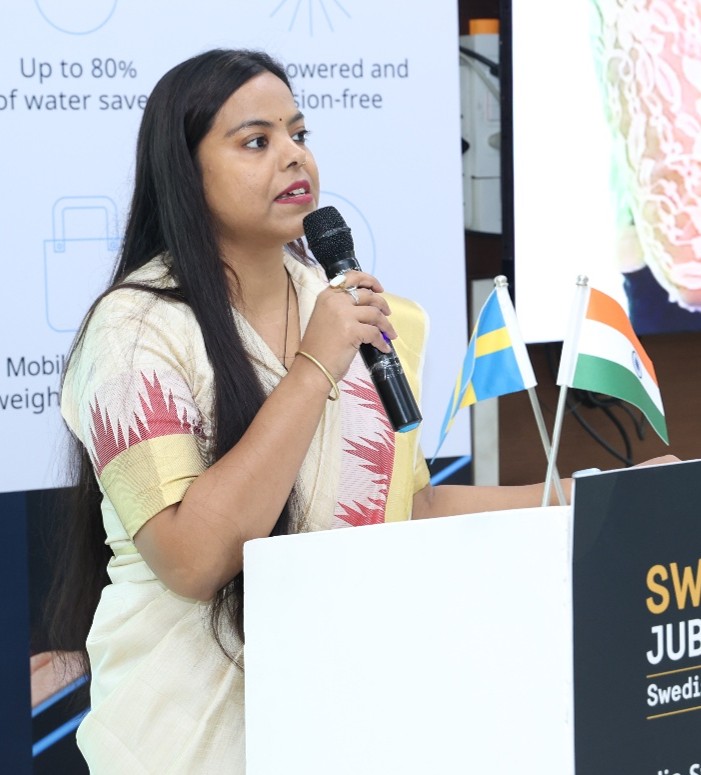
Panellist Richa from India.
Dr Joshi provided deeper insight into social and cultural barriers. She emphasised that marginalised communities often lack access to information and decision-making authority. She also highlighted that trust plays a major role, stating that communities must have “trust in both the technology and the implementing institutions” for long-term adoption. She shared a real-life example of a solar irrigation system that failed due to poor coordination, leading to economic and emotional loss for a women’s farming group, illustrating how institutional gaps can undermine otherwise promising technologies.
Discussing the role of green hydrogen in energy transition, Dr Thapa explained that green hydrogen complements rather than competes with decentralised renewable energy systems. While solar and microgrids provide electricity for communities, green hydrogen addresses sectors that are harder to electrify, such as heavy industry and transportation. He described it as a balance between “green electrons” (electricity) and “green molecules” (hydrogen). He also highlighted green hydrogen’s role in energy storage: converting surplus renewable energy into storable fuel. Emphasising regional cooperation, he said, “The future of clean energy is not just national. It is increasingly regional.”

Panellist Dr Thapa from Nepal.
Erbar highlighted equity challenges in Mongolia’s energy transition. He pointed out that most investments focus on centralised systems, leaving small-scale and decentralised solutions underserved. He stressed the need for institutional reform alongside energy reform, explaining that greater support for private sector participation is essential to reach remote communities. Without this shift, many households risk being excluded from clean energy progress.

Panellist Erbar from Mongolia.
A Q&A element followed, during which participants raised questions about financing and scalability. Queries regarding capital costs and the role of subsidies, government incentives and public–private partnerships in reducing the financial burden on users made for a robust discussion. Some alumni raised the scalability of green hydrogen as a concern, to which Dr Thapa responded by emphasising regional cooperation, pointing out that shared energy systems across countries can reduce risk and enable economies of scale. He also stressed the importance of developing regulatory frameworks and infrastructure to support emerging technologies. The discussion additionally touched on artificial intelligence and smart energy systems, with Richa noting ongoing efforts to integrate smart microgrids and virtual power plants. These innovations are expected to enhance efficiency and better manage rising energy demand sustainably.
In her closing remarks, moderator Nasa reflected on the key insights from the discussion. While countries differ in geography and energy needs, common challenges remain, such as affordability, awareness, institutional coordination and cultural acceptance. She emphasised that the transition to clean energy must be inclusive, ensuring that no communities are left behind. The discussion reinforced the importance of collaboration, innovation and shared learning across regions.
The Champions for Environment and Climate Action alumni network is a member-led initiative under Australia Awards – South Asia & Mongolia. It brings together alumni who are committed to environmental protection, climate resilience and sustainable development across the region. Through collaboration, innovation and shared leadership, this network amplifies the role of alumni as changemakers in addressing one of the most urgent challenges of our time.