

Mongolian scholars engage with First Nations Australians ahead of NAIDOC Week
Posted: 6 July 2026
Ahead of NAIDOC Week 2026 (5–12 July), Australia Awards scholars from Mongolia have been learning first-hand about Australia’s First Nations peoples. NAIDOC Week is an annual celebration of the cultures, histories and achievements of Aboriginal and Torres Strait Islander peoples.
Mongolian scholars Suvd-Erdene Narmandakh and Oyuntugs Tegsheebaatar, together with nine other scholars, travelled to South Australia’s Ikara-Flinders Ranges National Park from 22 to 25 May to learn about the Adnyamathanha people under the guidance of John Solar, a Yura man and Adnyamathanha cultural educator. (Read more about scholars’ own reflections on the experience via these links: Suvd-Erdene Narmandakh, Oyuntugs Tegsheebaatar)
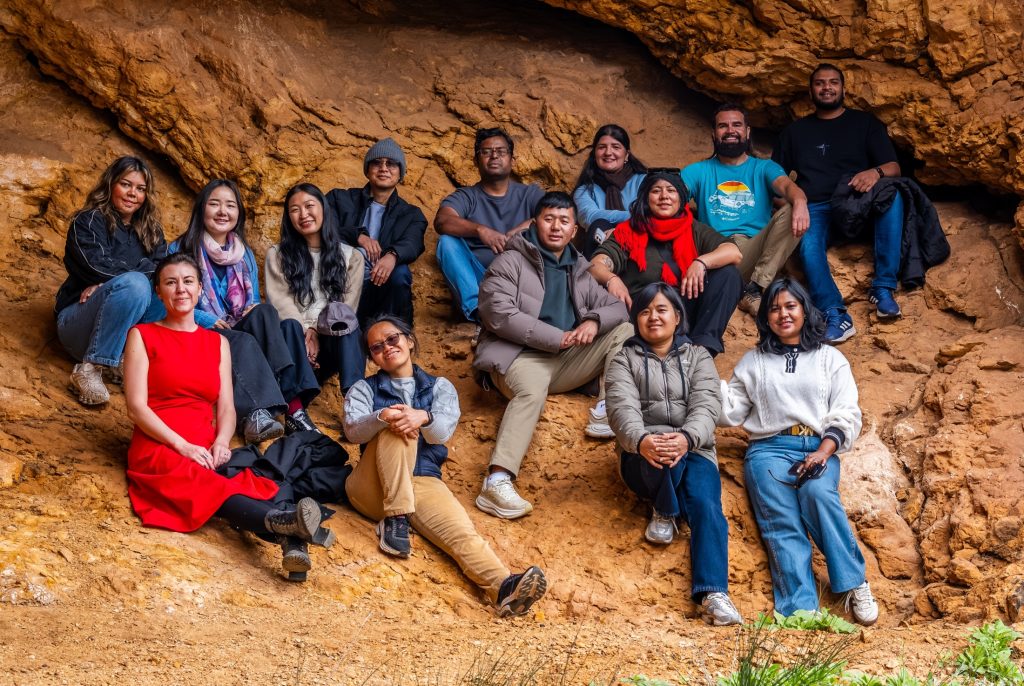
Suvd-Erdene and Oyuntugs (third and fourth from left) with other scholars, guide John Solar (back row, second from right), his niece Bridgette Treloar-Walker (left) and Australia Awards – South Asia & Mongolia Indigenous Engagement Adviser Alice Tamang (second from left).
During their time on Adnyamathanha Country, John shared Yura Muda (creation stories), spoke in language, and highlighted plants that Adnyamathanha people used for medicine, ceremony and food. Activities included hiking to Akurra Adnya (Arkaroo Rock), one of the most culturally significant and sacred Adnyamathanha rock art sites; making fire; cooking damper; and looking for native animals, including Andu (yellow-footed rock-wallabies) and witchetty grubs—the English name of which derives from the Adnyamathanha word witjuri.
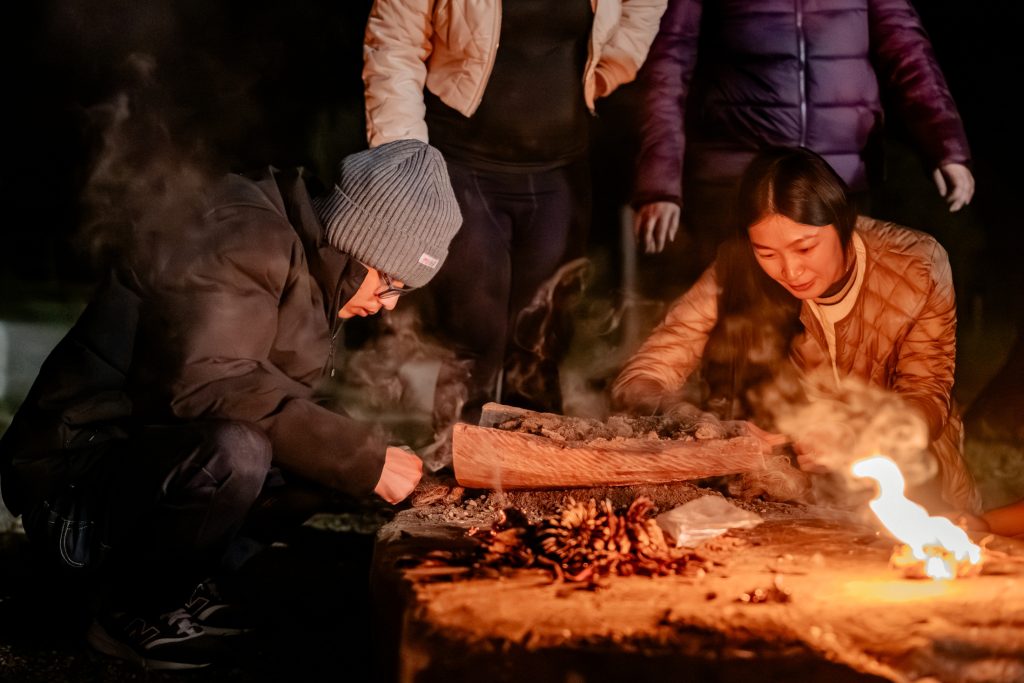
Oyuntugs (right) tries her hand at making fire alongside Bangladeshi scholar Aki Mittra Chakma (left).
Oyuntugs, who is studying a Master of Environmental Management, valued learning how Adnyamathanha practices and connection to Country contribute to environmental stewardship in the national park. “A key reflection from this experience is that effective environmental management requires both scientific knowledge and traditional ecological knowledge,” she says. “Scientific research provides important evidence, but local and Indigenous knowledge can offer valuable insights that may not be captured by data alone. As I continue my studies and develop my career in environmental management, I hope to support approaches that respect and integrate both knowledge systems. The trip strengthened my understanding that caring for the environment is not only a technical responsibility but also a cultural and social one.”
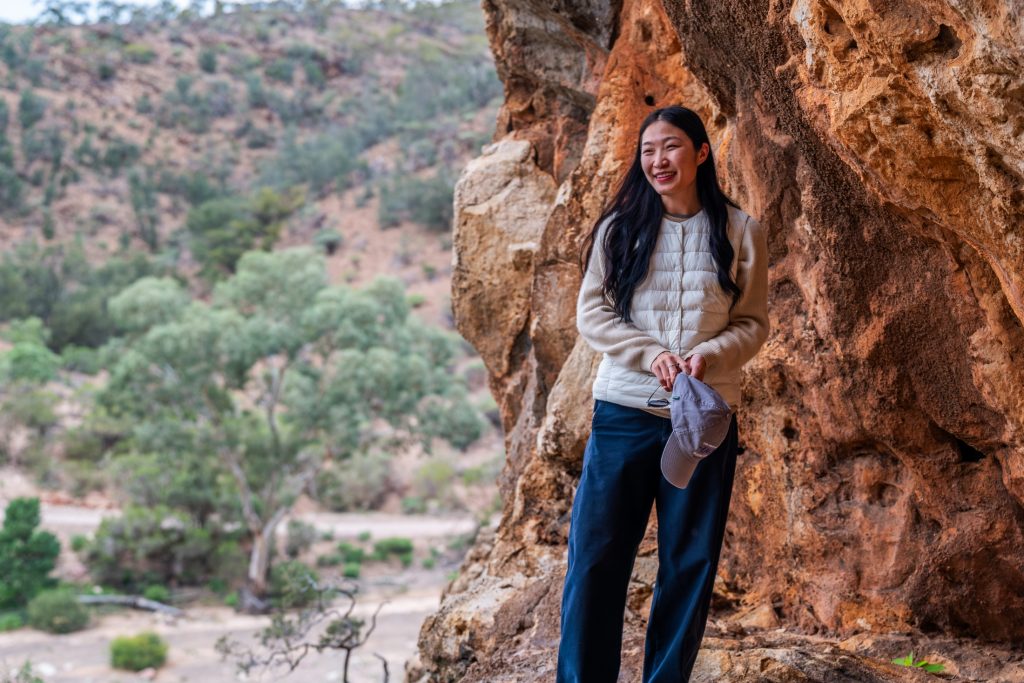
Oyuntugs in a cave in the Ikara-Flinders Ranges National Park.
For Suvd-Erdene, the experience was a reminder of her own cultural background. “As a member of the Zackhchin ethnic group in western Mongolia, I was raised in a nomadic family where stories, traditions and values were passed down orally across generations,” she says. “Listening to John share creation stories brought back memories of my grandmother, who frequently recounted stories about our family, homeland and traditions. I recognised that, despite the geographical distance between our cultures, both communities preserve knowledge through storytelling, respect for elders and connection to land.”
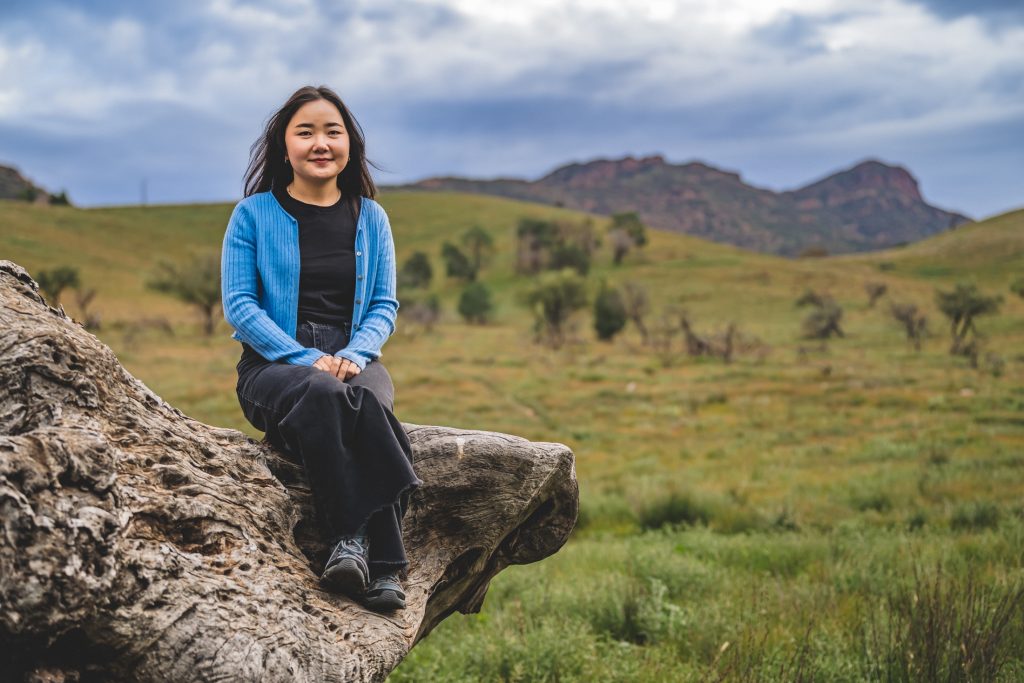
Suvd-Erdene pictured at Ikara-Flinders Ranges National Park.
Australia Awards scholars from Mongolia also participated in two weaving workshops in June facilitated by Ronnie Jordan, a Pitta Pitta Wangkamahdla woman, weaver, painter and cultural facilitator. Scholars received weaving materials before the workshops, enabling them to follow Ronnie’s demonstrations and practise the techniques in real time.
Ronnie guided scholars through the cultural significance of weaving, explaining that woven pieces can reflect stories, relationships and connection to Country. She also spoke about the importance of cultural protocols, including the difference between a Welcome to Country and an Acknowledgement of Country.
The workshops introduced scholars to the preparation and use of natural fibres, including how materials are collected, dried and softened before weaving. Ronnie explained how Aboriginal knowledge of plants, seasons and environmental signs informs cultural practices and supports sustainable use of natural resources.
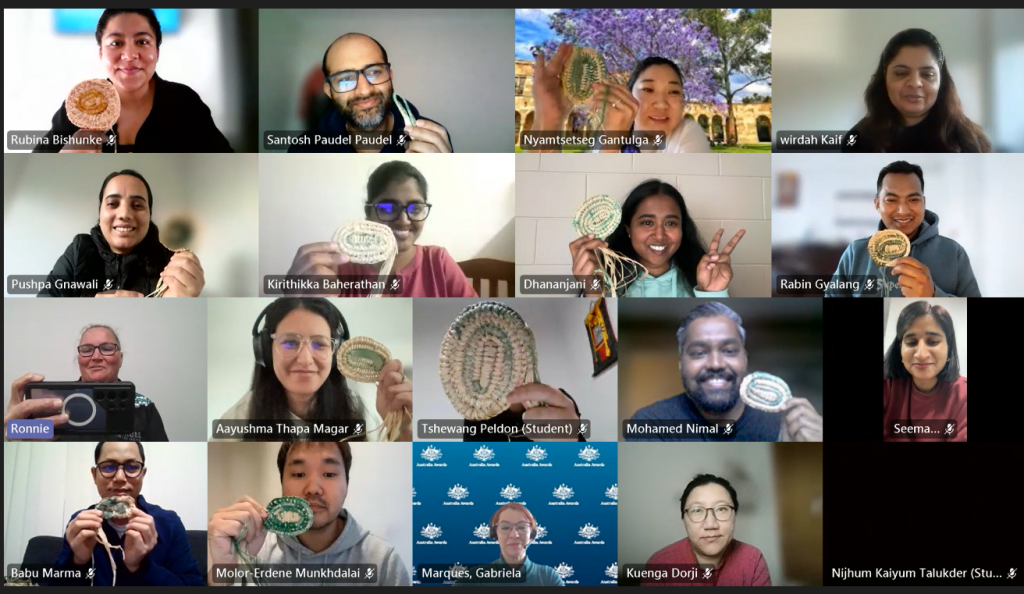
Scholars, including Molor-Erdene Munkhdalai and Nyamtsetseg Gantulga from Mongolia, show their progress during the weaving workshop.
Participants were then guided through simple weaving techniques, including looping, coiling and stitching. The sessions offered a practical and respectful way for scholars to engage with First Nations cultures, while also experiencing the calming and mindful qualities of weaving.
For Mongolian scholar Biligt Davaasuren, it was an enlightening experience. “Working with my hands and slowing down to follow each step was unexpectedly calming. I came away with a deeper respect for the patience and skill that Aboriginal weaving asks of you,” he says.
Also in June, scholars had the opportunity to participate in an Aboriginal Cultural Connection Workshop. The two-hour session, which was hosted by the North & West Melbourne Neighbourhood Centre in collaboration with Yarn Strong Sista, offered the scholars the chance to learn about Aboriginal culture through storytelling, conversation and creative activities in a welcoming community environment.
The workshop concluded with a hands-on ochre-inspired art activity guided by artist Annette Sax, a proud Taungurung woman from the Eastern Kulin Nation. Annette encouraged the scholars to be creative with natural materials while sharing their own cultural identity stories.
Collectively, these experiences gave the scholars practical and reflective ways to engage with First Nations Australians and learn about their cultures and knowledge systems. As NAIDOC Week approaches, their reflections highlight how cultural learning can deepen respect and create connections across countries and communities.