Australia Awards championing inclusive sport and leadership across South Asia and beyond
Posted: 15 September 2026
On 5 August 2026, Australia Awards – South Asia & Mongolia hosted an engaging alumni panel discussion titled ‘Game Changers: Women Transforming Inclusive Sport and Leadership’. The online event brought together members of the Regional Women in Leadership Network (RWILN) and the Equity for All alumni network to explore how women leaders, athletes and advocates are using sport as a platform for inclusion, empowerment and social change. Alumna and disability researcher Dr Samitha Samanmali from Sri Lanka moderated the discussion, which highlighted the role of sport in challenging stereotypes, creating opportunities, and amplifying the voices of women and people with disability across the region.
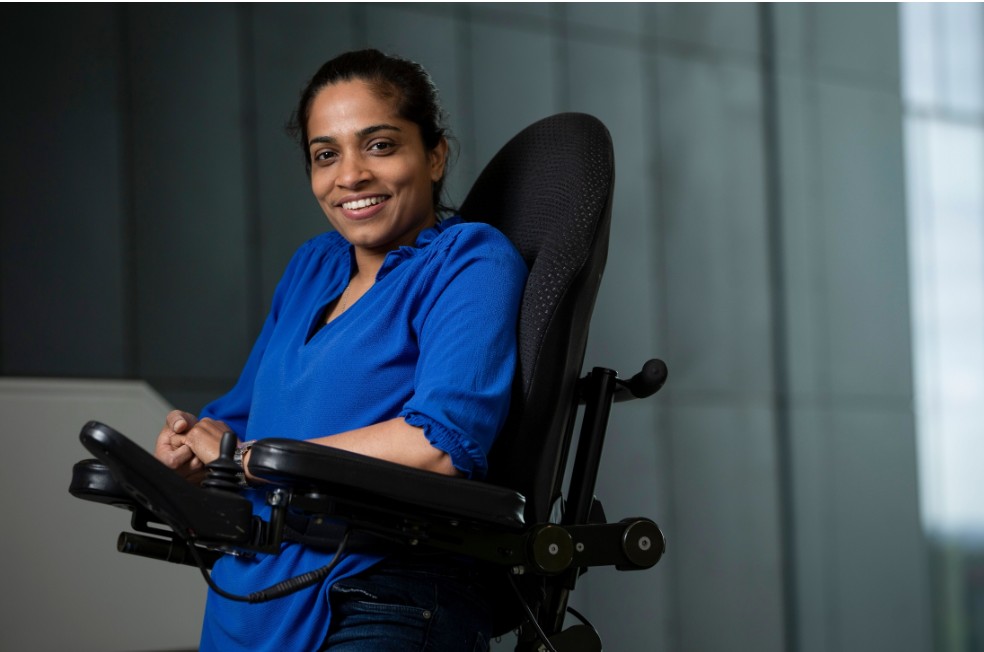
Moderator Dr Samanmali.
The first panellist, Bridgett McDonald from Australia, shared her journey as a disability inclusion advocate and para-athlete. Having grown up in the remote town of Alice Springs, Bridgett explained that one of the greatest barriers she faced was not her disability itself, but limited awareness of what opportunities were available. As a young athlete competing in wheelchair sports and archery, she often had to travel interstate to access competitions and coaching, highlighting the challenges faced by people living in remote communities.
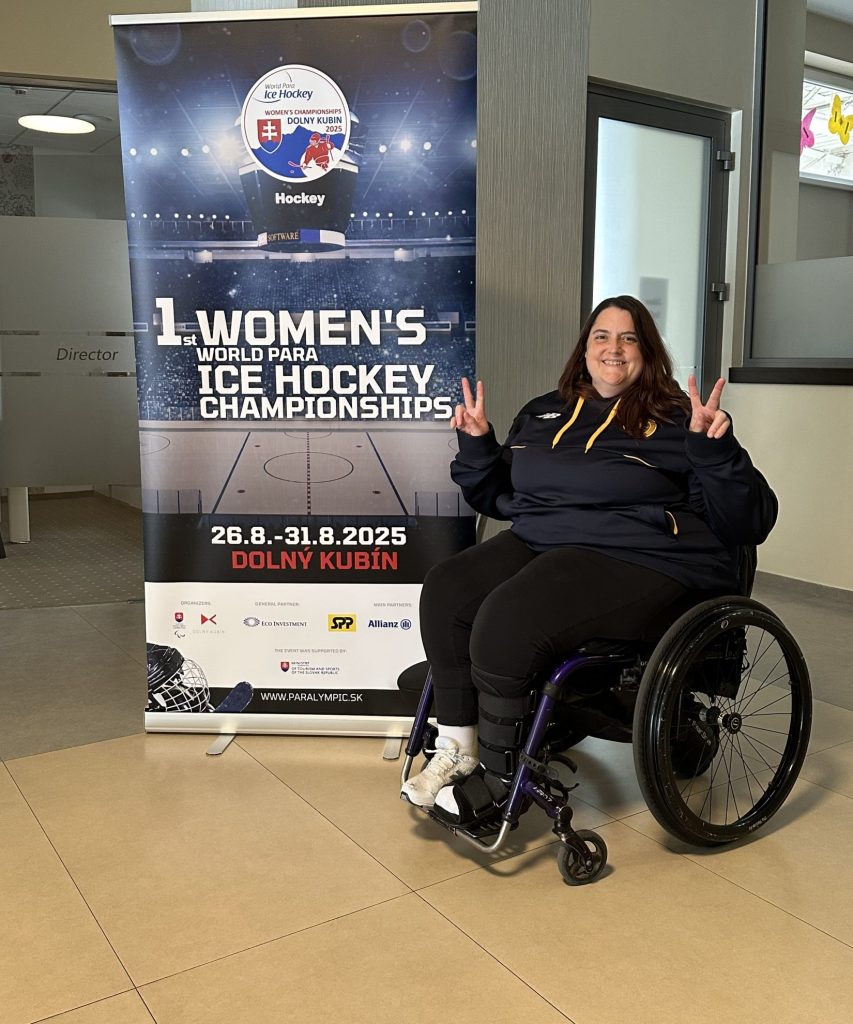
Bridgett McDonald from Australia.
Bridgett also spoke about representing Australia as a goalkeeper at the inaugural Women’s Para Ice Hockey World Championship in Slovakia in 2025. While the opportunity to compete internationally was a career highlight, she reflected on the accessibility challenges she encountered throughout the journey, from navigating transport systems and accommodation to accessing sporting facilities. In response, she stressed that participation in sport must be supported by accessible environments that enable athletes to compete independently and with dignity. Her presentation highlighted the importance of moving beyond basic accessibility measures and ensuring that the voices of people with disability are heard in planning and decision-making processes.
The second speaker, alumna Fathimath Ibrahim from Maldives, shared a powerful story of resilience, determination and leadership. Living with retinitis pigmentosa (a genetic eye disorder that causes vision loss), Fathimath described how she grew up with limited opportunities but refused to accept society’s assumptions about what people with disability could achieve. She became the first blind person in Maldives to complete key stages of formal education and later turned to sport as a way of challenging perceptions and demonstrating her capability.
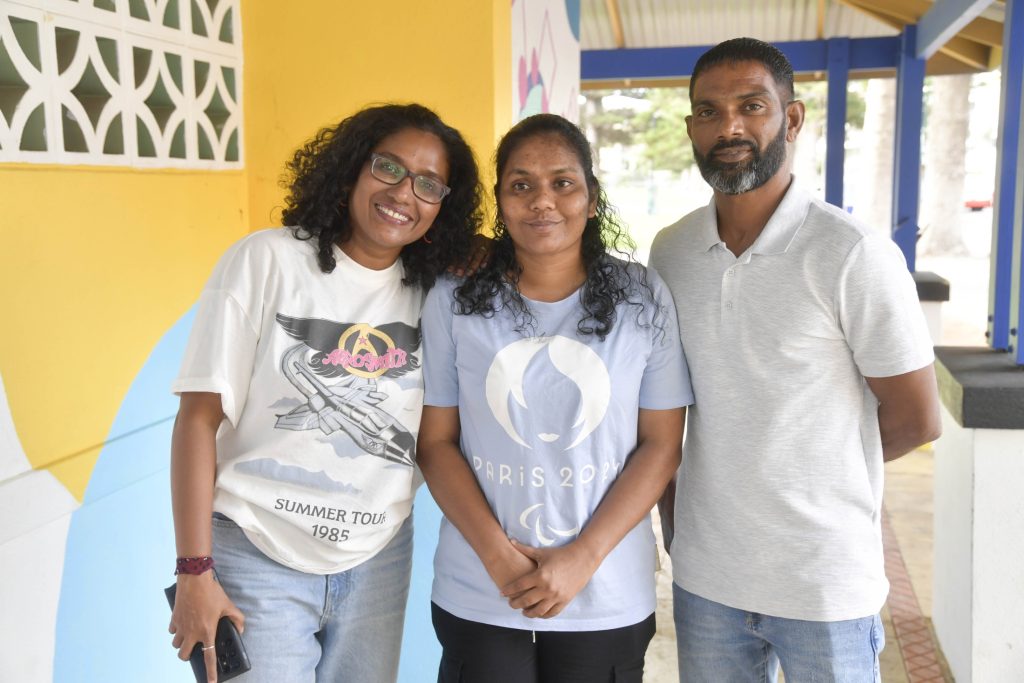
Fathimath (centre) pictured with her carer, Mohamed Ibrahim (right), and fellow alumna Ashfa Hamdi (left) from Maldives during the Australia Awards Disability Champions professional development opportunity they received to visit Australia.
Her sporting journey began through community awareness activities and eventually saw her become the first blind Maldivian woman to complete long-distance races, including a half-marathon. Fathimath went on to represent Maldives at both the Tokyo 2020 and Paris 2024 Paralympic Games, while setting national records and inspiring others to pursue their goals. Beyond athletics, she has become a leading disability rights advocate, promoting accessibility, inclusive education, and greater access to information and technology. She spoke about her efforts to improve accessibility in Dhivehi (the official national language of Maldives) and her work influencing disability policy and awareness throughout her country. Her message was clear: disability should never define a person’s potential or limit their aspirations.
The final panellist, alumna Kamlesh Yadav Tiwana from India, reflected on a distinguished career spanning more than three decades in sports coaching, governance, athlete development and education. Kamlesh recounted the challenges she faced as a young woman entering a largely male-dominated sports sector and the determination required to build a successful career in leadership. As one of the first women in India to pursue advanced qualifications in sports coaching, she became a role model for future generations of female athletes and coaches.
A major focus of her presentation was her commitment to increasing opportunities for girls in sport. Kamlesh described how she worked closely with families and communities to build trust, address safety concerns and encourage participation by young women. She emphasised the importance of safeguarding, mentorship, athlete welfare and creating equitable sporting environments where everyone has the opportunity to succeed. Through coaching, advocacy and authorship, she continues to champion gender equity and inclusive leadership in sport.
During the Q&A session after the discussion, alumni explored how educational institutions, development practitioners and sporting organisations can better support people with disability. A key theme throughout the conversation was the importance of consultation. The panellists emphasised that accessibility should never be based on assumptions and that people with disability must be involved in the design of programs, facilities and services from the outset.
Bridgett highlighted the need to ask detailed and practical questions about accessibility rather than relying on broad definitions. Fathimath reinforced the importance of listening to the lived experiences of people with disability and recognising that accessibility needs differ widely. Kamlesh added that supportive environments, equal opportunities, and protection from stigma and bullying are essential to ensuring participation and success.
In her closing remarks, Dr Samanmali reflected on the key lessons from the session, noting that sport has the power to drive leadership, inclusion and social change far beyond the playing field. Through their personal and professional journeys, Bridgett, Fathimath and Kamlesh have demonstrated how women leaders are challenging barriers, changing perceptions and creating more inclusive opportunities for others. Their stories served as a powerful reminder that when inclusion, accessibility and leadership come together, sport can become a catalyst for lasting change across communities and countries.
RWILN and the Equity for All alumni network are member-led initiatives under Australia Awards – South Asia & Mongolia that bring together alumni committed to advancing inclusive leadership and equitable development across the region. RWILN focuses on connecting, celebrating and strengthening women leaders through knowledge sharing, leadership development and advocacy for gender equality, while the Equity for All alumni network unites alumni passionate about advancing equity for people with disability and marginalised communities. Together, these networks foster collaboration, innovation and shared learning to promote greater inclusion, leadership and positive social impact across the region.