

Alumni networks unite for feminist leadership, resilience and inclusive action
Posted: 1 July 2026
Australia Awards – South Asia & Mongolia recently hosted an online knowledge-sharing session that brought together more than 30 members of the Male Allies for Gender Equality alumni network and the Regional Women in Leadership Network. The session on 3 June 2026 created a valuable platform for alumni across the region to engage in meaningful dialogue on feminist leadership, collective resilience and the translation of global commitments into local action.
Sri Lankan alumna Upeka Tharindi moderated the session. An entrepreneur working at the intersection of sustainability, innovation and women’s economic empowerment, Upeka completed the Australia Awards Women Trading Globally Short Course in 2023.
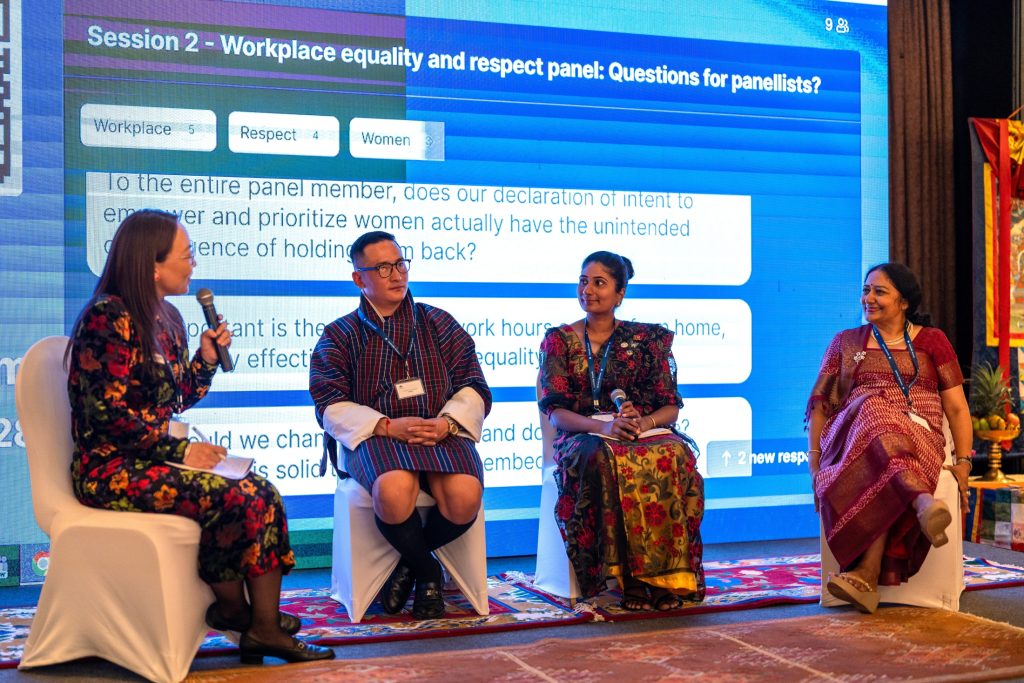
Upeka (second from right) participating in a panel discussion on gender equality in workplace at the 2024 Regional Alumni Workshop in Bhutan.
The primary purpose of the session was to foster learning and collaboration across the two alumni networks, enabling their members to reflect on how feminist approaches can strengthen leadership and drive inclusive change. By connecting male allies and women leaders in one space, the event encouraged participants to collectively explore how principles of equity, inclusion and solidarity can be embedded into their professional and community work.
The session also aimed to showcase the experience of alumnus Mirza Zulfiqur Rahman from India, who attended the 70th annual session of the United Nations Commission on the Status of Women (CSW70) in New York in March 2026.
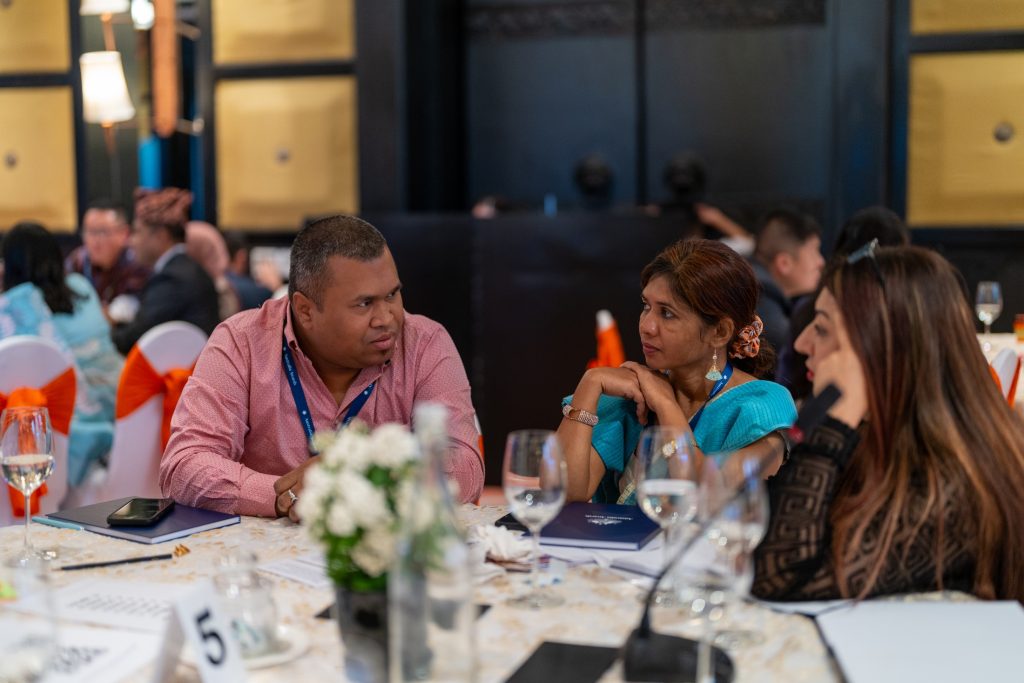
Alumnus Mirza (left) engaging with other participants at the 2024 Regional Alumni Workshop.
Drawing on his experience at CSW70, Mirza highlighted the importance of international platforms in shaping the global gender equality agenda and building solidarity across diverse movements. He emphasised that although events like CSW70 provide critical spaces for dialogue and advocacy, their true impact lies in how these conversations are translated into practice at the local level. Mirza said, “Solidarity is not something we only talk about in global forums. It’s something we need to practice in our everyday work and movements.” He also encouraged participants to view global engagements not as isolated experiences but as catalysts for ongoing action, learning and collaboration within their own local contexts.
A central focus of the session was the introduction of the Feminist Resilience Toolkit, a resource developed by Heinrich-Böll-Stiftung’s Global Unit for Feminism and Gender Democracy to support individuals and organisations in embedding feminist principles into their work. The toolkit provides practical guidance on fostering resilience through inclusive practices, collective approaches and equity-driven decision-making.
Mirza described the toolkit as a living resource that evolves through engagement and adaptation. He encouraged participants to actively use and contribute to it. “We need to show solidarity by not only reading it, but also sharing it and adding to it in different contexts,” he said.
He further stressed that resilience should not be viewed as an individual trait, but as a shared responsibility built through collaboration and mutual support. By applying the principles outlined in the toolkit, participants can strengthen their ability to navigate challenges, while promoting more inclusive and equitable systems.
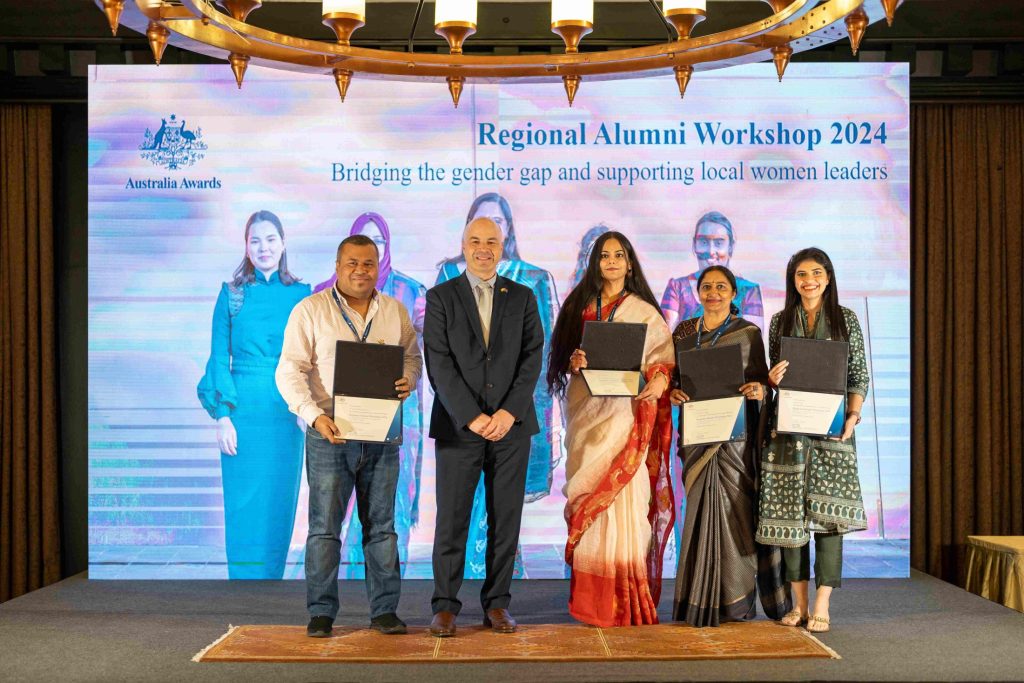
Mirza (left) with fellow alumni from India receiving certificates from Matthew Lapworth (second from left), former Director of the South and Central Asia Development Section of Australia’s Department of Foreign Affairs and Trade at the 2024 Regional Alumni Workshop.
The session concluded with a Q&A, which allowed participants to ask questions and share their own experiences across sectors and countries. The discussion highlighted attendees’ strong interest in applying feminist frameworks in practical ways, particularly within organisational leadership, community work and policy engagement. Mirza encouraged participants to reflect on the insights shared during the session and consider “how these ideas can be applied in your own spaces”.
Beyond the direct learning, the event also provided an opportunity for participants to explore potential collaborations and deepen connections within the alumni network. Attendees were encouraged to continue engaging beyond the session, including connecting directly with the speaker and accessing shared resources, such as the Feminist Resilience Toolkit.
Most importantly, the session demonstrated how alumni contributions—whether through global engagement at forums like CSW70 or through tools such as the Feminist Resilience Toolkit—play a crucial role in advancing inclusive and sustainable development across South Asia and Mongolia. The event reinforced the importance of shared learning spaces in amplifying these contributions and strengthening engagement across alumni networks.
The Male Allies for Gender Equality alumni network is a member-led initiative under Australia Awards – South Asia & Mongolia. It brings together male alumni who are committed to advancing gender equality, challenging harmful norms and fostering inclusive environments across the region. Through learning, reflection and action, this network empowers men to become active partners in building a more just and equitable world.
The Regional Women in Leadership Network is also a member-led alumni initiative under Australia Awards – South Asia & Mongolia that aims to connect, celebrate and strengthen women leaders. Together, its members seek to foster equity and inclusion by sharing knowledge, building leadership capacity and advancing gender equality.