Alumni explore intersections between mental health and sustainable development
Posted: 21 November 2025
To mark World Mental Health Day 2025, Australia Awards – South Asia & Mongolia hosted an online alumni panel discussion exploring the intersections between mental health and sustainable development. The event brought together alumni and development professionals from across the region to share experiences, best practices and insights on integrating mental health into development practice.
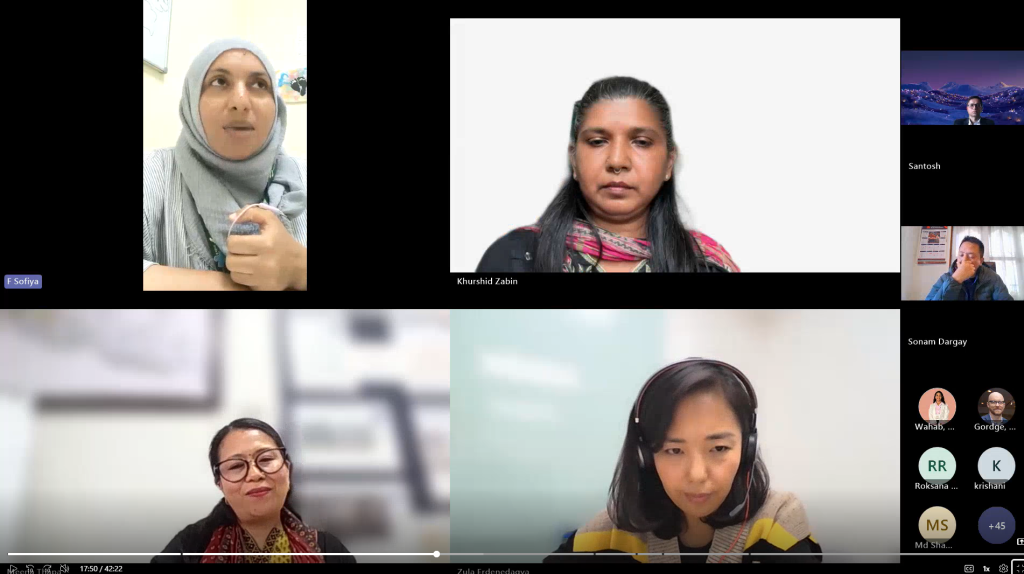
Alumnae Fathimath Sofiya Rasheed from Maldives (top left), Khurshid Zabin from Bangladesh (top right), Meena Thapa from Nepal (bottom left) and Zula Erdenedagva from Mongolia (bottom right) engaging with the audience during the panel discussion.
The panel featured alumnae Munkzul (Zula) Erdenedagva from Mongolia, Fathimath Sofiya Rasheed from Maldives and Khurshid Zabin from Bangladesh. It was moderated by Nepalese alum Meena Thapa, who has a Master of Public Health from the University of Sydney. Drawing from diverse professional and personal experiences, the speakers explored community approaches, health indicators and individual actions that strengthen mental health at multiple levels.
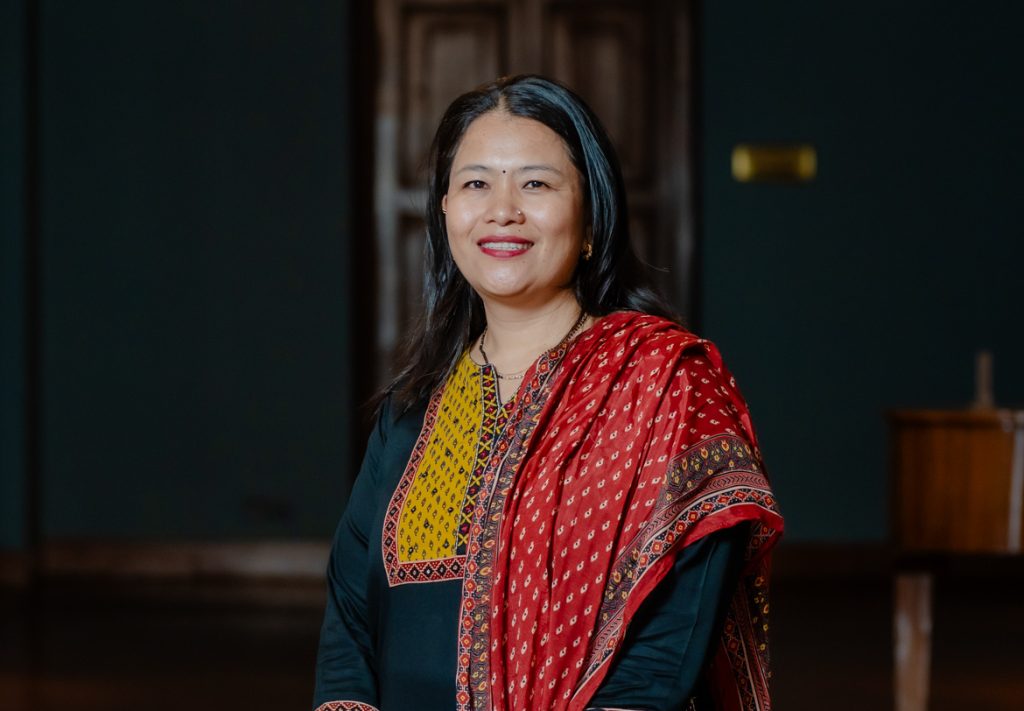
Nepalese alum Meena Thapa.
Zula Erdenedagva, a sustainable development professional, opened the panel by discussing her pioneering work to promote mental health literacy in Mongolia through the introduction of the Mental Health First Aid program. The initiative provides ordinary citizens with the knowledge and confidence to recognise early signs of mental distress and offer support within their communities. “Mental health and physical health shouldn’t be disconnected—it’s one health,” Zula said. “This literacy helps families, workplaces and communities recognise early signs of distress and provide help before things get worse.”
Zula took her first steps into advocating for mental health during her Australia Awards Scholarship at Monash University from 2022 to 2024, where she received a Master of International Development with a focus on sustainable economies. Although her academic background was in finance and sustainable development, she came to understand the profound connection between workforce wellbeing, human health and economic sustainability. During her time in Australia, Zula completed a Mental Health First Aid course and received formal certification. The training was transformative, helping her to manage her own wellbeing while providing tools for her to support others.
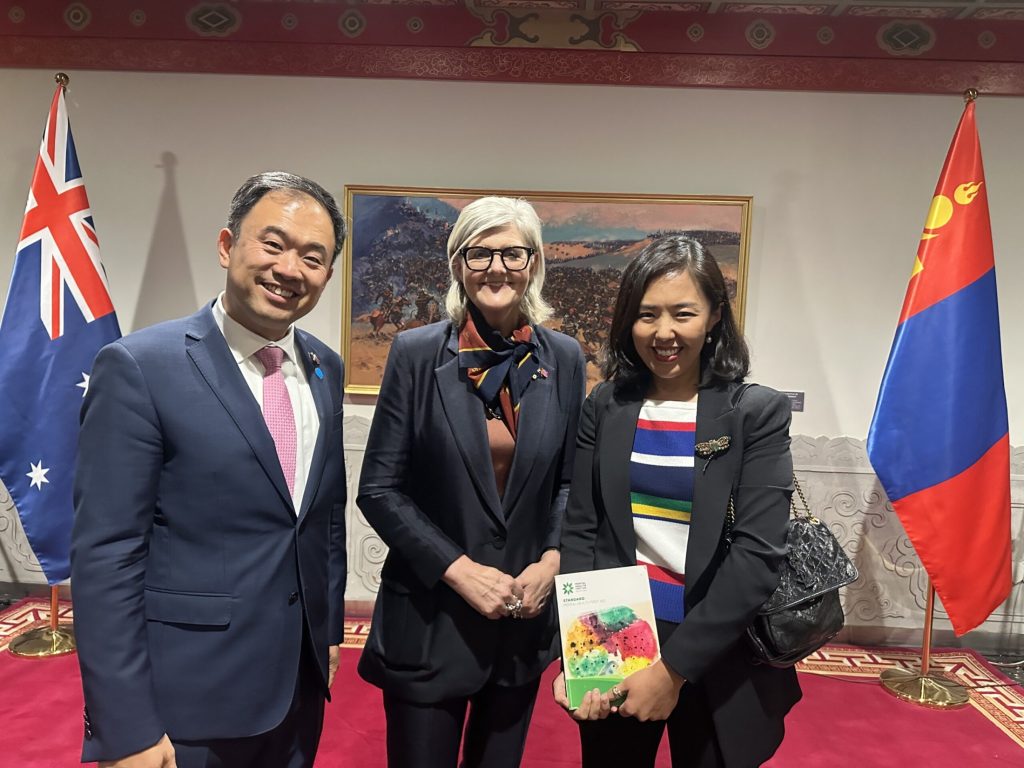
Zula (right) shares details of the launch of the Mental Health First Aid program in Mongolia with the Governor-General of Australia, Her Excellency the Hon Ms Sam Mostyn AC, and Australia’s Ambassador to Mongolia, HE Mr Leo Zeng.
After returning home, Zula worked with Mental Health First Aid International to launch the program in Mongolia to make mental health literacy accessible beyond clinical settings. In Mongolia, where stigma still limits access to care, the initiative empowers citizens to contribute to prevention, early intervention and community support. While mental health initiatives exist through schools, universities and national programs, Zula’s focus on literacy represents a new approach: one where everyone, from families to work colleagues, can play an active role. By embedding mental health education into broader sustainability and wellbeing frameworks, her work strengthens social cohesion and supports national development goals.
Fathimath Sofiya Rasheed, a registered social worker with over 22 years of experience, then shared her work supporting vulnerable individuals and families through community-based mental health initiatives. Sofiya returned to Maldives in 2013 after completing a Master of Social Work at the University of Melbourne. This Australia Awards-supported degree strengthened her understanding of holistic approaches to psychosocial support.
Working at the National Centre for Mental Health at Indira Gandhi Memorial Hospital, Sofiya has led programs for patients living with mental illness in community settings. She explained that one of the challenges in Maldives is the high rate of hospital readmissions after discharge. To address this, she initiated a community-based intervention program, including home visits and follow-ups, which reduced relapse rates and strengthened social support networks. Sofiya also introduced group therapy for adults who are experiencing depression and anxiety, and recently began Dialectical Behaviour Therapy for adolescents, fostering peer support, reducing stigma, and improving patients’ ability to engage in family, work and community life.
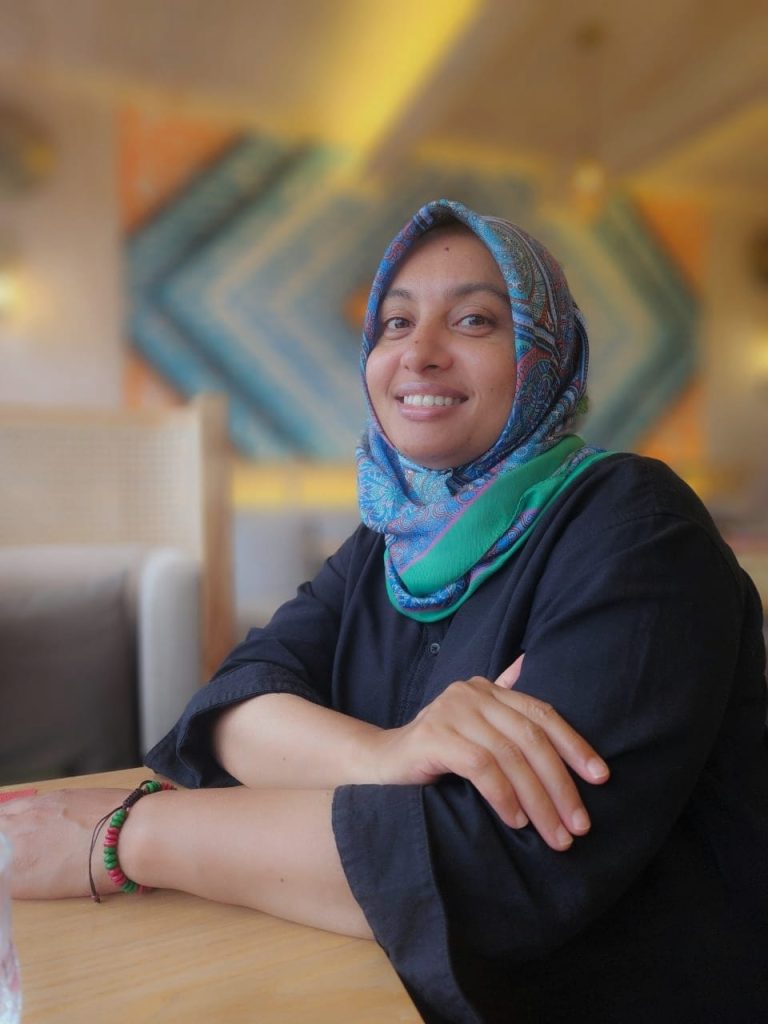
Maldivian alumna Fathimath Sofiya Rasheed.
“Although the impact and disability of mental illness are high, we can create pathways for patients to remain productive and engaged in society,” Sofiya said. “Mental health programs strengthen communities and contribute to the broader economy, showing that health and sustainable development are deeply intertwined.”
Lastly, Khurshid Zabin, a workplace dignity consultant and life coach, highlighted the role of mental health in the workplace and in personal wellbeing. Khurshid completed her Master of Human Resource Management at the University of South Australia in 2016 with the support of an Australia Awards Scholarship. She emphasised that sustainable development begins within individuals, noting that no system—be it economic, environmental or educational—can thrive if the people within it are struggling. Her approach centred on nervous system regulation, emotional awareness and simple daily practices that help individuals respond rather than react to challenges.
During the panel, Khurshid demonstrated practical techniques, including deep breathing exercises such as the 4-7-8 method, neck and shoulder stretches to release tension and stimulate the vagus nerve, and gentle tapping techniques to release stored emotions and promote oxytocin production.
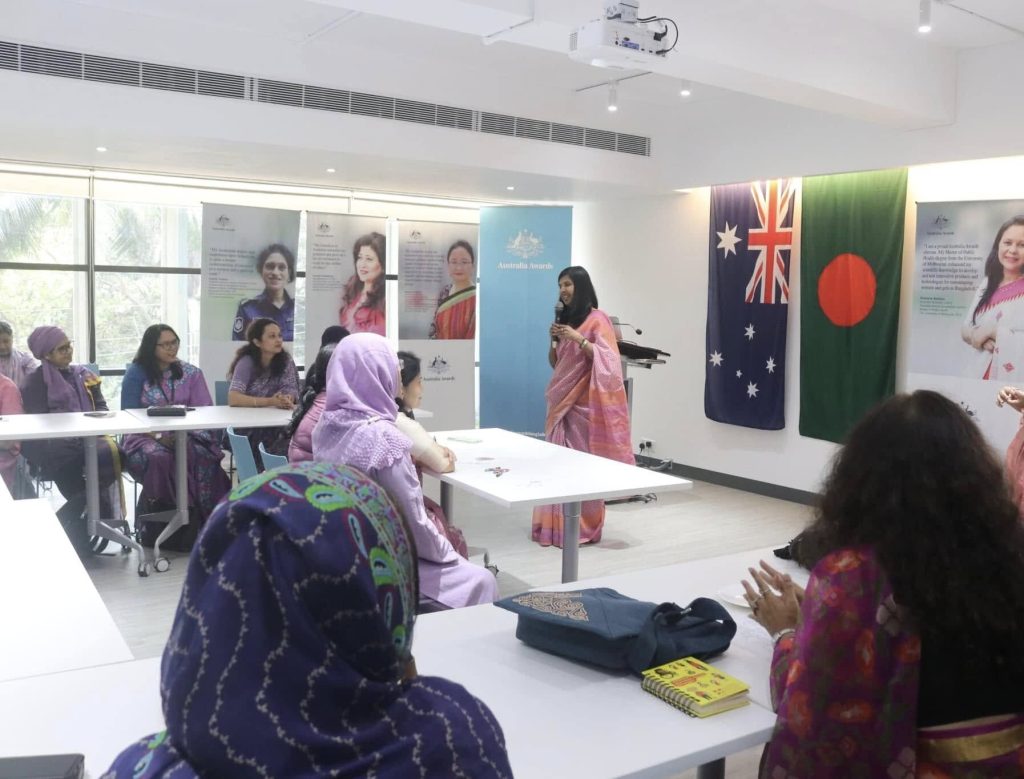
Khurshid facilitates a mental wellbeing session for members of the Australia Awards Women in Leadership Network in Bangladesh for International Women’s Day.
“Life will throw challenges, but we can control our system to act better,” Khurshid said. “Practicing these techniques daily strengthens your inner resilience, which then reflects in your workplace, your community and beyond.”
During the audience Q&A session, participants actively engaged with the panellists, asking insightful questions about the practical impact of mental health initiatives in their countries. Zula elaborated on expanding the Mental Health First Aid program in Mongolia, highlighting its role in equipping communities with early intervention skills. Sofiya discussed indicators for assessing mental health within general health services, including functional behaviour and activity levels, showing how targeted approaches can improve patient outcomes. Attendees praised the session’s relevance, with Bangladeshi alumna Banya Banowary reflecting, “It was an amazing session. Physical and mental health are closely connected, and both form the root of our strength in daily life. A healthy mind helps us think and feel positively, face challenges with strength, and act productively in our personal, professional and social lives.”
The event was part of Australia Awards – South Asia & Mongolia’s broader series of alumni engagement activities, including upcoming sessions to mark International Day of Persons with Disabilities and the 16 Days of Activism Against Gender-Based Violence.