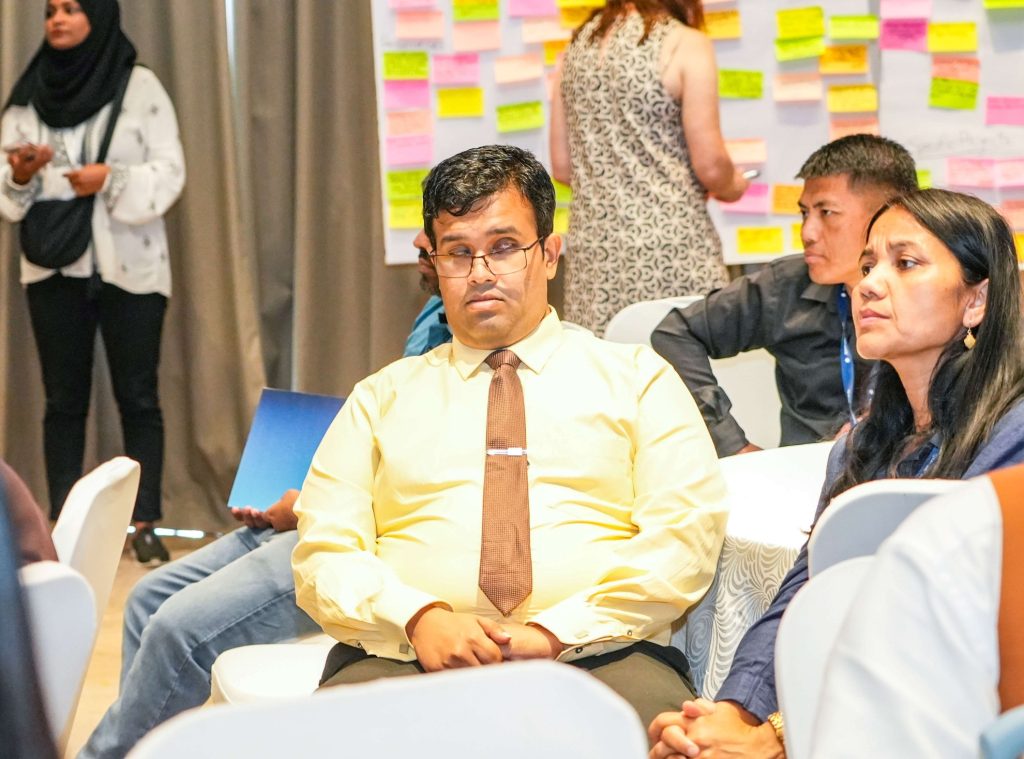
Scholars Forum 2026 taking place this November in Canberra

Building on the success of the 2024 Forum themed “Working Together for a Gender‑Equal World”, this year’s event will once again bring together scholars from across the region to engage in dialogue, leadership exercises, and collaborative workshops.

The Forum will feature interactive workshops and peer‑led sessions that encourage participants to step into leadership roles and refine their skills as facilitators and convenors. A highlight will be the chance to meet DFAT leaders, who will share insights on Australia’s development priorities and the role of scholars in advancing regional partnerships. These exchanges will connect policy perspectives with scholars’ academic and professional journeys. Through panels and discussions, participants will explore how their studies can be transformed into practical contributions at home, particularly through Development Impact and Linkages Plans.

< Back to previous page

Scholars strengthening their skills and knowledge in using AI tools

Bangladesh Bhutan Maldives Mongolia Nepal Pakistan Scholars Platform Sri Lanka

On 26 May 2026, 30 Australia Awards – South Asia & Mongolia scholars participated in a three-hour interactive online workshop on Artificial Intelligence (AI). The workshop aimed to help scholars build practical and responsible capability in using AI for work and study, with a focus on real-world applications for policy analysis, planning and writing.

Timothy (Tim) McDonald from the AI Training Company facilitated the session, presenting scholars with an overview of current AI trends, tools and best practices. Tim is a former journalist and communications strategist who combines storytelling expertise with deep knowledge of generative AI applications. In his work, he assists organisations to integrate AI into their workflows and helps teams use AI to accelerate both productivity and creativity.

Tim guided scholars through different tools tailored to their questions and various scenarios, and supported them with hands-on exercises. He answered questions and gave examples of working with AI tool prompts, ensuring scholars would be able to apply what they learnt confidently and appropriately.

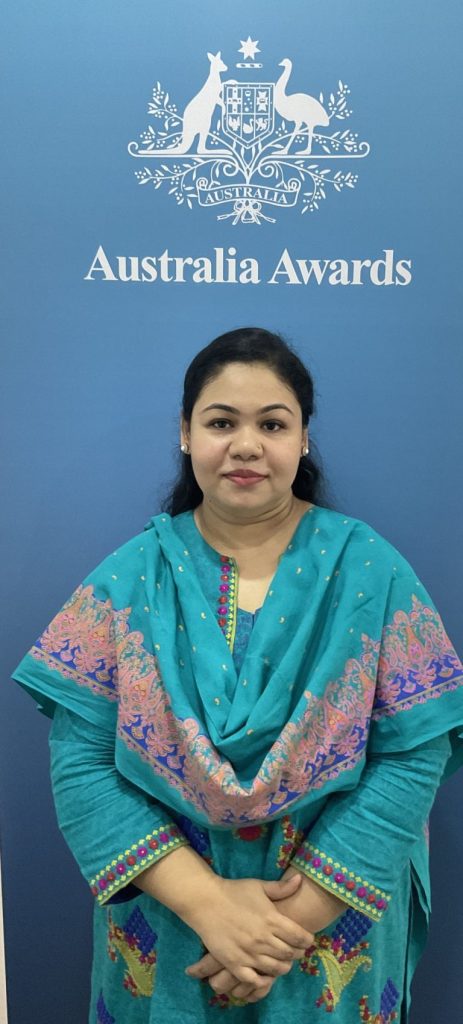
The workshop resonated strongly with scholars seeking to deepen their knowledge in using AI tools effectively. Several participants commented on how the training broadened their understanding of the tools. Bangladeshi scholar Nijhum Talukder said that the workshop was “really informative and useful”, a sentiment echoed by scholars during the session.

alt_Nijhum_Kaiyum_Talukder_img

Bangladeshi scholar Nijhum Talukder.

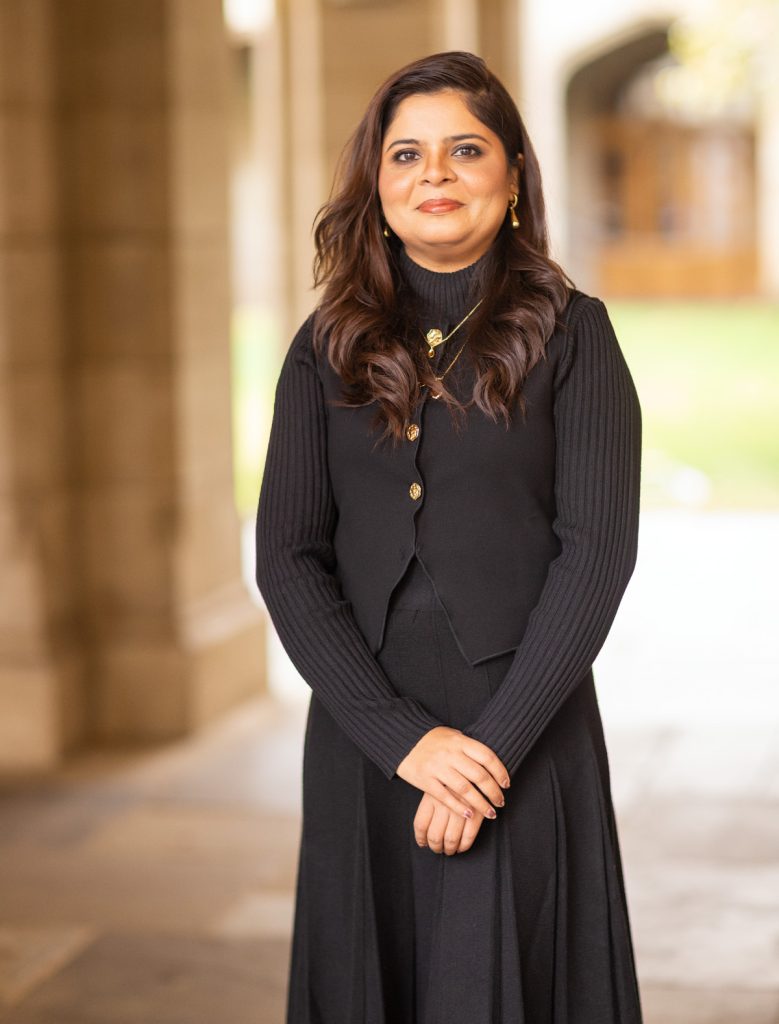
Among those who praised its usefulness, Pakistani scholar and former Scholar Ambassador Wirdah Kaif said that “prompt generation techniques and the Google NotebookLM tool” were her key learnings and takeaways.

alt_Pakistani_scholar_Wirdah_Kaif_img

Pakistani scholar Wirdah Kaif.

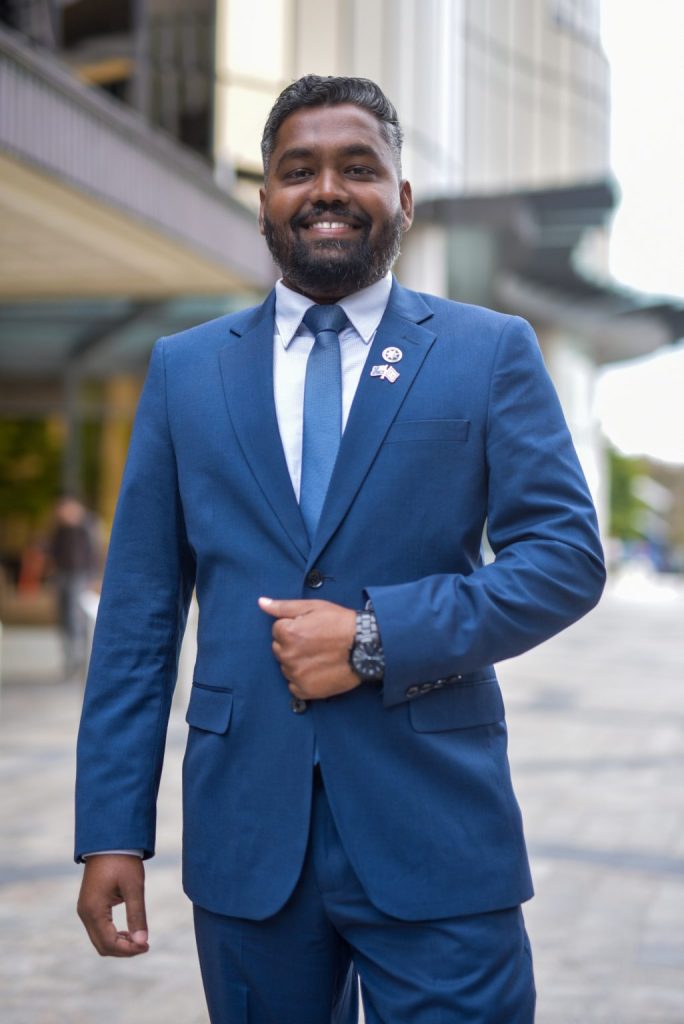
Mohamed Nimal from Maldives added that he “found it extremely helpful that the session was very practical and introduced how to navigate many different tools”.

alt_Mohamed_Nimal_img

Scholar Mohamed Nimal from Maldives.

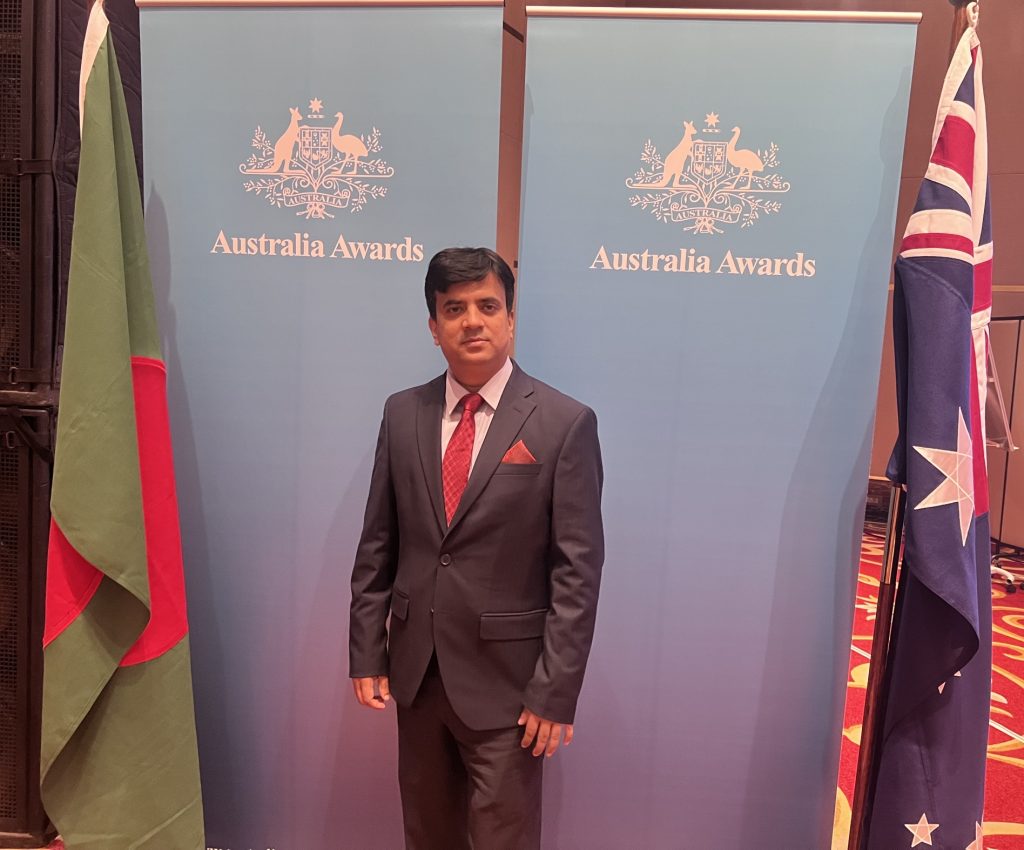
Reflecting on the overall experience, Pakistani scholar Zoha Shakir said, “The workshop changed the way I see AI: not as a shortcut, but as a partner for better decision-making. As a public servant, I see immense potential for AI to strengthen evidence-based policymaking, tackle complex development challenges and improve public service delivery, provided it is always guided by critical thinking, ethical use and human judgement.”

alt_Zoha_Shakir_img

Pakistani scholar Zoha Shakir.

Bangladeshi scholar Shyamal Chandra Basak also highlighted the practical value of the training. “As a master’s degree student in Marine Science and Management, this workshop showed me how AI can genuinely support research—from analysing marine and coastal data to structuring academic reports,” he said. “I’m already applying these tools in my coastal management research and assignments, and it’s made a real difference in how efficiently I can work.”

alt_Shyamal_chandra_img

Bangladeshi scholar Shyamal Chandra Basak.

Australia Awards – South Asia & Mongolia is proud to announce the new cohort of Scholar Ambassadors for 2026–2027.

The Scholar Ambassador program was established in 2025 to recognise and empower outstanding scholars who demonstrate academic excellence, leadership qualities, and a commitment to fostering a strong and inclusive community for Australia Awards scholars.

The program’s inaugural cohort of 10 scholars was selected in July 2025. Scholar Ambassadors receive training and gain practical experience in collaborating with the Australia Awards – South Asia & Mongolia team and giving support to students.

Scholar Ambassadors play a vital role in:

  • helping the Australia Awards – South Asia & Mongolia team to coordinate events in their state or territory
  • initiating and delivering enrichment activities and networking opportunities for other scholars
  • sharing their stories online through official channels and social media
  • engaging with other scholars and obtaining feedback about their experiences and challenges.

This year, 11 scholars were selected as Scholar Ambassadors through a competitive process. This process consisted of two rounds: a written application submission and an online interview. Successful applicants participated in a two-day in-person training held in Adelaide on 6 and 7 July. This training covered key areas such as team building; leadership and communication; gender equality, disability and social inclusion; safeguarding; and event management.

Several of the newly appointed Scholar Ambassadors have commented on their Scholarship journey so far and what they hope to achieve as Ambassadors.

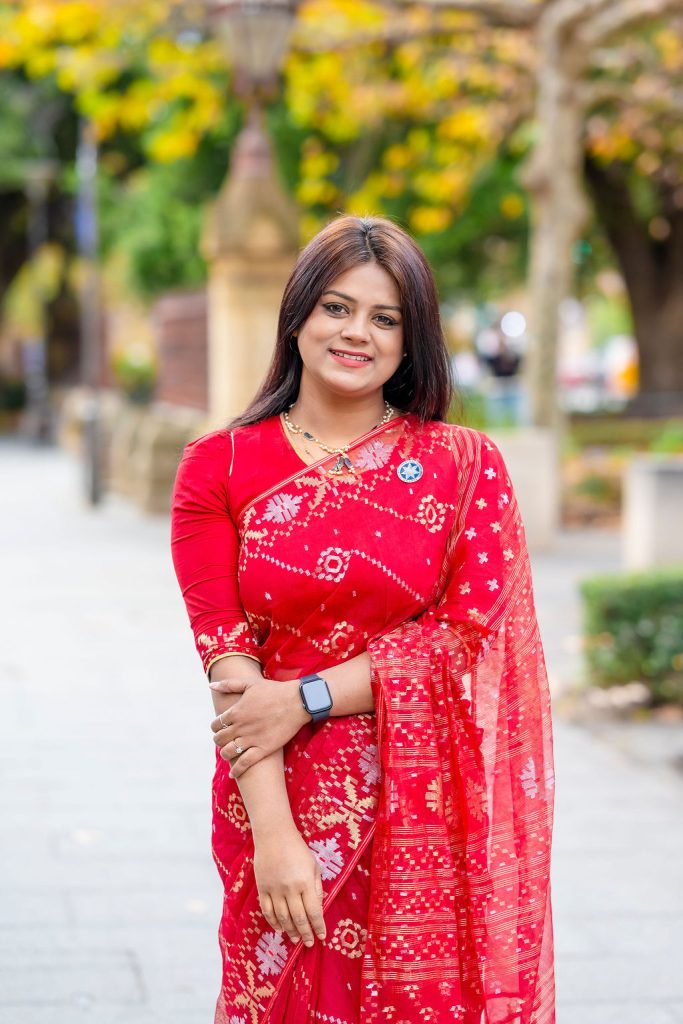
Tamanna Jyoti from Bangladesh said, “I have spent most of my career in public service, where work only counts if it actually reaches people. Becoming a Scholar Ambassador lets me continue that here in Australia—listening to fellow scholars, understanding what they need and acting on it. It is the same principle that drew me to data science: Decisions work best when they are grounded in what people actually experience, not what we assume.” Tamanna is currently studying a Master of Data Science at Monash University.

Scholar Ambassador Tamanna from Bangladesh.

Scholar Ambassador Tamanna from Bangladesh.

Mariyam Nuhaa from Maldives, who is studying a Master of Social Work at the University of Queensland, said, “The most inspiring part of the training was meeting scholars from across South Asia and Mongolia who have already contributed so much to their countries. Despite our different backgrounds, I was amazed by how similar our aspirations are and how much we can learn from one another. It reinforced for me that meaningful connections are at the heart of creating positive change, and I look forward to building those connections throughout my journey as a Scholar Ambassador.”

Scholar Ambassador Mariyam from Maldives.

Scholar Ambassador Mariyam from Maldives.

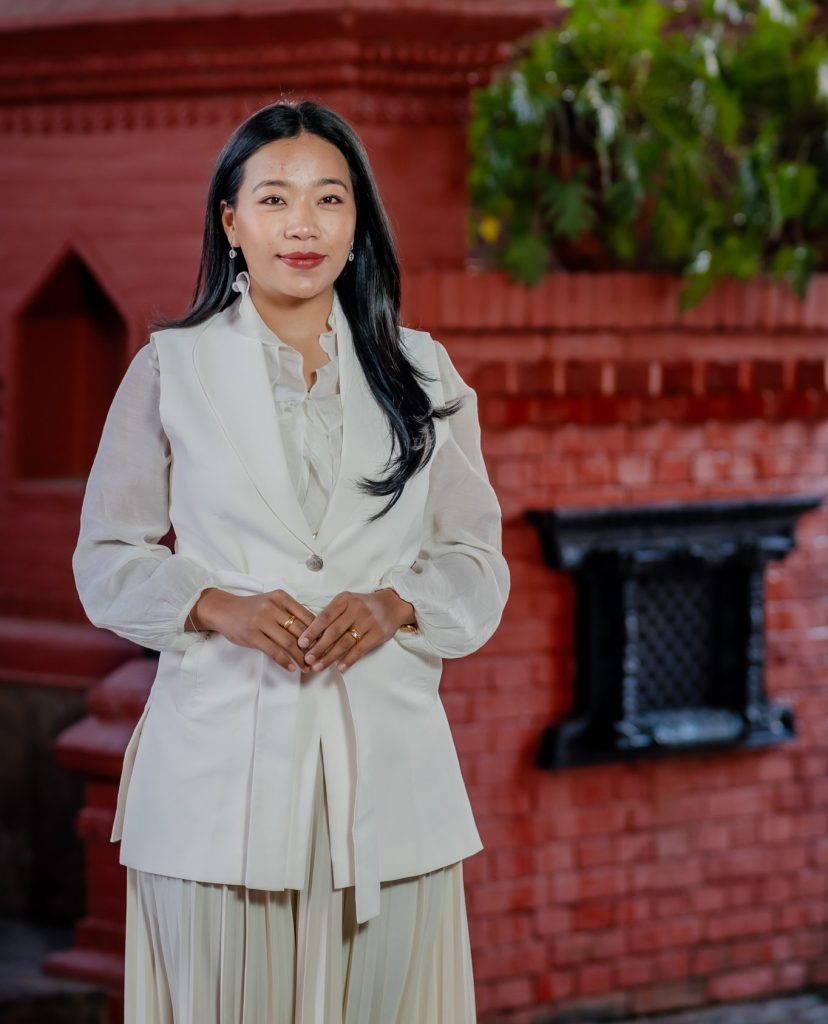
Tuvshinbagana Munkhjargal from Mongolia added that “the training reinforced the value of leadership, collaboration and effective communication in creating positive change”. Tuvshinbagana is pursuing a Master of Environmental Management and Development at the Australian National University.

Scholar Ambassador Tuvshinbagana from Mongolia.

Scholar Ambassador Tuvshinbagana from Mongolia.

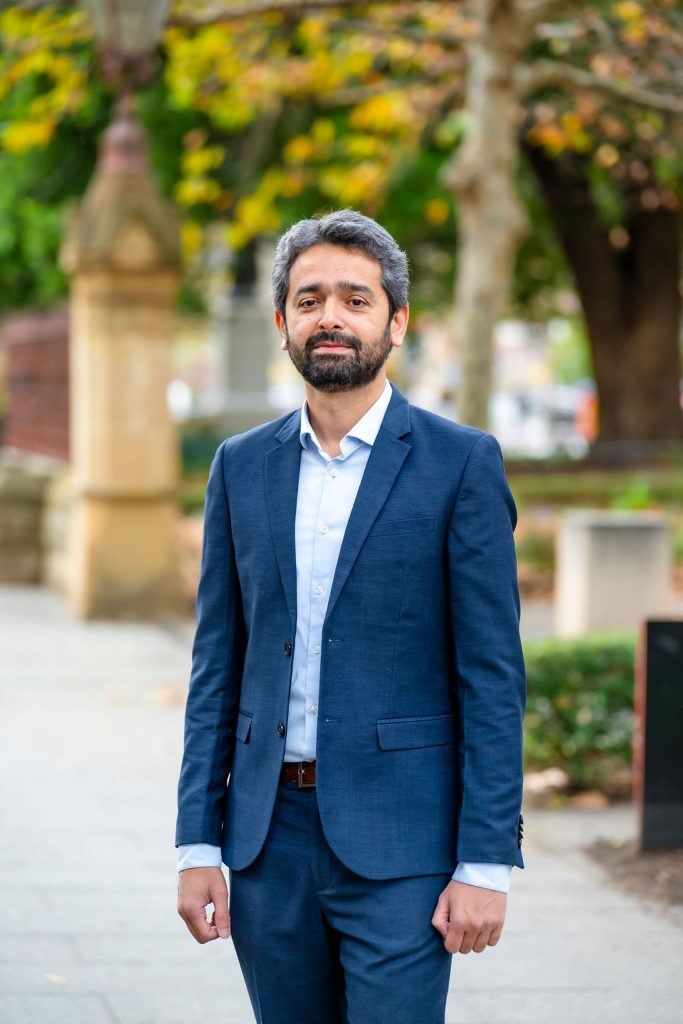
Musa Hassan Syed from Pakistan said, “The Scholar Ambassador program is an energy booster. It pushes you to grow beyond academics and challenges you to step into your leadership potential. The training highlighted the power of shared stories and made me realise how leading with empathy and purpose can positively shape the experiences of others. With my fellow Ambassadors, I hope to create spaces where scholars feel supported, connected and inspired.” Musa is studying a Master of Public Policy and Economics at the University of Western Australia.

Scholar Ambassador Musa from Pakistan.

Scholar Ambassador Musa from Pakistan.

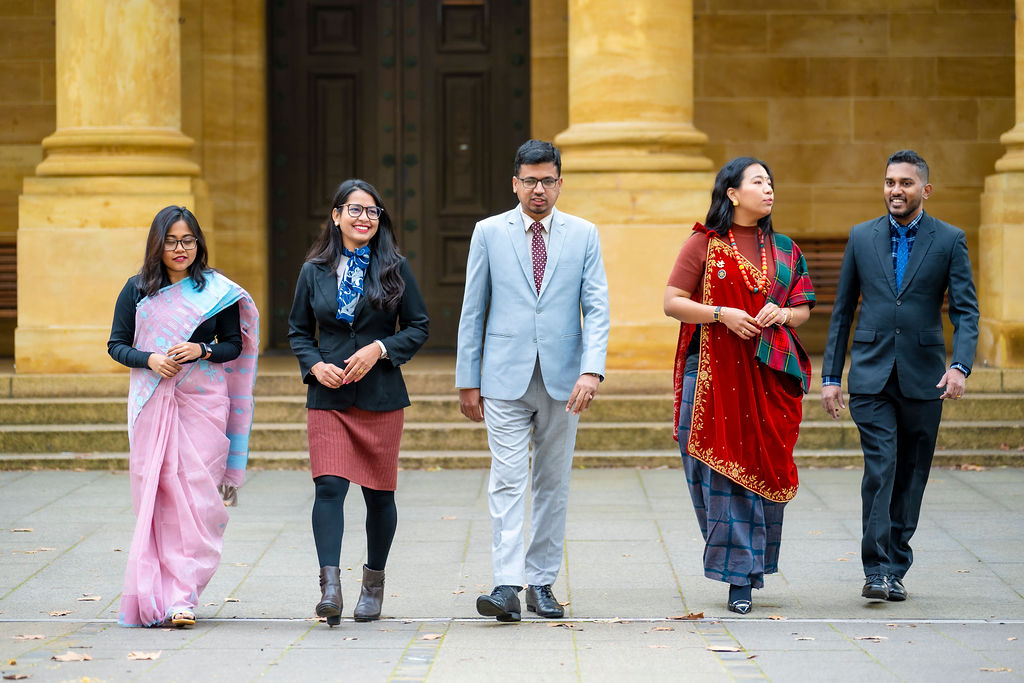
Aarati Sunar from Nepal, who’s studying a Master of Sustainable Development at Flinders University, said that she was “excited to share experiences and learn from fellow scholars”, a sentiment also shared by Bhagya Batugedara from Sri Lanka, who said that he hopes to “help create an inclusive, supportive environment for Australia Awards scholars, where they feel connected and empowered”. Bhagya is currently pursuing a Master of Public Policy at the Australian National University.

Scholar Ambassadors Aarati from Nepal (second from left) and Bhagya from Sri Lanka (right) pictured interacting with other Scholar Ambassadors.

Scholar Ambassadors Aarati from Nepal (second from left) and Bhagya from Sri Lanka (right) pictured interacting with other Scholar Ambassadors.

Scholar Ambassadors represent scholars’ voices, providing feedback to enhance engagement and improve the Scholarship experience. The role of each Ambassador is to contribute to cultivating a sense of belonging, inspiring their peers and helping them to enrich their Scholarship journey.

Meet the rest of the Scholar Ambassadors here.

< Back to previous page

Scholars participate in photo competition on ‘Learning from First Nations Australians’

Bangladesh Bhutan Maldives Mongolia Nepal Pakistan Scholars Platform Sri Lanka First Nations

Between NAIDOC Week and International Day of the World’s Indigenous Peoples, Australia Awards scholars submitted entries to the Through My Eyes: Learning from First Nations Australians photo competition. The competition invited scholars to submit a photograph and reflection showing what they had learnt about First Nations peoples, cultures and communities during their time in Australia.

The winner was announced during a scholar webinar to mark International Day of the World’s Indigenous Peoples. Australia Awards – South Asia & Mongolia’s Indigenous Engagement Adviser, Alice Tamang, a Dharug woman, said the judging panel had been impressed by the strength of the entries and the thoughtful ways scholars connected their learning in Australia with their own cultures, studies and families.

The winner was Rajeeka Ranathunga Jayasekara Koralalage from Sri Lanka. Rajeeka’s photograph showed the Quandamooka Truth Embassy at Minjerribah in Queensland, which she encountered during a field trip for her studies. Alice said the judges were particularly moved by Rajeeka’s curiosity to keep learning, her reflections on truth-telling and cultural resilience, and her commitment to sharing these stories with her children.

Speaking after the announcement, Rajeeka said she had not taken the photograph with a competition in mind, but felt drawn to the site as “a place of freedom” where people could speak, negotiate and tell their truth. She said that learning about First Nations histories and experiences had resonated with her own background, given that Sri Lanka is also an island nation with a history of colonisation and resilience. As a mother of two, Rajeeka said she values passing this learning on to the next generation, adding that she and her children often talk about First Nations cultures and histories at home.

Rajeeka’s winning entry and those of the three other finalists are repeated in full below, along with excerpts of other scholars’ entries.
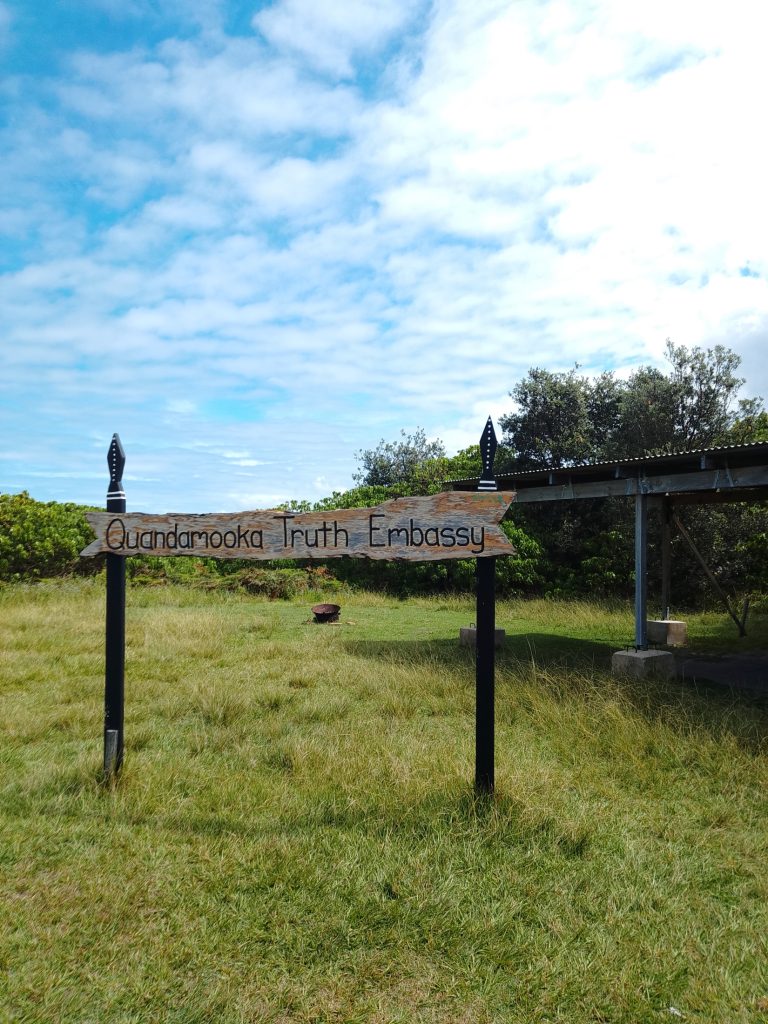
The winning photo of scholar Rajeeka Ranathunga Jayasekara Koralalage from Sri Lanka.

The winning photo of scholar Rajeeka Ranathunga Jayasekara Koralalage from Sri Lanka.

Caption: Standing on open grassland, the wall-less Quandamooka Truth Embassy on Minjerribah symbolises the idea that truth lives in the open, carried by community, and protected through dialogue and negotiation.

Reflection: I visited Minjerribah on 17 March 2026 as part of a field trip for my Master of Tourism, Hotel and Event Management. We first went to the museum, where we learnt about the history of the First Nations of Australia and of this island. Later, we completed the Gorge Walk.

During the walk, I came across a place called the Quandamooka Truth Embassy. I was curious about it and took this photo on my phone. The words ‘Truth Embassy’ caught my attention, and I learnt that this was a place where First Nations people gather to speak the truth and protect their island. Seeing it reminded me of Somebody’s Land by Adam Goodes, David Hardy and Ellie Laing, a book my children borrowed from their school library. Reading it with my kids, I learnt about the hardships First Nations people endured and the sacrifices they made for this land.

Coming from a country ruled by the Portuguese, the Dutch and the British for centuries, I have heard stories of our own ancestors who sacrificed their lives, fought for our land and stood resilient. Standing at the Truth Embassy enriched my respect for First Nations people, because I understood what it means to lose cultural traditions and what it takes to restore them. The embassy, with no walls, symbolises that there are no limitations when standing up for what is right and speaking the truth. The word ‘embassy’ also reflects diplomacy: resolving disputes through discussion and peaceful means. This gave me more understanding of First Nations people, who are courageous, resilient and diplomatic. I will carry this understanding into my tourism studies and future work, approaching First Nations culture and Country with respect. I will also continue reading these stories with my children, so they grow up knowing the history of the land that has shaped all our lives.
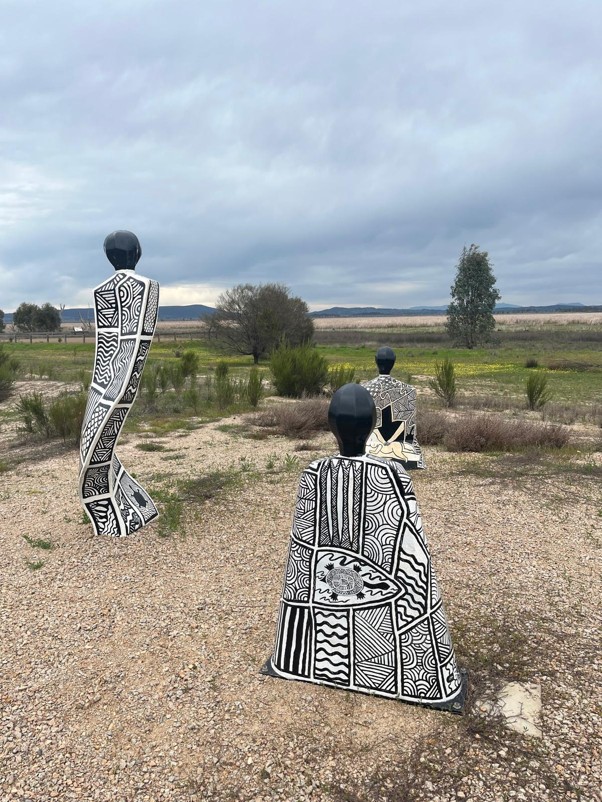
Photo submitted by Nepali scholar Jyoti Ghimire.

Photo submitted by Nepali scholar Jyoti Ghimire.

Caption: Observing these sculptures, I learnt about the deep connection between First Nations people and their culture, Country and nature. It helped me appreciate the significance of family, ancestorial knowledge, and their stories and long-lasting relationship with the living environment, expressed through the art. It further increased my respect for Indigenous knowledge.

Reflection: I visited the Lotjpatj Natjan Danak Sculpture Walk at Winton Wetlands for an ‘Ecological Restoration’ field trip as part of one of my courses in 2025. We had a brief presentation about the history of that area, the sculptures and the restoration project implemented there. I came across the Yakapna sculptures, which were very eye-catching and immediately caught my attention. It was a powerful experience of learning about Aboriginal living culture, rich history and Indigenous art. I was highly impressed by understanding what the sculptures expressed to visitors.

These three sculptures represent Ancestors, totems, ceremonies, ecology and species, and rivers and creeks for the Yorta Yorta community. It looked like three people were watching towards the wetlands and the beautiful landscape. These sculptures were known as Yakapna, meaning ‘family’ in the Yorta Yorta language. This simple word made me think about how family extends beyond people to include Country, culture and future generations. I learnt that long-necked turtles were a totem that indicated healthy wetland. Moreover, baby cradling on the knee was indicating a symbol of love for the family. Every pattern and linework in the sculptures illustrated what activities were done in that area. Understanding these sculptures closely encouraged me to appreciate the knowledge and cultural values of Aboriginal people and their special places.

Studying the Yakapna, I learnt how the First Nations people used to take care of their family, land and local species. Additionally, this sculpture broadened my knowledge about this Country, which is a source of identity and responsibility to the First Nations people. I realised that caring for Country involves respecting the culture, art and knowledge that the First Nations people have passed down for millennia. While working in conservation and management of forest and land resources in Nepal, I will always respect the knowledge and values that Indigenous people hold for environment.
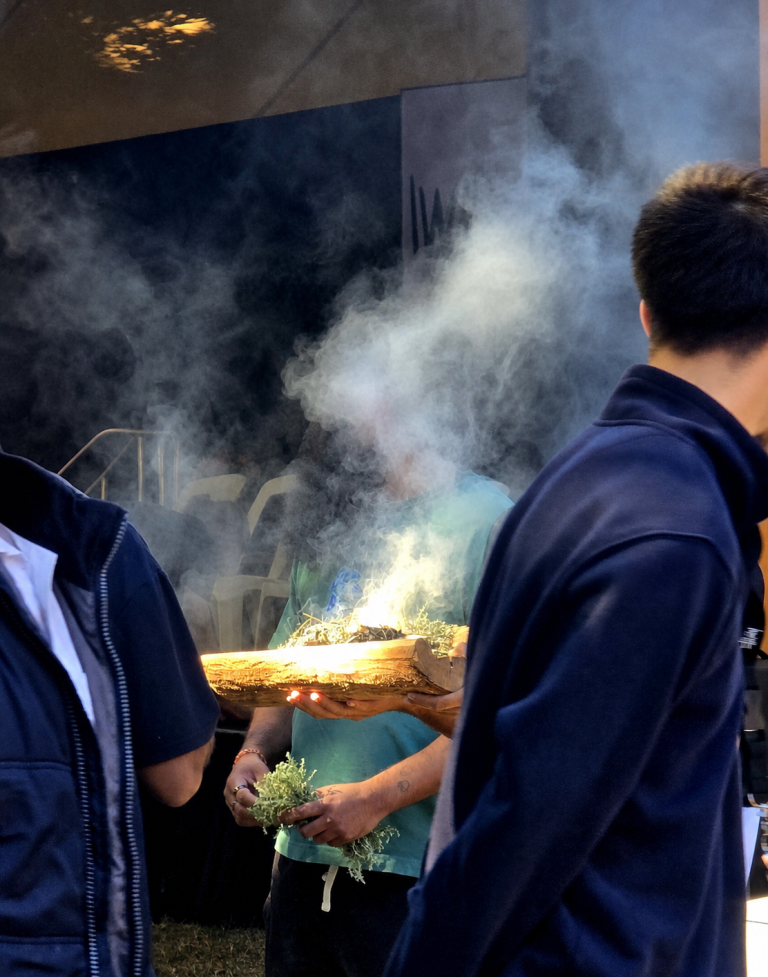
Photo submitted by Md Ahsanul Kabir from Bangladesh.

Photo submitted by Md Ahsanul Kabir from Bangladesh.

Caption: Smoke rises during the Kaurna Day smoking ceremony at Adelaide University, where I volunteered for the day. As participants gathered respectfully, I witnessed living Kaurna culture creating a powerful moment of welcome, reflection and connection on Kaurna Country.

Reflection: I took this photograph while volunteering at Kaurna Day at Adelaide University. As smoke from the native plants moved through the gathering, people paused and participated respectfully. The light passing through the smoke first caught my attention, but what lingered was the atmosphere of connection and shared respect.

Volunteering allowed me to contribute to the event while learning through participation. The experience strengthened my understanding that Kaurna culture is not only part of South Australia’s history; it is also a living culture, maintained and shared by Kaurna people on their Country. The ceremony encouraged me to recognise the cultural knowledge and authority of the Traditional Custodians.

I also learnt to think more deeply about the importance of place. Adelaide University’s City East campus stands on Kaurna Country, and witnessing the ceremony made that relationship feel more grounded and meaningful to me. It reminded me that an Acknowledgement of Country should be more than a familiar statement. It should encourage us to learn about the Traditional Custodians, respect their continuing connection to Country, and consider our responsibilities while living and studying on their land.

Through volunteering that day, I learnt that genuine cultural engagement begins with humility, attentive listening and a willingness to build respectful relationships. This photograph represents the moment when that lesson became visible to me through smoke, light and community.

Photo submitted by Nadunie Thathsaranie Wanigasinghe from Sri Lanka.

Photo submitted by Nadunie Thathsaranie Wanigasinghe from Sri Lanka.

Caption: This photograph shows dried leaves I painted at the NAIDOC Week gathering at the University of Melbourne, before we walked together to the NAIDOC March to celebrate culture, community and connection.

Reflection: The leaf painting activity was an opportunity for me to meet staff from the Mabo Centre and members of the university’s Indigenous community. Art opens space for connection. Our conversations began with shared interests, including handmade jewellery, and developed into a discussion about jewellery used within different First Nations communities. The leaf painting activity left me curious about the knowledge beneath its surface. What materials and pigments have First Nations artists traditionally used? Are there specific reasons for the selections? Do patterns relate to stories or places? What knowledge can be shared publicly, and who has the cultural authority to teach it?

This curiosity led me to the Koorie Heritage Trust later that day. While immersing myself in the delicate artwork of Gunditjmara Elder Aunty Connie Hart, I learnt that she developed her weaving knowledge by quietly observing her mother and Elders and “sneaking a stitch or two.” Her story also highlighted the vulnerability of intergenerational cultural transmission when opportunities to teach and learn are disrupted.

It reminded me of my maternal grandmother, who was highly skilled in beeralu, Sri Lanka’s traditional bobbin lace making. My mother knows it to some extent, but I cannot do it. This relates not only to me but to many in my generation and generations forward. Although the cultural histories are different, the missing link within my own family helped me understand how valuable artistic knowledge can weaken between generations.

I learnt that an artistic tradition is not preserved merely by displaying. It lives when its rightful custodians can practise, explain and pass on the knowledge behind it.
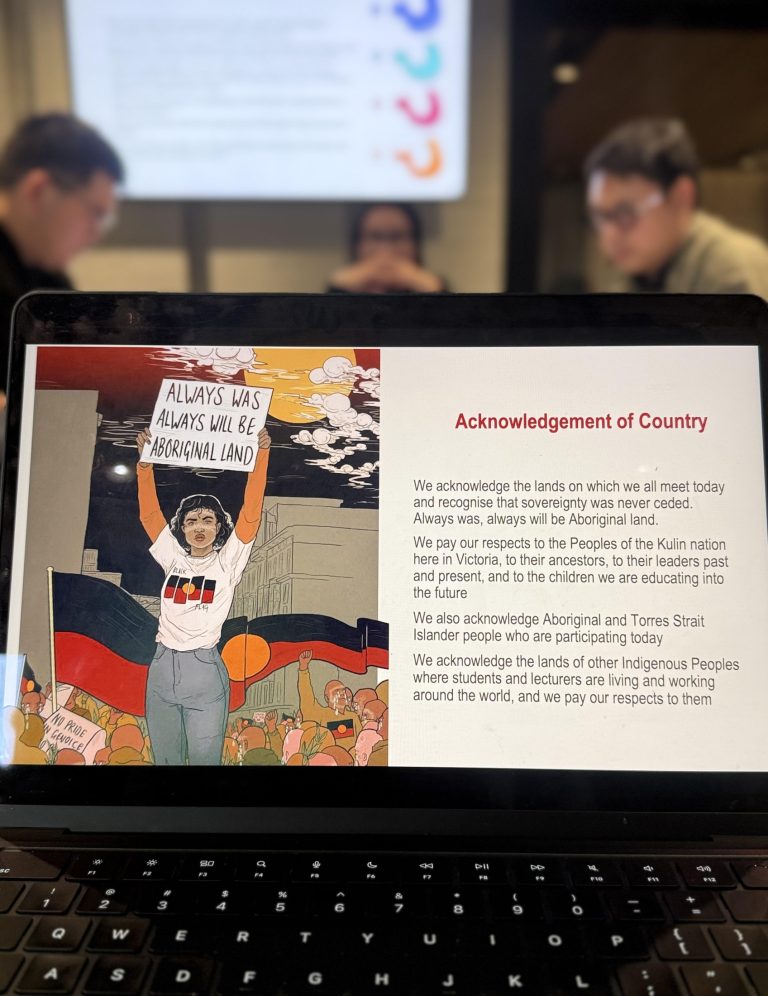
Photo submitted by Bhutanese scholar Sherab Jatsho.

Photo submitted by Bhutanese scholar Sherab Jatsho.

Caption: An Acknowledgement of Country before class became more than a customary opening. It was an invitation to recognise the enduring connection of First Nations peoples to Country and to reflect on how truth, respect and reconciliation can enrich education and strengthen our shared humanity.

Excerpt from reflection: This photograph was taken at the beginning of one of my classes at Monash University during NAIDOC Week. What initially appeared to be a routine opening slide gradually became a profound learning experience and reflection. … The photograph symbolises the power of education to foster understanding across cultures. … Meaningful education extends beyond textbooks; it shapes values, empathy, and our capacity to engage respectfully with different histories, societies and perspectives. This experience has strengthened my appreciation for Indigenous knowledge systems and reinforced the importance of promoting inclusive, respectful and culturally responsive learning environments wherever I may serve in the future.

Photo submitted by Babu Marma from Bangladesh.

Photo submitted by Babu Marma from Bangladesh.

Caption: Dharawal Community leader Uncle Shayne tells their ancestors’ stories of land, sea, water and trees on the bank of Kamay Botany Bay National Park.

Excerpt from reflection: Dr Shayne T. Williams, a Dharawal and La Perouse Aboriginal Elder, an educator, and the Chair of the Burraga Foundation, shared the deep connection between the Dharawal and Eora peoples and Kamay (Botany Bay). Through stories of the land, sea, waterways and native plants, he explained how Country is connected to culture, identity and community. I learnt about the Gadigal people, their enduring connection to the area, and the ways they have cared for and lived with Country for generations. We also learnt about the traditional uses of native plants, including cabbage tree palms and bracken fern.

One story that particularly stayed with me was that of Bouri Bouri, the whale, which helped me better understand the deep connection between the sea and the cultural identity of the Eora people. This experience strengthened my appreciation of First Nations knowledge, storytelling traditions, and the enduring relationship between people and Country.
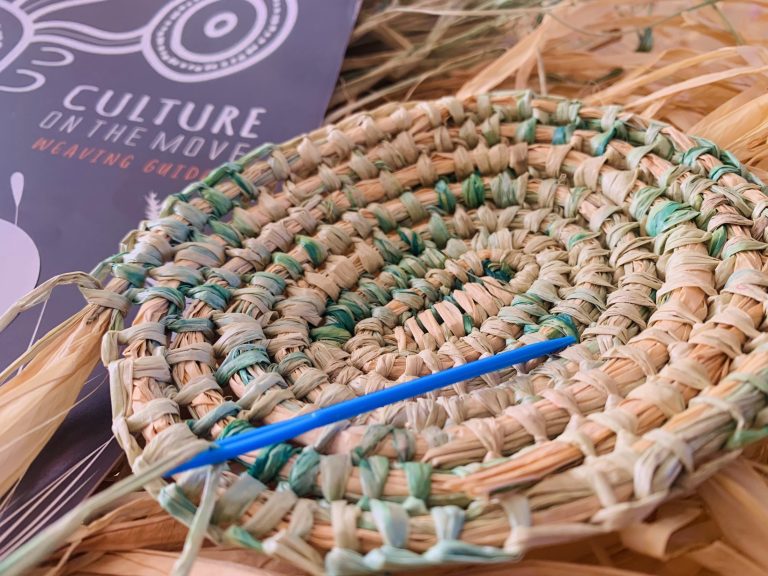
Photo submitted by scholar Dhananjani Pushpamali from Sri Lanka.

Photo submitted by scholar Dhananjani Pushpamali from Sri Lanka.

Caption: The first stitches of a raffia basket mark the beginning of my learning journey into the artistic traditions of First Nations peoples, revealing how weaving connects culture, storytelling, ancestral knowledge and a deep relationship with Country.

Excerpt from reflection: This photograph captures the very beginning of a basket that I started weaving during the workshop facilitated by Ronnie Jordan, a Pitta Pitta Wangkamahdla woman, the owner of Culture on the Move, a weaver, an artist and a community cultural facilitator. The unfinished base, the heart of the basket, raffia, needle and weaving guide reflect the beginning of my understanding of First Nations Australians, their art, cultural practices and ways of knowing. While the basket is only partially woven, it symbolises the first steps of a much deeper learning journey. … Through listening, learning and engaging with Ronnie, I realised that weaving is a way of sharing stories, preserving cultural identity, empowering community and strengthening the connection to Country. … This experience encouraged me to look beyond the finished artwork and appreciate the knowledge, cultural identity, storytelling tradition and connection to Country woven into every piece. It has strengthened my respect for First Nations cultures and inspired me to continue learning from the world’s oldest continuing cultures.
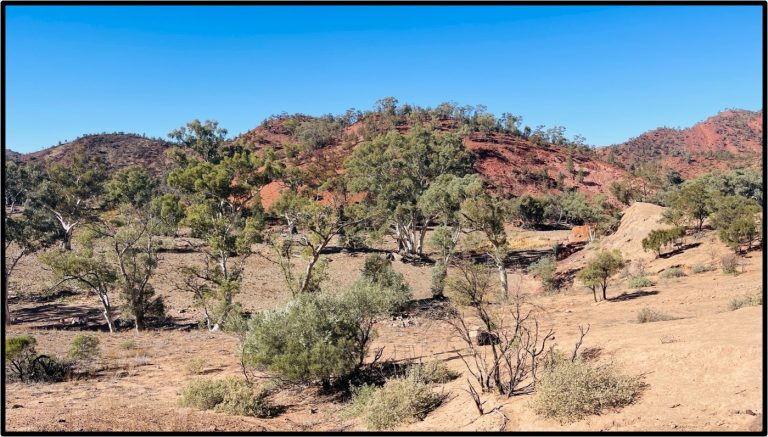
Photo submitted by scholar Zoha Shakir from Pakistan.

Photo submitted by scholar Zoha Shakir from Pakistan.

Caption: At first, I saw rugged mountains and ancient rocks. Through Adnyamathanha eyes, I came to see something far greater: a living landscape where culture, history and nature exist as one.

Excerpt from reflection: Standing in Brachina Gorge, as we were guided across Adnyamathanha Country, I realised I was not simply looking at mountains, trees and ancient rocks. I was standing in a place where every ridge, gorge and pathway carries stories, knowledge and responsibility. What appeared to be a beautiful landscape gradually became something much deeper: a living classroom where culture, history and nature exist as one.

Coming from Pakistan, this experience resonated deeply with me. Walking on Adnyamathanha Country challenged me to think differently about the relationship between people and the environment. I learnt that resilience is built through understanding the landscape, respecting its limits and valuing knowledge passed down through generations. This knowledge does not replace science; it strengthens it.
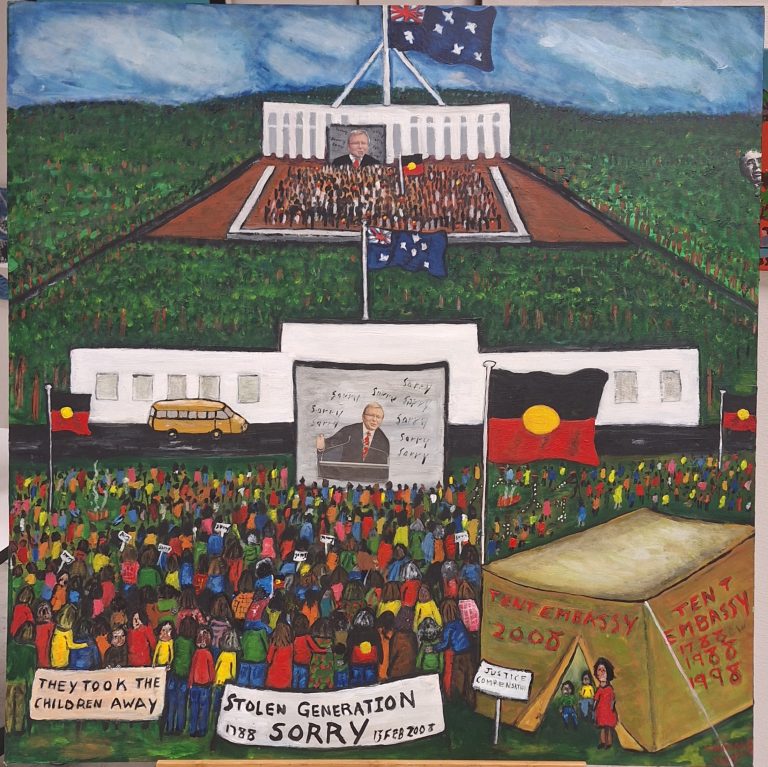
Photo submitted by Sri Lankan scholar Kirithikka Baherathan.

Photo submitted by Sri Lankan scholar Kirithikka Baherathan.

Caption: This photo captures a painting by Aboriginal artist and activist Sandra Saunders depicting the National Sorry Day. It was captured by my lens on 18 February 2025 at an exhibition held at the Flinders University Museum of Art.
(Used with the permission of Flinders University Museum of Art.)

Excerpt from reflection: Before starting my journey to Australia, I knew little about the First Nations of this land and their history. I had a few instances in my early days in Australia where I learnt about Aboriginal art and culture, but this photograph taught me something very different in their history. This was my first experience where I learnt about the Stolen Generation and a part of the recent history where an entire nation came together for reconciliation. As a scholar coming from the war-torn nation of Sri Lanka, this learning felt very personal, with pain, resilience and most importantly tremendous hope for building a future together.

This painting and the story behind it have shaped my perspectives of the people of Australia in their unity to thrive together for a better nation, by not ignoring the past, but sharing accountability for the occurrences and committing to acknowledgement of the custodians of the land.

Cover photo – Scholars from left to right: Winner of the competition Rajeeka Ranathunga Jayasekara Koralalage, Runners-up Jyoti Ghimire, Md Ahsanul Kabir and Nadunie Thathsaranie Wanigasinghe.

< Back to previous page

Scholars and alumni learn about importance of Indigenous knowledge in water conservation

Bangladesh Bhutan Maldives Mongolia Nepal Pakistan Scholars Platform Sri Lanka Climate First Nations

Ahead of International Day of the World’s Indigenous Peoples, Australia Awards – South Asia & Mongolia hosted an interactive online discussion for scholars to explore the intersection of Indigenous knowledge and contemporary science in water management, climate adaptation and sustainability. Professor Phil Duncan, a Gomeroi man from Moree, New South Wales, led the session, which was moderated by Nepali scholar Ganga Gurung. More than 20 alumni and 60 scholars participated in the discussion.

Nepali scholar Ganga Gurung, who moderated the session.

Nepali scholar Ganga Gurung, who moderated the session.

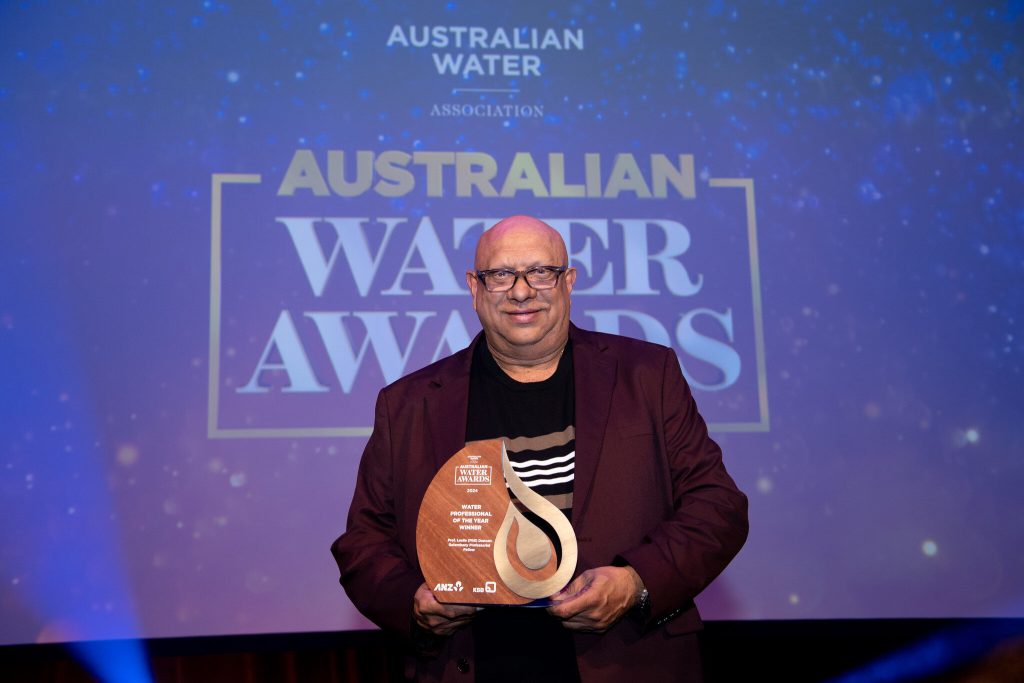
Professor Duncan is one of Australia’s leading Indigenous water and natural resource management experts. With more than 40 years’ experience across Indigenous communities, government and academia, he is widely recognised for his leadership in Indigenous water rights, freshwater management, and the integration of Indigenous knowledge into environmental policy and practice. He is the Galambany Professorial Fellow at the University of Canberra’s Centre for Applied Water Science and has held national leadership roles such as Chair of the Murray–Darling Basin Authority’s Basin Community Committee and board member of the NSW Natural Resources Access Regulator. In 2024, he was named Australian Water Professional of the Year for his outstanding contribution to the water sector and advocacy for First Nations peoples.

Professor Duncan named 2024 Australian Water Professional of the Year. Photo credits: Australian Water Association

Professor Duncan named 2024 Australian Water Professional of the Year. Photo credits: Australian Water Association

Professor Duncan’s discussion was a deeply moving exploration of how Indigenous knowledge and contemporary science can come together to reshape water management, sustainability and climate adaptation. He opened by greeting participants in his Gomeroi language, reminding everyone that cultural protocols such as Acknowledgement of Country are not symbolic gestures but living traditions of respect and connection.

From the outset, he framed water as central to life itself, to quality of life, to longevity and to cultural identity. He described Indigenous knowledge as the “missing ingredient” in global climate strategies, offering resilience and sustainability when woven together with Western science. His words carried urgency but also hope, calling for a “we, the us” approach where communities act collectively and listen to one another.

The videos Professor Duncan shared from his Country, the Wirdah River, were especially powerful. He spoke of rivers and creeks as the arteries and veins of the land, sustaining both people and ecosystems. Yet he mourned that these lifelines have been diverted, drained and monopolised, leaving Indigenous custodians locked out of their responsibilities.

His message was stark: “When Country is healthy, we are healthy. When Country is hurting, we are hurting. No water, no Country, no life, no people.”

He emphasised that water conservation must be understood as both ecological and cultural. He explained how Indigenous knowledge systems view water as part of a living, breathing entity of Mother Earth, comparing river systems not just to arteries but also to human organs such as lungs and kidneys, where interconnectedness is vital to health. He urged that conservation efforts must restore connectivity, respect cultural responsibilities and ensure sustainability.

Tracing the history of Indigenous water rights in Australia, from the 1967 referendum to today’s policies, Professor Duncan underscored his belief in the principle of “Nothing about us without us”. In his view, Indigenous voices must move beyond advisory roles into genuine decision‑making.

He also shared examples of collaborative projects, including research across 19 countries that revealed common values: healthy people, healthy culture and healthy country all depend on healthy water. His workshops demonstrated that Indigenous and non‑Indigenous scientists often arrive at similar understandings when given the opportunity to converse and compare findings.

During the Q&A, participants asked about practical ways to integrate Indigenous knowledge into policy frameworks and education. Professor Duncan stressed the importance of creating culturally safe environments for dialogue, where Indigenous custodians can speak without fear of dismissal. He highlighted the role of young people in carrying forward water stewardship, urging that they be actively involved in both scientific research and cultural practices.

Questions also touched on balancing economic pressures with ecological sustainability, to which he responded that reciprocity and respect must guide all decisions: “We’ve got to give back [to Country]. We can’t just keep taking.” He emphasised that conservation is not only about protecting ecosystems but also about protecting cultural identity and sovereignty.

Other questions explored how Indigenous knowledge could be scaled globally. Professor Duncan explained that while contexts differ, the principles of respect, cooperation and collective responsibility are universal. He encouraged the attendees to build networks across borders, noting that courageous conversations between communities often reveal shared values and solutions.

In response to the session, Bhutanese scholar Dorji Wangdi said, “Sustainable water management starts by listening to Country and learning from Indigenous knowledge.”

Bhutanese scholar Dorji Wangdi.

Bhutanese scholar Dorji Wangdi.

Nepali scholar Rabin Gyalang said of the discussion about Australia’s Indigenous people managing water sources, “It reminds me of Nepali Indigenous and local communities, where people treat water sources as sacred places.” Rabin described how such communities respect these places by not discarding rubbish, polluting the water sources or felling any trees in such areas. “They worship [these water sources] occasionally in a special way, thanking them and being grateful towards them for providing water to the people and irrigating the farm fields.”

Nepali scholar Rabin Gyalang.

Nepali scholar Rabin Gyalang.

Pakistani scholar Sadaf Jamil described Professor Duncan’s discussion as having been “beautiful, interesting and marvellous”.

Overall, the session served as both a cautionary message and an invitation. Professor Duncan urged participants to slow down, take everyone on the journey and plan for the future through the eyes of the next generation. His project Winaga‑li Gunimaa Gali—“Listen, hear, think, understand from our sacred Mother Earth and our water”—embodies this philosophy, blending Indigenous principles with practical restoration efforts.

Ultimately, one phrase he used when introducing himself captured the essence of his message on Indigenous communities’ commitment to water conservation: “I am the river, the river is me.”

Feature photo: Professor Duncan (left) and Nepali alum Ganga Gurung (right). Professor Duncan’s photo credited to the Aboriginal Carbon Foundation.

< Back to previous page

Scholars strengthen visual storytelling skills to amplify impact

Bangladesh Bhutan Maldives Mongolia Nepal Pakistan Scholars Platform Sri Lanka

Australia Awards scholars gain more than a world-class education. Through complementary professional development opportunities, they build the communication and leadership skills needed to translate knowledge into impact. One such recent opportunity was a two-part Visual Storytelling for Impact workshop that Australia Awards – South Asia & Mongolia delivered in April 2026, bringing together more than 60 scholars from across the region.

Visual storytelling is an increasingly valuable skill, helping scholars communicate complex ideas, showcase development outcomes and engage diverse audiences through compelling images and personal stories. The workshop was designed to support this capability by strengthening scholars’ visual storytelling skills, enabling them to communicate their experiences, achievements and outcomes through compelling images and meaningful narratives.

Drawing on extensive experience in media, communications and visual storytelling, facilitators Neil Bennett and Tim Winkler led the two workshop sessions. Through a combination of presentations, practical examples and interactive discussions, they demonstrated how scholars can use photography to communicate experiences, achievements and development outcomes in an engaging and authentic way.

The first session explored the key elements of effective visual storytelling and how images can be used to communicate ideas, experiences and impact. Participants examined techniques for taking stronger photographs, planning a cohesive story, tailoring content for different audiences, and writing captions that add context and meaning. The session also highlighted the importance of obtaining informed consent, applying ethical photography practices and complying with Australia Awards photographic requirements.

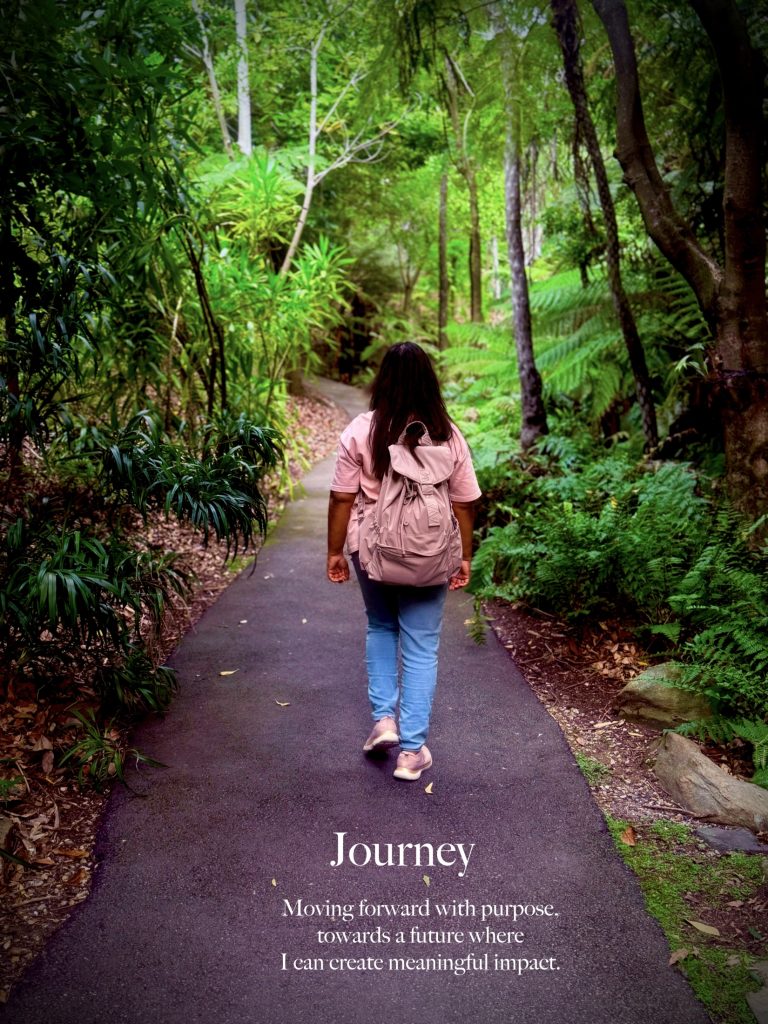
Sri Lankan scholar Dilanka Wickramasinghe shared this photo as one of a series reflecting on her experience as an Australia Awards scholar.

Sri Lankan scholar Dilanka Wickramasinghe shared this photo as one of a series reflecting on her experience as an Australia Awards scholar.

Following the first session, scholars were encouraged to apply their learning through a hands-on photography exercise. Participants were asked to submit a small collection of images reflecting how Australia Awards had influenced their personal, academic or professional journey. These submissions formed the basis of discussion and feedback during the follow-up session.

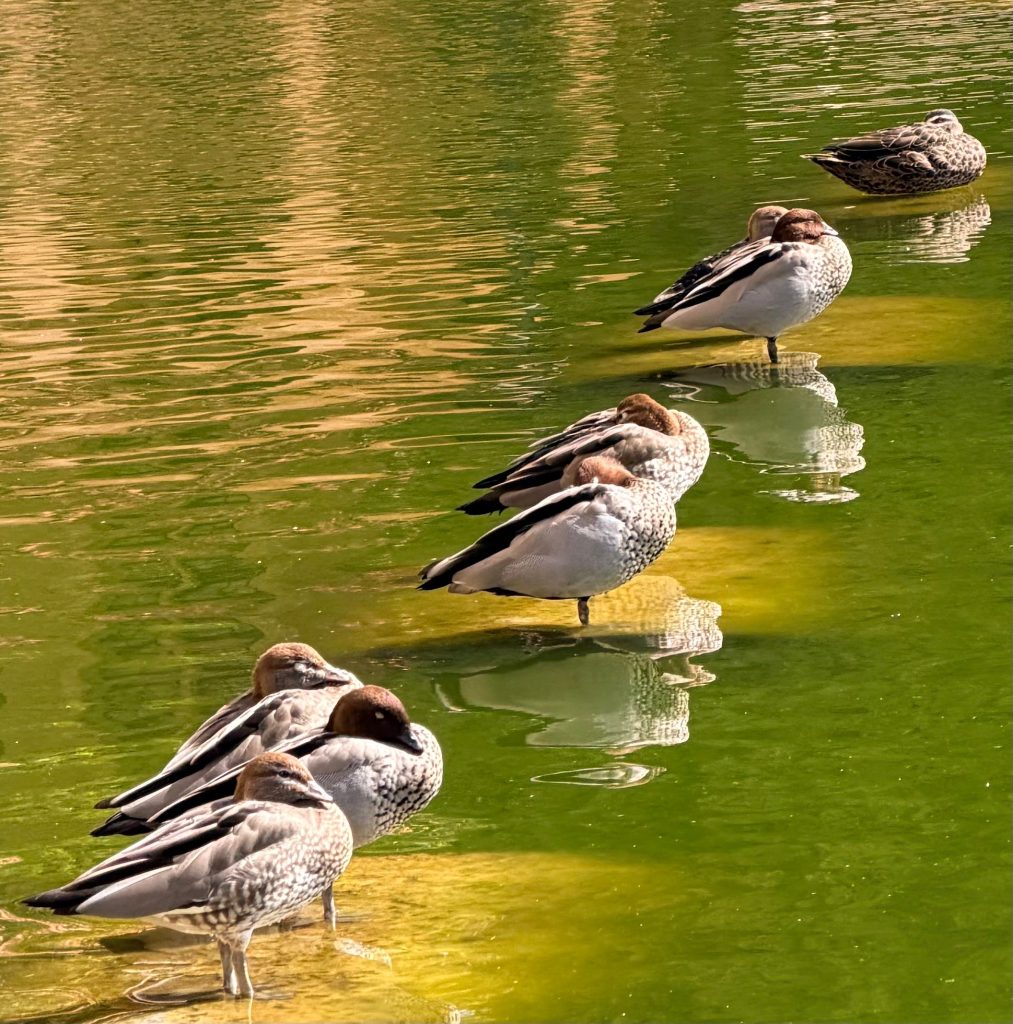
Neil Bennett praised the clever use of composition in this photo submitted by Bangladeshi scholar Nahid Sultana, and how the “diagonal line intrigues the eye”.

At the second session, the trainers showcased select images submitted by scholars. This process involved examining more than 40 photos from 19 different scholars in depth, creating a collaborative and reflective space. Scholars shared the stories behind their images—why they captured the moment, the message they intended to communicate and the outcomes represented. The trainers provided expert feedback on composition, lighting, framing and the strategic use of imagery for impactful storytelling. This format was welcomed by the participants, with Mongolian scholar Chantsalsuren Galbaatar commenting that “receiving personalised feedback on a wide variety of images with explanations helped me notice details I had never paid attention to before and gave me a new perspective on photography and storytelling”.

The workshop resonated strongly with scholars seeking to deepen their professional communication skills. Bangladeshi scholar Nahid Nawrin Sultana said, “The workshop strengthened my ability to use visual storytelling as a tool for meaningful communication. I gained practical skills to create authentic, people-centred stories that can inspire action and highlight development impact across diverse communities.”

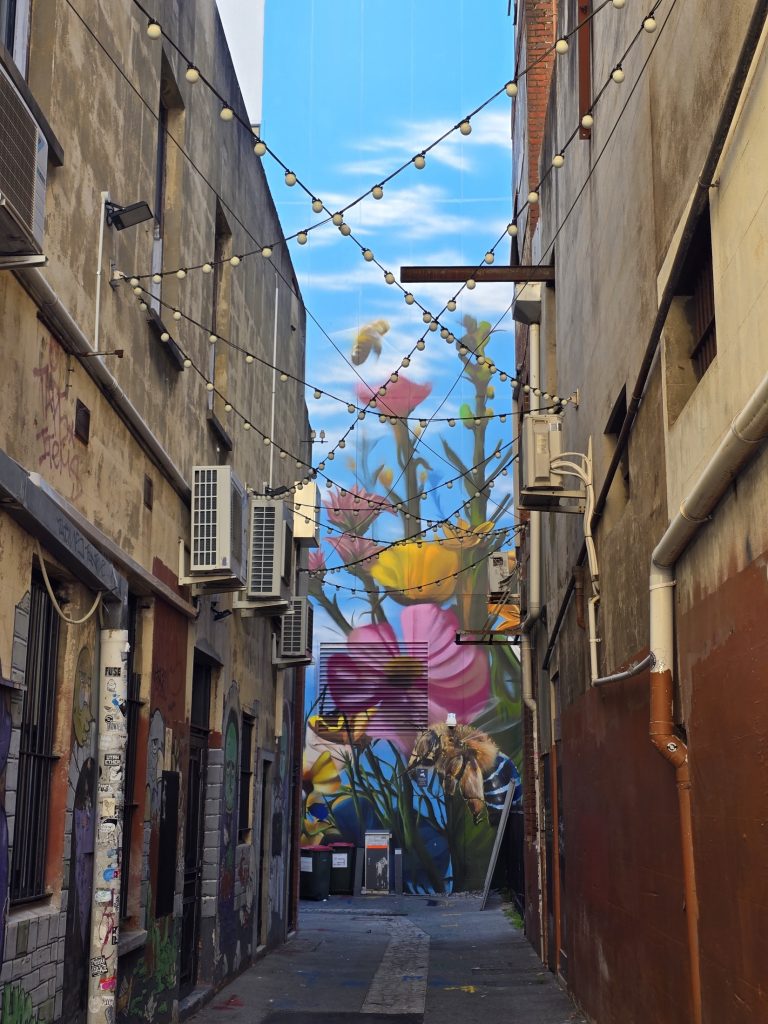
Tim Winkler praised the character captured in Ahsan’s photo and the wit of its caption: “a laneway with more personality than many LinkedIn bios.”

Tim Winkler praised the character captured in Bangladeshi scholar Md Ahsanul Kabir’s photo and the wit of its caption: A laneway with more personality than many LinkedIn bios.

Several participants reflected on how the workshop broadened their understanding of visual storytelling. Bangladeshi scholar Nazmun Nahar described it as “an inspiring workshop that transformed the way I see photography; not merely as capturing images, but as preserving emotions, telling meaningful stories and giving wings to imagination”. Fellow Bangladeshi scholar Anjan Roy added, “The session didn’t just teach us the techniques; it really helped us grasp the core philosophy behind a visual story.”

Reflecting on the overall experience, Sri Lankan scholar Rathnayaka Mudiyanselage Dhananjani Pushpamali said, “I learnt how effective visual storytelling can make ideas more memorable and meaningful, and I felt encouraged to think more creatively.” Pakistani scholar Shamsa Yousaf added, “The workshops taught me that storytelling isn’t just about what you see; it’s about how you show it.”

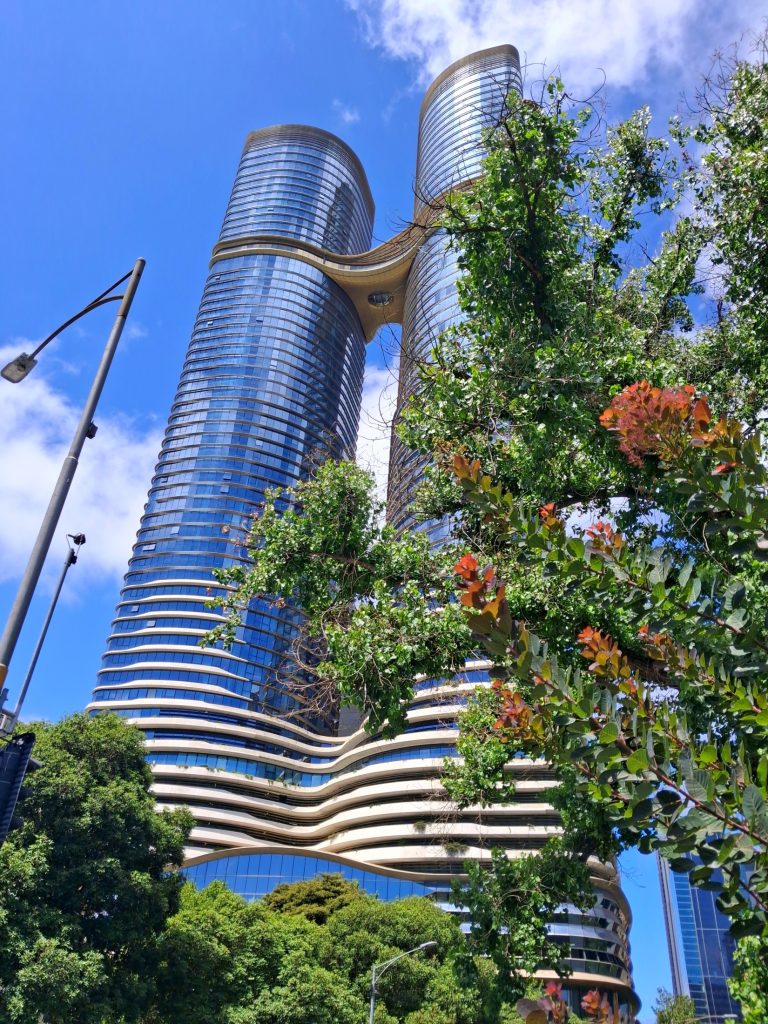
Neil described this photo by Sri Lankan scholar Suganja as a beautiful depiction of how green spaces existed alongside large modern buildings in Melbourne. In the text submitted with it, Suganja shared “It is the perfect starting point for a first Melbourne adventure, where modern architecture meets historic greenery.”

Neil described this photo by Sri Lankan scholar Suganja as a beautiful depiction of how green spaces existed alongside large modern buildings in Melbourne. In the text submitted with it, Suganja shared “It is the perfect starting point for a first Melbourne adventure, where modern architecture meets historic greenery.”

Participants also highlighted the practical value of the training. Sri Lankan scholar Weerasinghe Mudiyanselage Dinusha Nisansala Karunathilake described visual storytelling as “a powerful tool for creating connection and driving meaningful change”, adding that she was excited to use these skills to make public initiatives “more accessible, engaging and impactful for the communities we serve”. Mongolian scholar Solongo Erdenebat also reflected on the importance of authenticity, noting that “effective visual storytelling is not just about taking beautiful photos but about capturing authentic moments from the right perspective to then create meaningful emotional connections with the audience”.

The workshop facilitator praised Mongolian scholar Solongo Erdenebat’s use of leading lines to the Australian flag in this photo of Sydney’s Anzac Bridge.

Neil Bennet praised Mongolian scholar Solongo Erdenebat’s use of leading lines to the Australian flag in this photo of Sydney’s Anzac Bridge.

The visual storytelling workshops supported scholars to prepare entries for the Through My Eyes: Learning from First Nations Australians photo competition, marking NAIDOC Week and International Day of the World’s Indigenous Peoples.

Feature photo, from left to right: Sri Lankan participant, Weerasinghe Mudiyanselage Dinusha Nisansala Karunathilake, Mongolian participant, Solongo Erdenebat, and Bangladeshi participant, Anjan Roy.

< Back to previous page

Mongolian scholars engage with First Nations Australians ahead of NAIDOC Week

Mongolia Scholars Platform First Nations

Ahead of NAIDOC Week 2026 (5–12 July), Australia Awards scholars from Mongolia have been learning first-hand about Australia’s First Nations peoples. NAIDOC Week is an annual celebration of the cultures, histories and achievements of Aboriginal and Torres Strait Islander peoples.

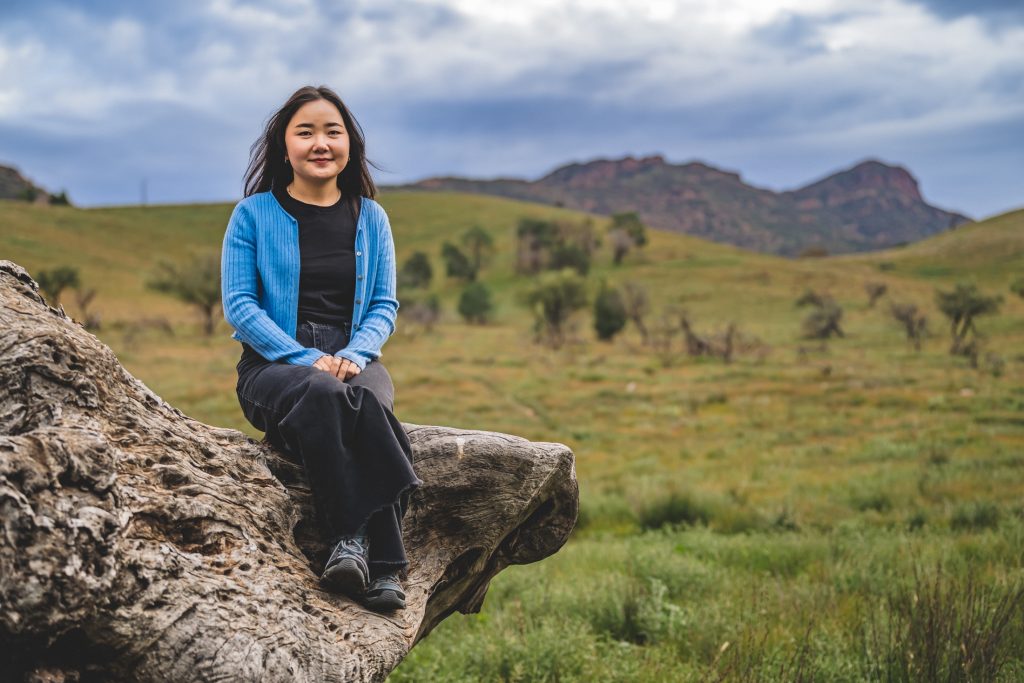
Mongolian scholars Suvd-Erdene Narmandakh and Oyuntugs Tegsheebaatar, together with nine other scholars, travelled to South Australia’s Ikara-Flinders Ranges National Park from 22 to 25 May to learn about the Adnyamathanha people under the guidance of John Solar, a Yura man and Adnyamathanha cultural educator. (Read more about scholars’ own reflections on the experience via these links: Suvd-Erdene Narmandakh, Oyuntugs Tegsheebaatar)

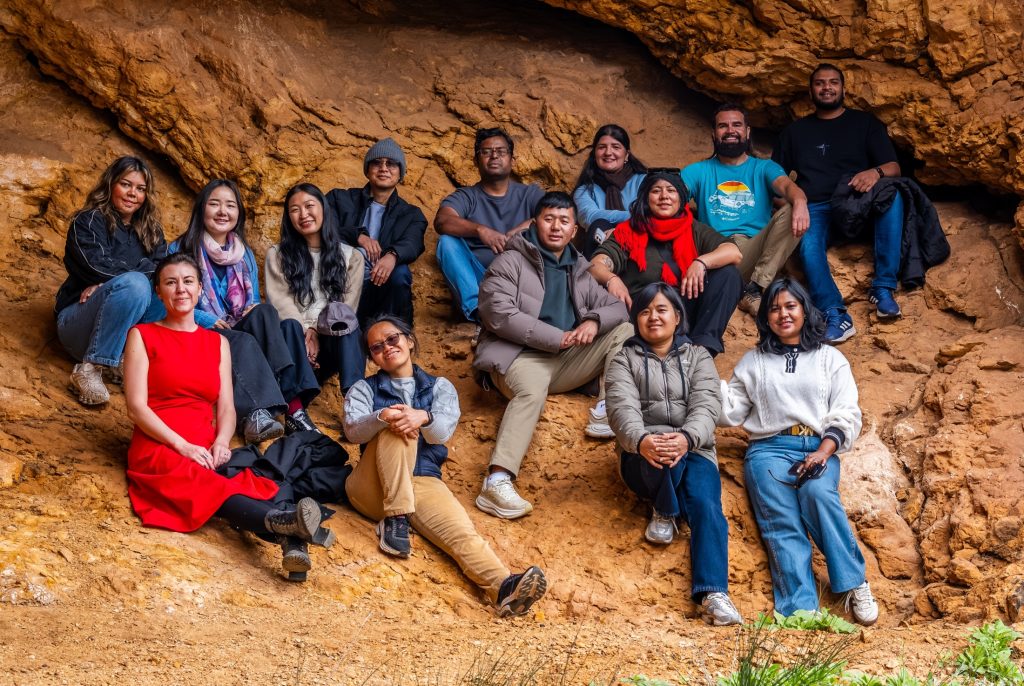
Suvd-Erdene and Oyuntugs (third and fourth from left) with other scholars, guide John Solar (back row, second from right), his niece Bridgette Treloar-Walker (left) and Australia Awards – South Asia & Mongolia Indigenous Engagement Adviser Alice Tamang (second from left).

During their time on Adnyamathanha Country, John shared Yura Muda (creation stories), spoke in language, and highlighted plants that Adnyamathanha people used for medicine, ceremony and food. Activities included hiking to Akurra Adnya (Arkaroo Rock), one of the most culturally significant and sacred Adnyamathanha rock art sites; making fire; cooking damper; and looking for native animals, including Andu (yellow-footed rock-wallabies) and witchetty grubs—the English name of which derives from the Adnyamathanha word witjuri.

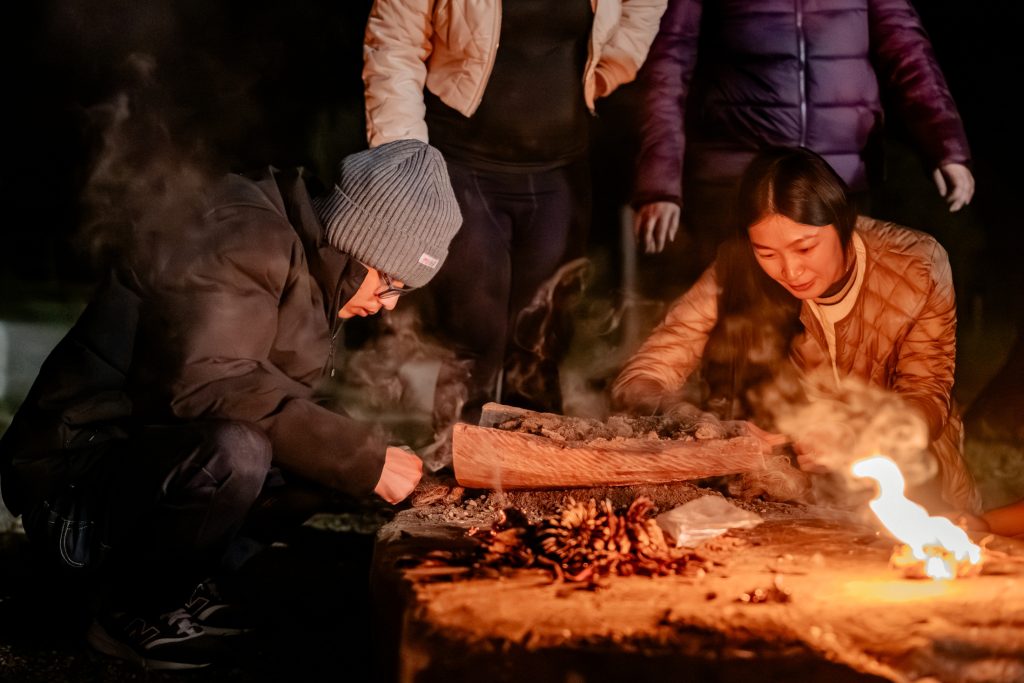
Oyuntugs (right) tries her hand at making fire alongside Bangladeshi scholar Aki Mittra Chakma (left).

Oyuntugs, who is studying a Master of Environmental Management, valued learning how Adnyamathanha practices and connection to Country contribute to environmental stewardship in the national park. “A key reflection from this experience is that effective environmental management requires both scientific knowledge and traditional ecological knowledge,” she says. “Scientific research provides important evidence, but local and Indigenous knowledge can offer valuable insights that may not be captured by data alone. As I continue my studies and develop my career in environmental management, I hope to support approaches that respect and integrate both knowledge systems. The trip strengthened my understanding that caring for the environment is not only a technical responsibility but also a cultural and social one.”

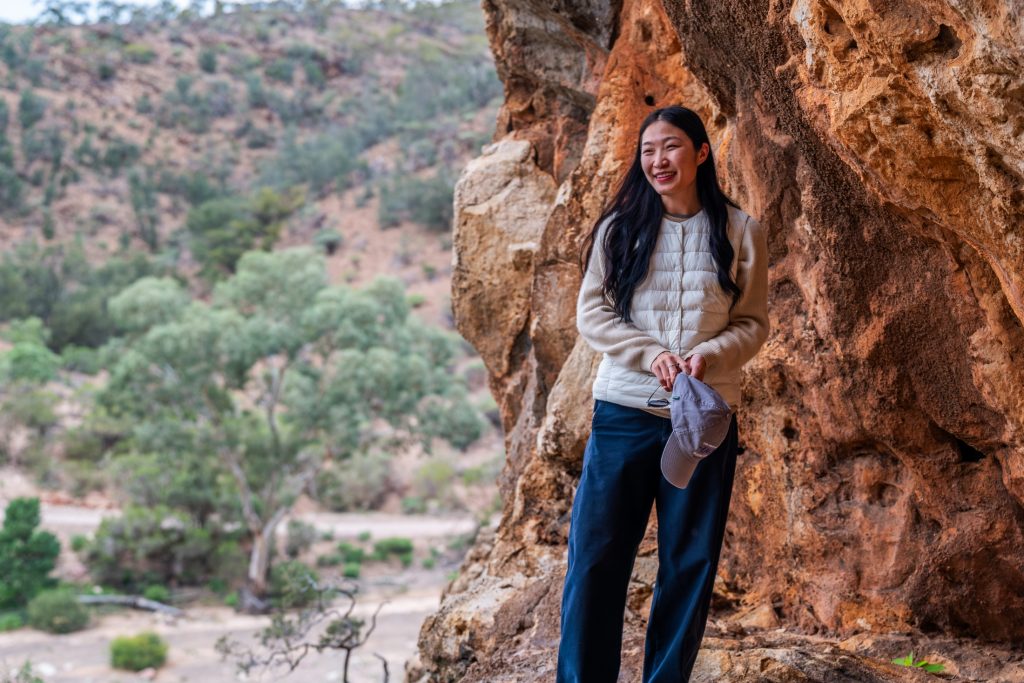
Oyuntugs in a cave in the Ikara-Flinders Ranges National Park.

For Suvd-Erdene, the experience was a reminder of her own cultural background. “As a member of the Zackhchin ethnic group in western Mongolia, I was raised in a nomadic family where stories, traditions and values were passed down orally across generations,” she says. “Listening to John share creation stories brought back memories of my grandmother, who frequently recounted stories about our family, homeland and traditions. I recognised that, despite the geographical distance between our cultures, both communities preserve knowledge through storytelling, respect for elders and connection to land.”

Suvd-Erdene pictured at Ikara-Flinders Ranges National Park.

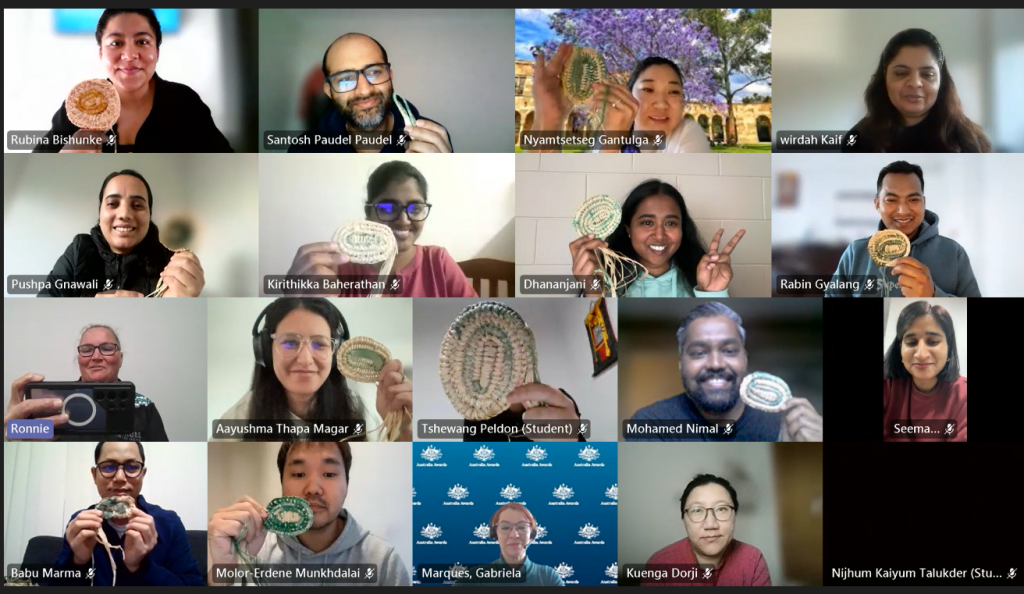
Australia Awards scholars from Mongolia also participated in two weaving workshops in June facilitated by Ronnie Jordan, a Pitta Pitta Wangkamahdla woman, weaver, painter and cultural facilitator. Scholars received weaving materials before the workshops, enabling them to follow Ronnie’s demonstrations and practise the techniques in real time.

Ronnie guided scholars through the cultural significance of weaving, explaining that woven pieces can reflect stories, relationships and connection to Country. She also spoke about the importance of cultural protocols, including the difference between a Welcome to Country and an Acknowledgement of Country.

The workshops introduced scholars to the preparation and use of natural fibres, including how materials are collected, dried and softened before weaving. Ronnie explained how Aboriginal knowledge of plants, seasons and environmental signs informs cultural practices and supports sustainable use of natural resources.

Scholars, including Molor-Erdene Munkhdalai and Nyamtsetseg Gantulga from Mongolia, show their progress during the weaving workshop.

Participants were then guided through simple weaving techniques, including looping, coiling and stitching. The sessions offered a practical and respectful way for scholars to engage with First Nations cultures, while also experiencing the calming and mindful qualities of weaving.

For Mongolian scholar Biligt Davaasuren, it was an enlightening experience. “Working with my hands and slowing down to follow each step was unexpectedly calming. I came away with a deeper respect for the patience and skill that Aboriginal weaving asks of you,” he says.

Also in June, scholars had the opportunity to participate in an Aboriginal Cultural Connection Workshop. The two-hour session, which was hosted by the North & West Melbourne Neighbourhood Centre in collaboration with Yarn Strong Sista, offered the scholars the chance to learn about Aboriginal culture through storytelling, conversation and creative activities in a welcoming community environment.

The workshop concluded with a hands-on ochre-inspired art activity guided by artist Annette Sax, a proud Taungurung woman from the Eastern Kulin Nation. Annette encouraged the scholars to be creative with natural materials while sharing their own cultural identity stories.

Collectively, these experiences gave the scholars practical and reflective ways to engage with First Nations Australians and learn about their cultures and knowledge systems. As NAIDOC Week approaches, their reflections highlight how cultural learning can deepen respect and create connections across countries and communities.


On 25 March 2026, the Alumni Disability Advisory Group hosted a powerful online panel discussion following International Women’s Day titled ‘Untold Stories: Women with Disabilities on Policy Change – What Works and What Needs to Change’. Alumni Supun Jayawardena from Sri Lanka and Tara Devi Giri from Bhutan moderated the discussion between two panellists: Duptho Zangmo from Bhutan and Dr Samitha Samanmali from Sri Lanka.

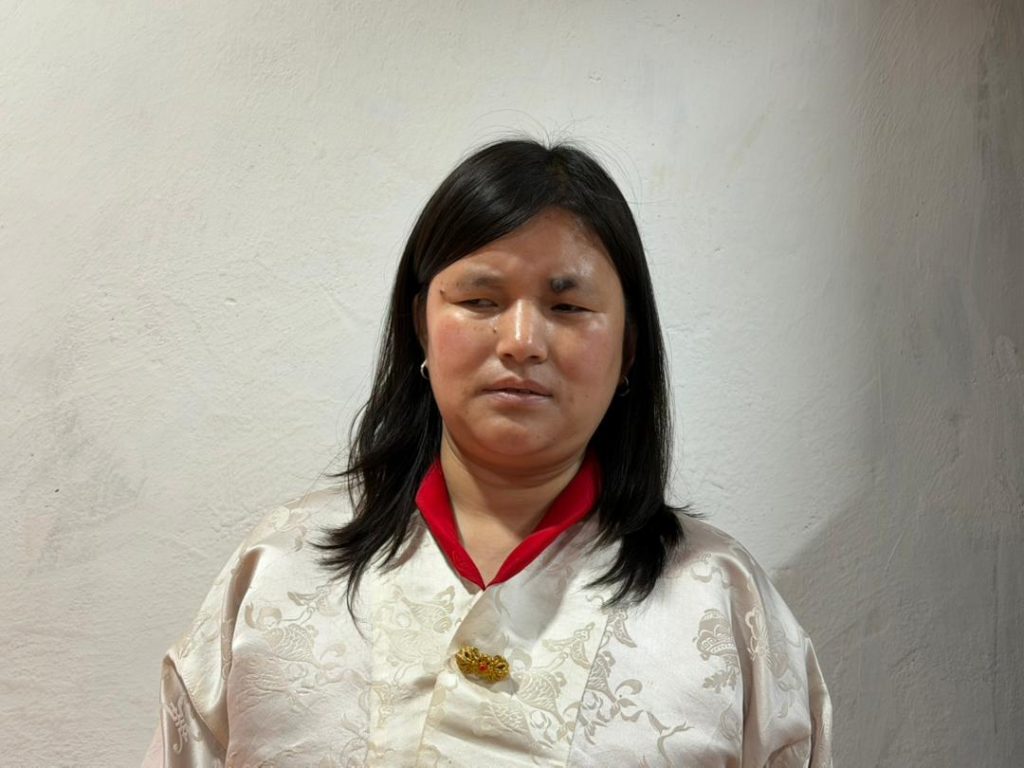
Ms Zangmo is a Lecturer at the Royal Institute of Performing Arts in Thimphu, where she teaches English and supports the preservation of Bhutan’s rich performing arts traditions. Born blind, her lived experience has shaped her lifelong advocacy for inclusive education and equal opportunities.

Panellist Ms Zangmo from Bhutan.

Panellist Ms Zangmo from Bhutan.

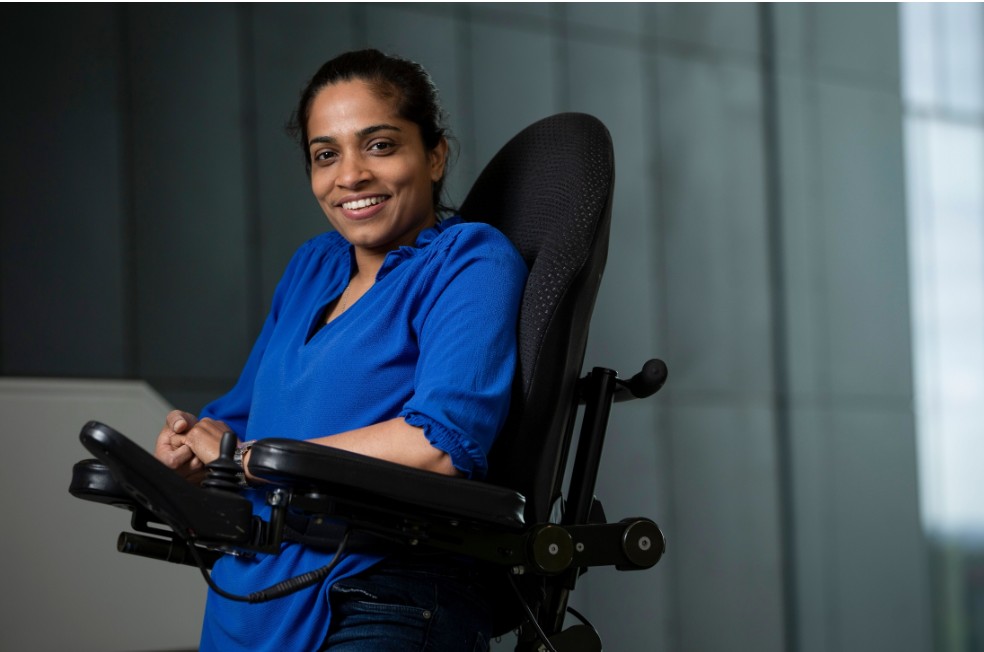
Dr Samanmali is an Australia Awards alumna and former member of the Australia Awards Alumni Disability Advisory Group (in 2021–2023). She is a medical doctor with extensive experience in public health, rehabilitation and disability inclusion. She is currently undertaking a PhD at the University of Queensland, where she recently received the Global Change Scholarship.

Panellist Dr Samanmali from Sri Lanka.

Panellist Dr Samanmali from Sri Lanka.

The two panellists’ discussion provided a vital platform for women with disability to share lived experiences, examine how policies shape everyday realities and critically reflect on where implementation continues to fall short.

Opening the event, Supun highlighted that women with disability are often described as a “marginalised group within a marginalised group”, noting that disability policies—while well-intentioned—can inadvertently exclude when they are not informed by lived realities. Tara, who is also a disability rights advocate, framed the discussion by emphasising the importance of moving beyond policy language to ask harder questions: Who benefits? Who is left behind? And how do policies translate into lived inclusion—or continued barriers—on the ground?

Moderator Supun (middle) participating at the 2025 Regional Alumni Workshop in Colombo, alongside fellow moderator Tara Devi.

Moderator Supun (middle) participating in the 2025 Regional Alumni Workshop in Colombo, alongside fellow moderator Tara Devi (right).

Ms Zangmo shared her journey as a visually impaired lecturer and a board member of the Disabled People’s Organization of Bhutan. While acknowledging Bhutan’s early investments in education for people with visual impairments, she spoke candidly about systemic gaps that persist despite policy progress, particularly for women and girls with disability.

“Policies may look strong on paper,” she said, “but the real challenge is meaningful implementation—especially in education, employment and leadership.”

She highlighted issues such as limited access to assistive technology and accessible textbooks during secondary education, attitudinal barriers that underestimate the leadership potential of women with disability, and barriers to justice such as difficulty reporting gender-based violence, particularly for women with communication disabilities. Other inequalities include career advancement and gaps in employment quotas. Ms Zangmo stressed that women with disability often fall between gender policies and disability policies, and called for stronger intersectional approaches and greater representation of women with disability in decision-making spaces.

The second panellist, Dr Samanmali, shared deeply personal reflections on navigating healthcare systems as a wheelchair user, first as a medical student, then as a doctor in the Sri Lankan medical system. She outlined persistent challenges faced by women with disability in healthcare systems, including physical barriers such as inaccessible buildings, venues and examination tables; inaccessible transport limiting access to medical services; communication barriers for people with hearing or visual impairments; and limited awareness of disability-related secondary health conditions among primary healthcare providers. She also mentioned the stigma surrounding sexual and reproductive health, driven by assumptions that women with disability are not in need of such services.

Dr Samanmali pointed out that while Sri Lanka has disability regulations, weak enforcement continues to undermine access and equity.

“Policy without practice serves no one,” she said.

A Q&A with alumni after the panel reinforced that change does not rest with governments alone. Institutions, organisations and individuals all play a role—starting with basic accessibility checklists, respectful attitudes and willingness to learn. Both panellists stressed the urgent need to shift public attitudes from a charity-based model of disability to a rights-based, inclusive development approach.

A key highlight from the post-panel discussion was the identification of education as the most powerful driver of long-term change. From inclusive school curricula that normalise disability, to professional training that equips healthcare providers, educators and policymakers with the skills to deliver inclusive services, knowledge leads to greater understanding. By centring the voices of women with disability, this discussion reaffirmed a simple but transformative truth: policies work best when those most affected are heard, valued and empowered to lead.

The Alumni Disability Advisory Group supports disability-inclusive practice across Australia Awards – South Asia & Mongolia. It works as a consultancy group to the Program, bringing together nominated alumni from each country to develop innovative solutions that help remove barriers to participation in the Program.

Main photo: Moderators Supun (front row, left) and Tara (back row, right) with former and current members of the ADAG at the 2025 Regional Alumni Workshop. 

< Back to previous page

Alumni embrace Australian leadership principles on gender equality through Champions of Change

Bangladesh Bhutan Maldives Mongolia Nepal Pakistan Scholars Platform Sri Lanka

More than 40 Australia Awards alumni from across South Asia and Mongolia came together on 16 March 2026 for a dynamic regional conversation on gender-equitable leadership and structural change, learning from the experience of the Pakistan chapter of the Champions of Change Coalition. The Regional Women in Leadership Network and Male Allies for Gender Equality (two Australia Awards alumni networks) hosted the session online, bringing together alumni working across policy, development, education and the private sector.

The Champions of Change Coalition, founded in Australia in 2010 by former Sex Discrimination Commissioner Elizabeth Broderick, brings together CEOs, board directors and senior leaders to advance gender equality and increase women’s representation in leadership. The coalition focuses on addressing structural barriers, fostering inclusive workplace cultures and embedding accountability for measurable progress.

The alumni networks invited Fiza Farhan, Group Convenor of Champions of Change Pakistan, as the keynote speaker. Fiza works closely with leading CEOs across Pakistan to promote gender equality and women’s leadership within organisations and communities. She is also CEO of ORA Global Development Advisors and a globally recognised expert on women’s economic empowerment, climate change, inclusive growth, public–private partnerships and sustainable development.

Nepali alum Dibakar Bhujel (left) moderating the session.

Nepali alum Dibakar Bhujel (left) moderating the session featuring Fiza Farhan (centre).

The session was moderated by Dibakar Bhujel, Australia Awards alum from Nepal and Under Secretary at the Government of Nepal’s Ministry of Labour, Employment and Social Security. Dibakar, who is also a member of the Male Allies for Gender Equality alumni network, highlighted the importance of leadership accountability, coalition-building and male allyship in driving meaningful change.

In her remarks, Fiza Farhan shared reflections from over two decades of work in women’s economic empowerment and inclusive development. Fiza described how her experiences—from her early career as the only female CEO in Pakistan’s renewable energy sector to her role on the United Nations Secretary-General’s High-Level Panel on Women’s Economic Empowerment—shaped her leadership philosophy. She underscored women’s economic empowerment as a crucial foundation for broader social, political and legal equality, noting that economic inclusion unlocks progress across multiple dimensions of development.

Fiza provided an in-depth overview of the Champions of Change Coalition, highlighting its Australian origins and its focus on engaging senior leaders, particularly men, to treat gender equality as a business imperative, not a corporate social responsibility initiative. She explained how the Pakistan chapter, launched with support from Australia’s Department of Foreign Affairs and Trade, became the first international adaptation of the model. Despite initial scepticism, the Pakistan coalition has grown into the largest Champions of Change group globally, comprising 35 senior private-sector leaders across industries such as banking, energy, textiles, agriculture, logistics and consumer goods.

She illustrated how gender-inclusive leadership delivers measurable results, sharing examples such as PepsiCo Pakistan’s all-women distribution centre in Sialkot, which became the company’s highest-performing distribution hub nationally, as well as initiatives introducing female technicians, riders and agricultural workers that outperformed traditional benchmarks. She also highlighted the coalition’s strong emphasis on data, transparency and accountability, with annual reporting against shared gender indicators aligned to global frameworks and endorsed by the United Nations Secretary-General’s Office.

The interactive Q&A session highlighted the depth and diversity of alumni roles across the region. Alumni raised questions on strengthening women’s leadership through policy, closing the gap between strong policy frameworks and weak implementation, and adapting the Champions of Change model to other South Asian contexts. Reflecting on the seminar, Pakistani alumna Bushra Rasheed reflected, “Inclusive societies emerge from inclusive leadership and I trust in the efforts made by Champions of Change Coalition Pakistan. This Pak–Aus partnership in Pakistan sees a landscape of empowerment, trust and innovation complemented by both genders within their definite boundaries and maximum capacities.”

The Regional Women in Leadership Network (WiLN) and the Male Allies for Gender Equality alumni network are complementary, alumni-led initiatives working collectively to advance gender equality across the region. The Regional WiLN connects, celebrates, and strengthens women leaders by fostering equity and inclusion through knowledge sharing, leadership development and advocacy. The Male Allies network engages male alumni as active partners in challenging harmful norms, promoting inclusive environments and supporting systemic change. Together, through learning, reflection, collaboration and action, these networks contribute to building more just, equitable and inclusive societies.

< Back to previous page

Regional training strengthens alumni skills in visual storytelling

Bangladesh Bhutan Maldives Mongolia Nepal Pakistan Scholars Platform Sri Lanka

In early March 2026, Australia Awards – South Asia & Mongolia delivered a regional ‘Visual Storytelling’ workshop designed to equip alumni with the skills to communicate their impact through compelling images. The two-part workshop, which was held online on 4 and 11 March, brought together more than 60 alumni from across the region, complementing an earlier workshop series on written storytelling held in January and February.

The workshops in March were jointly facilitated by Neil Bennett, award-winning photographer and former Chief Visual Storyteller at NewsCorp, and Tim Winkler, an accomplished strategist, journalist and marketing expert. Together, they guided alumni through the fundamentals of visual communication and practical techniques for capturing powerful images using everyday devices such as smartphones.

Facilitators of the workshop (Left to right): Neil Bennett, Tim Winkler

Facilitators of the workshop (Left to right): Neil Bennett, Tim Winkler

This practical learning experience was designed to build the confidence and capability of alumni to visually tell the story of their Australia Awards journey and its impact.

Session one introduced participants to the foundations of visual storytelling—an increasingly important medium for communicating development outcomes to diverse audiences. This session covered identifying and understanding audiences, photography fundamentals, strategic use of images to communicate impact, planning a visual story, crafting effective captions, and using a smartphone to capture professional-quality images. The Australia Awards team also provided guidance on consent, ethical photography practices and Australia Awards photographic guidelines.

At the end of the first session, alumni were invited to complete a practical project by capturing one to three images that conveyed the story of their personal or professional development through Australia Awards. Participants submitted their photos within five days for the trainers to review ahead of the second session.

At the second session, the trainers showcased select images submitted by alumni. Around 10 photos were explored in depth during the live session, creating a collaborative and reflective space. Alumni shared the stories behind their images—why they captured the moment, the message they intended to communicate and the outcomes represented. The trainers provided expert feedback on composition, lighting, framing and the strategic use of imagery for impactful storytelling.

The workshop resonated strongly with alumni seeking to deepen their professional communication practices. Indian alumna Dr Kavitha Kasala shared that the session “highlighted how visuals can translate complex stories into powerful messages that truly connect with people”, noting that she learnt how effective imagery can be created “using a simple iPhone”.

Reflecting on the overall experience of the workshop, Pakistani alumnus Dr Imran Aziz Tunio said, “It was an insightful experience that deepened my understanding of storytelling. The workshop not only strengthened my knowledge but also inspired me to share these learnings within my community.”

Both the visual storytelling workshop and the written storytelling initiative delivered earlier in 2026 will help alumni prepare to take part in an upcoming storytelling competition in commemoration of the 75th anniversary of the Colombo Plan. The Colombo Plan initiated the Australian Government’s support for students from South and South-East Asia to attend Australian universities and technical colleges—support that is continued today by Australia’s Department of Foreign Affairs and Trade. With strengthened capacities in both written and visual storytelling, alumni are better positioned to showcase transformative outcomes from their Australia Awards journeys.

Both the visual storytelling workshop and the written storytelling initiative delivered earlier in 2026 supported alumni to prepare entries for the Australia Awards – South Asia & Mongolia Alumni Impact Competition, marking the 75th anniversary of the Colombo Plan. The Colombo Plan initiated the Australian Government’s support for students from South and South-East Asia to attend Australian universities and technical colleges—support that is continued today by Australia’s Department of Foreign Affairs and Trade. With strengthened capacities in both written and visual storytelling, alumni are better positioned to showcase transformative outcomes from their Australia Awards journeys.

Further details on the Alumni Impact Competition, including how to enter, are available here.