

Alumnus transforming healthcare in Mongolia through evidence, leadership and inclusion
Posted: 26 October 2026
This year marks the 75th anniversary of Australian Government scholarships for students from the Asia-Pacific region, with the first scholarship recipients travelling to Australia under the Colombo Plan in 1951. To commemorate this significant milestone, Australia Awards – South Asia & Mongolia launched the Alumni Impact Storytelling Competition to celebrate the outstanding contributions alumni have made to the development of their countries.
The competition invited alumni to showcase the impact they have created and reflect on how their Australia Awards experience has helped shape their personal and professional journeys.
Mongolian alumna Dr Enkhtuya Dagvadorj was recognised in the commended category of the written storytelling competition. Judges noted the strong link between her Australia Awards experience and her contributions to Mongolia’s health sector, including strengthening professional development systems for healthcare workers, supporting evidence-based clinical decision-making, and advancing opportunities for people with disability.
Dr Dagvadorj completed a Master of International Public Health at the University of Queensland in 2011. Her story highlights how the knowledge and leadership skills gained in Australia have translated into lasting development impact in Mongolia.
In a rural hospital in western Mongolia, a young doctor once told me, “Before, we relied mostly on experience. Now, we make decisions based on evidence—and it has changed how we treat our patients.” That moment captured the true impact of my journey as an Australia Awards scholar.
When I began my Master of International Public Health at the University of Queensland, I was committed to contributing to Mongolia’s health sector. However, I did not yet have a clear understanding of how to create change at a system level. Studying in Australia transformed not only my knowledge, but also my way of thinking. I learnt that effective decisions must be evidence-based, leadership is about empowering others, and sustainable systems are built through structured processes and continuous learning. Communication, I realised, is a powerful tool to influence behavior and drive change. These lessons became the foundation of my professional journey.
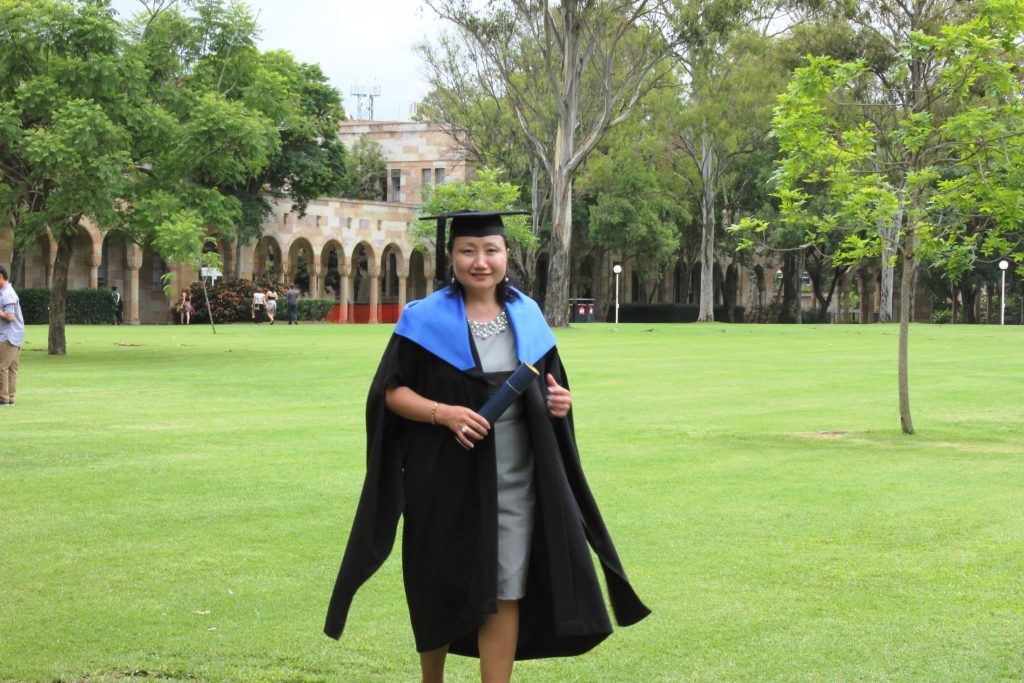
Dr Dagvadorj photographed at her graduation ceremony at the University of Queensland, Brisbane, Australia, in 2011.
Upon returning to Mongolia, I joined a pioneering initiative to develop the country’s first internationally accredited hospital that meets global standards. From the early stages, I led staff training and development across the organisation. I quickly recognised that one-time training was not enough to achieve lasting change. Drawing on my experience in Australia, I introduced a system of continuous professional development, ensuring that healthcare workers could continuously build their skills and apply new knowledge in practice. This approach helped establish a culture of learning within the organisation and laid the groundwork for broader impact.
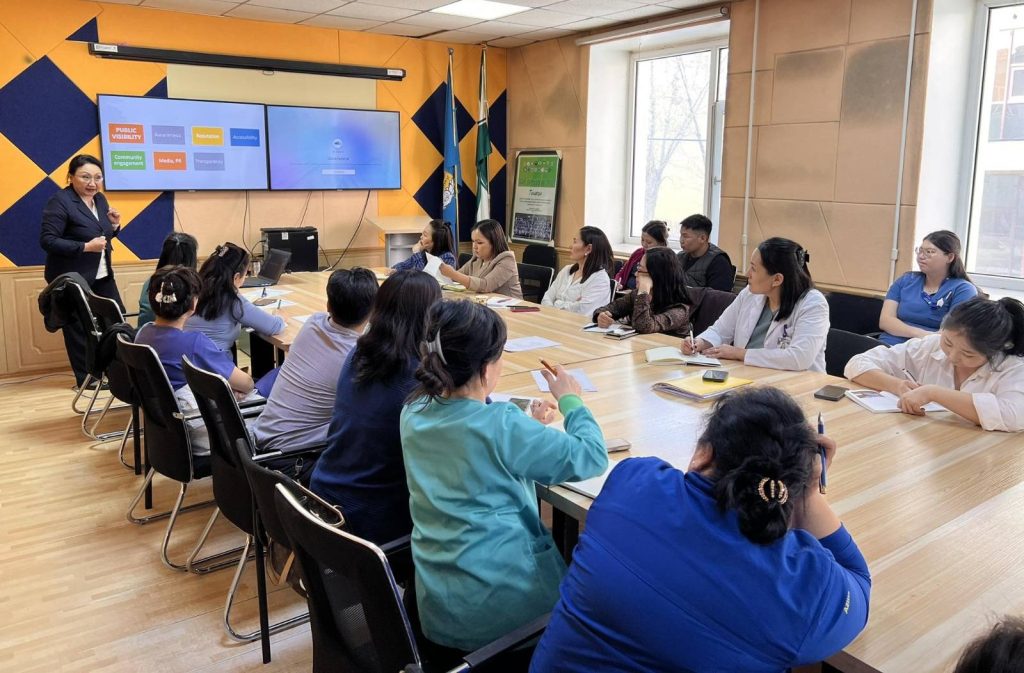
Dr Dagvadorj (left, standing) conducting a consultation session for district hospital staff as part of the project funded by the Asian Development Bank in Ulaanbaatar, Mongolia.
From 2019 to 2025, I worked as a national consultant alongside international experts under projects supported by the Asian Development Bank and Mongolia’s Ministry of Health. These projects focused on strengthening hospital management and capacity across multiple regions, including Uvs, Khovd and major districts of Ulaanbaatar. Through this work, I translated global knowledge into practical tools tailored to Mongolia’s context. My contributions included establishing continuous learning systems for healthcare professionals, developing standardised job descriptions at the sector level, and strengthening leadership and management capacity in both rural and urban hospitals.
One of the most significant achievements was leading the introduction of Wolters Kluwer’s UpToDate platform through an organisational subscription at the national level. This marked the first time that Mongolia’s healthcare system widely adopted a global clinical decision support tool, enabling healthcare professionals to access up-to-date, evidence-based medical information. As a result, doctors began to make more informed clinical decisions, directly contributing to improved quality of care for patients.
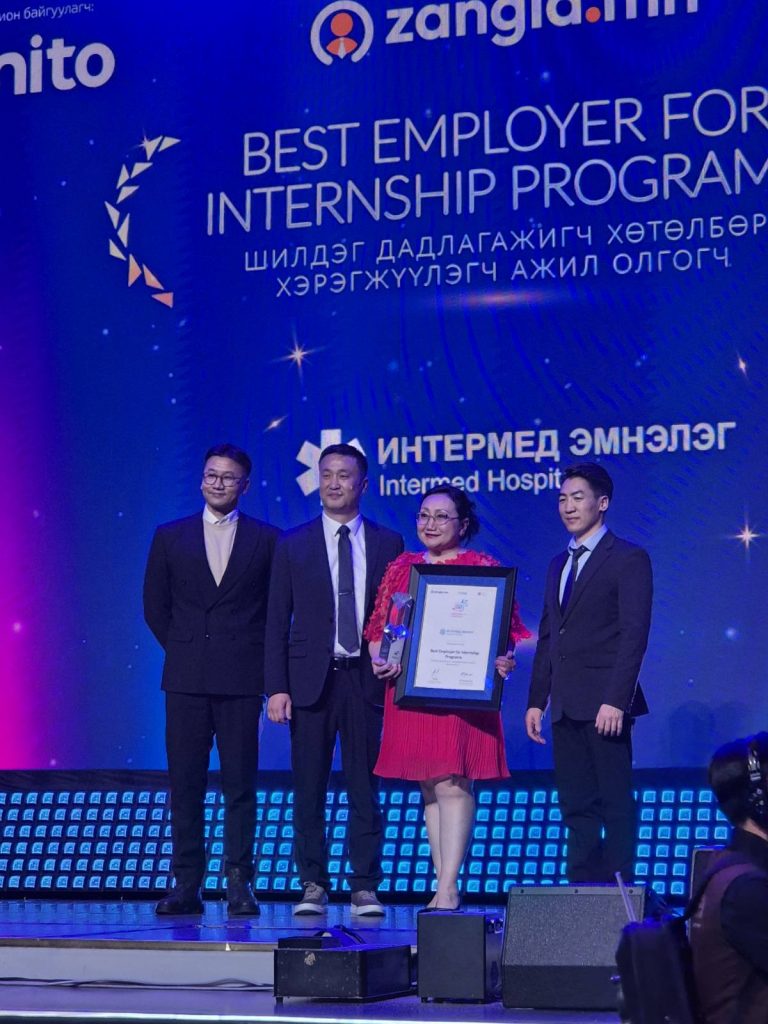
Dr Dagvadorj (second from right) and her colleagues receiving the Best Employer for Internship Programs award at the Good Workplace Awards ceremony in Ulaanbaatar, Mongolia.
Beyond institutional impact, my experience as an Australia Awards alumna also shaped my commitment to inclusive development. Through the Australia Awards Women in Leadership Network, I initiated a project to support people with disability. This initiative included organising annual preventive health screenings, providing capacity-building opportunities and supporting pathways to employment. As a result, three participants successfully secured employment, gaining both economic independence and confidence. I continue to work with these young people through a local non-governmental organisation, ensuring that the impact of this initiative is sustained over time. This experience reinforced my belief that development must be inclusive and that leadership is about creating opportunities for those who are often left behind.