

Scholars and alumni learn about importance of Indigenous knowledge in water conservation
Posted: 10 August 2026
Ahead of International Day of the World’s Indigenous Peoples, Australia Awards – South Asia & Mongolia hosted an interactive online discussion for scholars to explore the intersection of Indigenous knowledge and contemporary science in water management, climate adaptation and sustainability. Professor Phil Duncan, a Gomeroi man from Moree, New South Wales, led the session, which was moderated by Nepali scholar Ganga Gurung. More than 20 alumni and 60 scholars participated in the discussion.
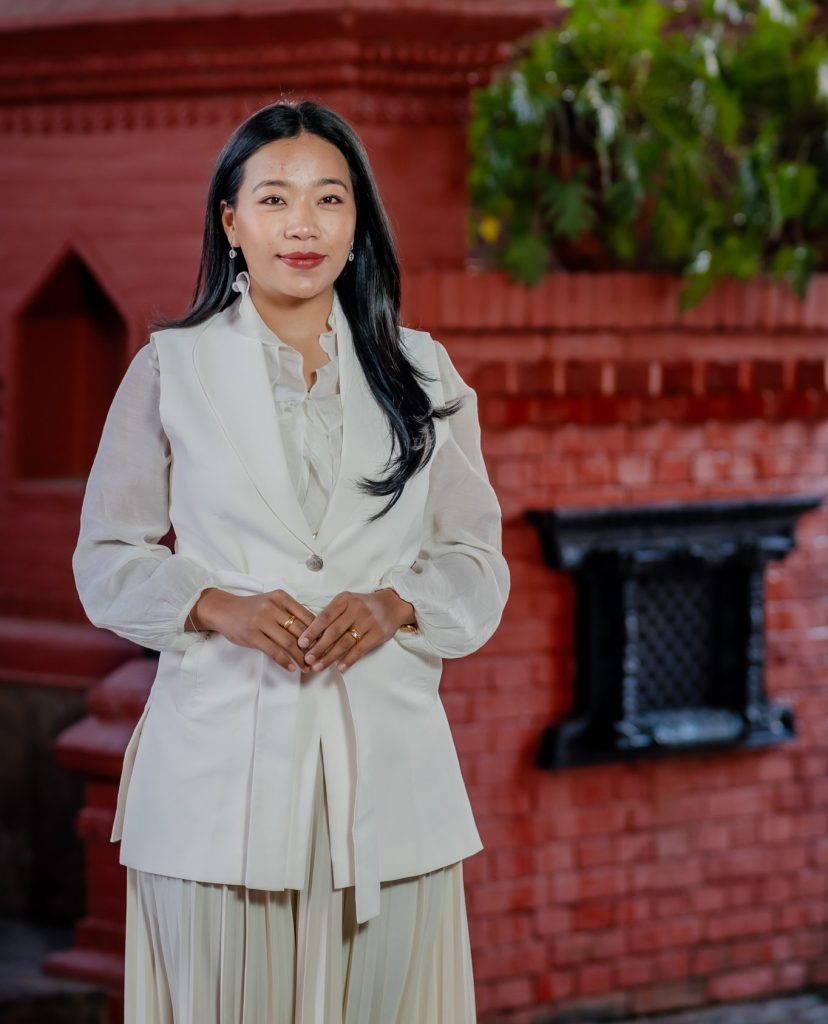
Nepali scholar Ganga Gurung, who moderated the session.
Professor Duncan is one of Australia’s leading Indigenous water and natural resource management experts. With more than 40 years’ experience across Indigenous communities, government and academia, he is widely recognised for his leadership in Indigenous water rights, freshwater management, and the integration of Indigenous knowledge into environmental policy and practice. He is the Galambany Professorial Fellow at the University of Canberra’s Centre for Applied Water Science and has held national leadership roles such as Chair of the Murray–Darling Basin Authority’s Basin Community Committee and board member of the NSW Natural Resources Access Regulator. In 2024, he was named Australian Water Professional of the Year for his outstanding contribution to the water sector and advocacy for First Nations peoples.
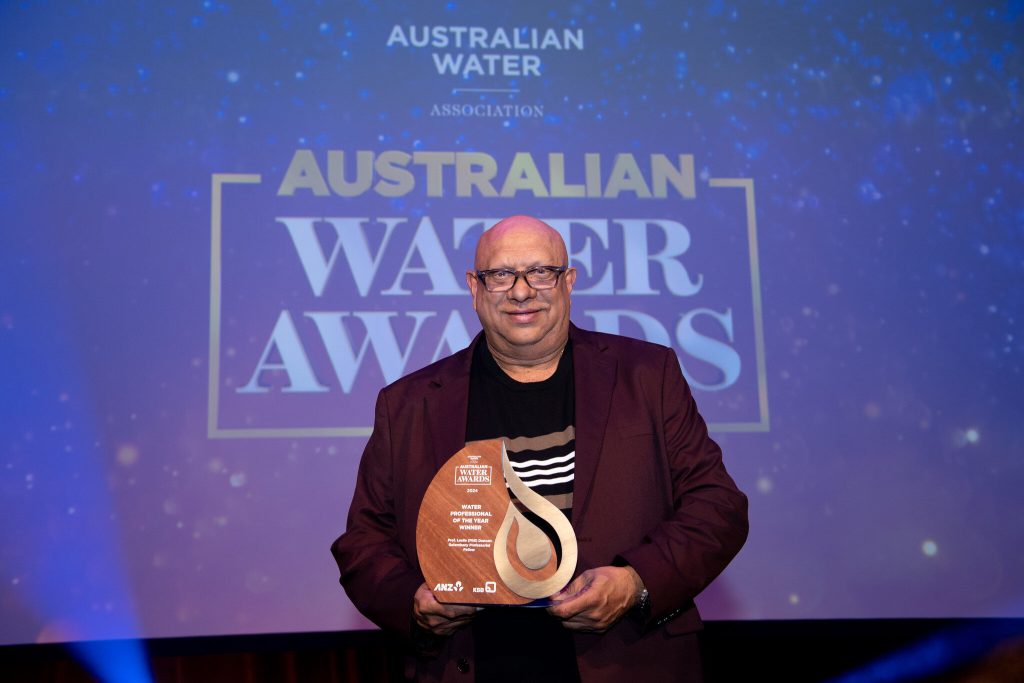
Professor Duncan named 2024 Australian Water Professional of the Year. Photo credits: Australian Water Association
Professor Duncan’s discussion was a deeply moving exploration of how Indigenous knowledge and contemporary science can come together to reshape water management, sustainability and climate adaptation. He opened by greeting participants in his Gomeroi language, reminding everyone that cultural protocols such as Acknowledgement of Country are not symbolic gestures but living traditions of respect and connection.
From the outset, he framed water as central to life itself, to quality of life, to longevity and to cultural identity. He described Indigenous knowledge as the “missing ingredient” in global climate strategies, offering resilience and sustainability when woven together with Western science. His words carried urgency but also hope, calling for a “we, the us” approach where communities act collectively and listen to one another.
The videos Professor Duncan shared from his Country, the Wirdah River, were especially powerful. He spoke of rivers and creeks as the arteries and veins of the land, sustaining both people and ecosystems. Yet he mourned that these lifelines have been diverted, drained and monopolised, leaving Indigenous custodians locked out of their responsibilities.
His message was stark: “When Country is healthy, we are healthy. When Country is hurting, we are hurting. No water, no Country, no life, no people.”
He emphasised that water conservation must be understood as both ecological and cultural. He explained how Indigenous knowledge systems view water as part of a living, breathing entity of Mother Earth, comparing river systems not just to arteries but also to human organs such as lungs and kidneys, where interconnectedness is vital to health. He urged that conservation efforts must restore connectivity, respect cultural responsibilities and ensure sustainability.
Tracing the history of Indigenous water rights in Australia, from the 1967 referendum to today’s policies, Professor Duncan underscored his belief in the principle of “Nothing about us without us”. In his view, Indigenous voices must move beyond advisory roles into genuine decision‑making.
He also shared examples of collaborative projects, including research across 19 countries that revealed common values: healthy people, healthy culture and healthy country all depend on healthy water. His workshops demonstrated that Indigenous and non‑Indigenous scientists often arrive at similar understandings when given the opportunity to converse and compare findings.
During the Q&A, participants asked about practical ways to integrate Indigenous knowledge into policy frameworks and education. Professor Duncan stressed the importance of creating culturally safe environments for dialogue, where Indigenous custodians can speak without fear of dismissal. He highlighted the role of young people in carrying forward water stewardship, urging that they be actively involved in both scientific research and cultural practices.
Questions also touched on balancing economic pressures with ecological sustainability, to which he responded that reciprocity and respect must guide all decisions: “We’ve got to give back [to Country]. We can’t just keep taking.” He emphasised that conservation is not only about protecting ecosystems but also about protecting cultural identity and sovereignty.
Other questions explored how Indigenous knowledge could be scaled globally. Professor Duncan explained that while contexts differ, the principles of respect, cooperation and collective responsibility are universal. He encouraged the attendees to build networks across borders, noting that courageous conversations between communities often reveal shared values and solutions.
In response to the session, Bhutanese scholar Dorji Wangdi said, “Sustainable water management starts by listening to Country and learning from Indigenous knowledge.”

Bhutanese scholar Dorji Wangdi.
Nepali scholar Rabin Gyalang said of the discussion about Australia’s Indigenous people managing water sources, “It reminds me of Nepali Indigenous and local communities, where people treat water sources as sacred places.” Rabin described how such communities respect these places by not discarding rubbish, polluting the water sources or felling any trees in such areas. “They worship [these water sources] occasionally in a special way, thanking them and being grateful towards them for providing water to the people and irrigating the farm fields.”

Nepali scholar Rabin Gyalang.
Pakistani scholar Sadaf Jamil described Professor Duncan’s discussion as having been “beautiful, interesting and marvellous”.
Overall, the session served as both a cautionary message and an invitation. Professor Duncan urged participants to slow down, take everyone on the journey and plan for the future through the eyes of the next generation. His project Winaga‑li Gunimaa Gali—“Listen, hear, think, understand from our sacred Mother Earth and our water”—embodies this philosophy, blending Indigenous principles with practical restoration efforts.
Ultimately, one phrase he used when introducing himself captured the essence of his message on Indigenous communities’ commitment to water conservation: “I am the river, the river is me.”
Feature photo: Professor Duncan (left) and Nepali alum Ganga Gurung (right). Professor Duncan’s photo credited to the Aboriginal Carbon Foundation.