Alumni mark International Day of Persons with Disabilities
Posted: 4 December 2025
Australia Awards alumni from across South Asia & Mongolia recently marked International Day of Persons with Disabilities 2025 with a roundtable discussion about how disability, gender and class intersect across South Asia and Australia.
Hosted by Australia Awards – South Asia & Mongolia’s Alumni Disability Advisory Group and the Equity for All alumni network, the online discussion was titled ‘Not just one identity: Disability, gender, class and beyond’. The session explored how intersecting identities shape the lived experiences of people with disability regionally, influencing their access to education, employment, leadership and community participation. Moderated by Australia Awards alumnus Supun Jayawardena, a senior lawyer and disability rights activist from Sri Lanka, the discussion brought together voices from across South Asia and Australia, offering a rich tapestry of perspectives.
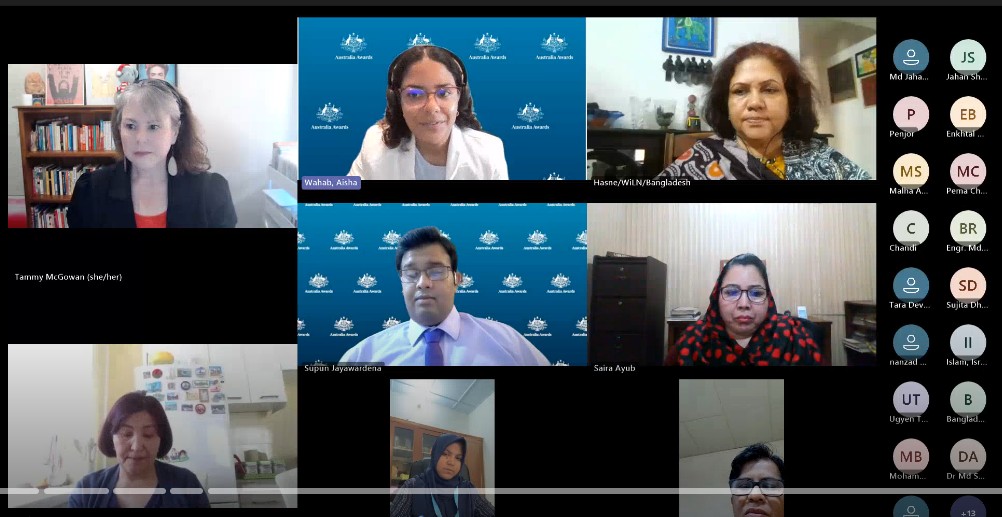
Alumni participating in the online discussion.
The conversation centred on the theme of International Day of Persons with Disabilities for 2025: Fostering disability inclusive societies for advancing social progress. Rather than focusing solely on disability as a standalone identity, the panel delved into how gender, socioeconomic status, ethnicity and geographic location intersect to create complex barriers or opportunities for inclusion.
One prominent contributor to the discussion was Arefeen Ahmed, Australia Awards alumna and founder of Jigsaw Consultants in Bangladesh. Drawing on over a decade of development and humanitarian experience, Arefeen illustrated how disability intersects with gender, poverty, social norms and rural–urban divides. She explained that older women with disability often face systemic exclusion, while children in rural areas confront significant obstacles to accessing education, healthcare and mobility services. Highlighting the limitations of ‘one-size-fits-all’ approaches, she emphasised the need for programs tailored to the nuanced realities of individuals, reinforcing their rights while acknowledging their diverse experiences.

Arefeen participating in a group discussion at the 2025 Regional Alumni Workshop in Colombo, Sri Lanka.
Saira Ayub, Australia Awards alumna from Pakistan, shared the compounded challenges faced by women with disability. Cultural norms, economic status and certain religious practices (such as the requirement for a male guardian) often restrict educational and professional opportunities for women, multiplying the hurdles already faced by wheelchair users and others with disability. Saira highlighted the stark disparities between children from wealthier families, who can access better services, and those from lower-income backgrounds, who are often left behind. She reaffirmed that truly inclusive policies require not only thoughtful design but also reliable data and robust enforcement mechanisms.
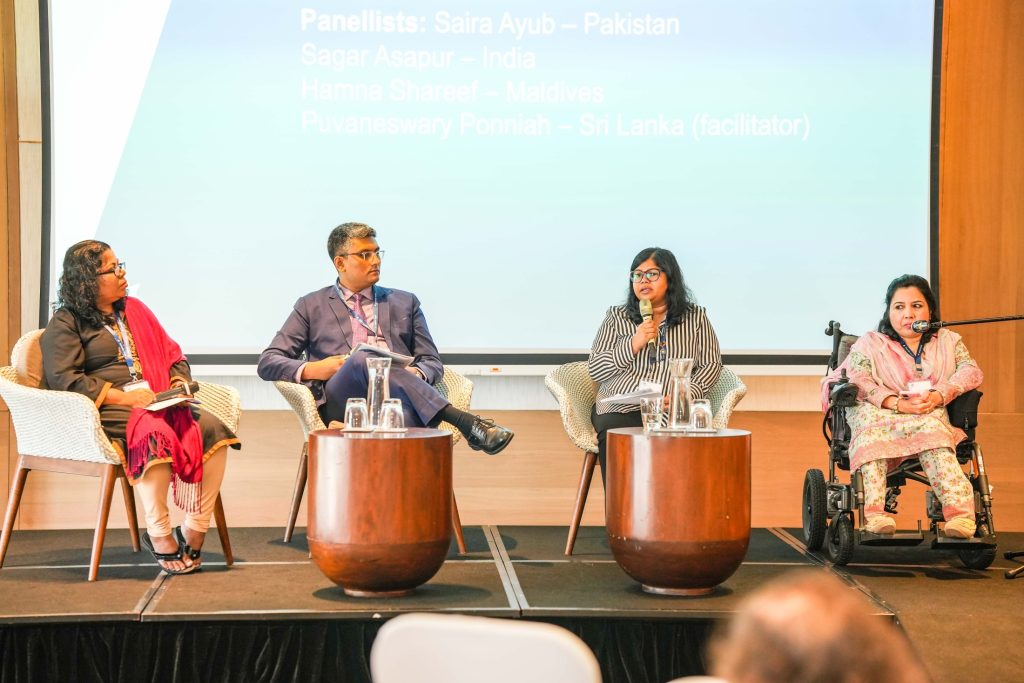
Saira (on right) participating as a panellist at the 2025 Regional Alumni Workshop.
Tammy McGowan, an Australian disability consultant, offered insight into navigating life with multiple hidden and invisible disabilities alongside socio-economic challenges and parenthood. Tammy reflected on how intersectional identities affect access to leadership and employment, noting that people with multiple disabilities encounter unique hurdles, even in systems with supportive infrastructure. She stressed the importance of meaningful representation, advocacy and programs that honour the full complexity of lived experiences, rather than treating disability as a single or uniform category.

Australian disability consultant, Tammy McGowan.
Throughout the discussion, it became clear that family support, social networks and economic background significantly shape opportunities. Policies alone are insufficient when implementation is weak and enforcement mechanisms are lacking. By integrating intersectional perspectives into program design and decision-making, organisations can move beyond tokenistic approaches, creating inclusive pathways that respect the dignity and agency of every individual.
The session concluded by recognising the complex realities of people with disability and the multiple factors shaping their opportunities. Such recognition is not only a matter of policy, but a step towards building more equitable and inclusive communities across South Asia and Mongolia.
The Alumni Disability Advisory Group supports disability-inclusive practice across Australia Awards – South Asia & Mongolia. Bringing together nominated alumni from each country, the group works as a small consultancy team to develop innovative solutions to remove barriers to participating in Australia Awards.
The Equity for All alumni network is a newly launched member-led initiative under Australia Awards – South Asia & Mongolia. It brings together Australia Awards alumni who are passionate about advancing equity for people with disability and marginalised communities across the region. Through shared knowledge, collaboration and innovation, this network creates a powerful platform for inclusive development.