

International Women’s Day speeches inspire Australia Awards scholars
Posted: 18 March 2026
On 6 March, Australia Awards scholars from South Asia and Mongolia tuned in across Australia to view the International Women’s Day Breakfast held in Adelaide. Hosted by Senator Penny Wong, Australia’s Minister for Foreign Affairs, the breakfast is the largest International Women’s Day (IWD) event in Australia.
In her remarks, Senator Wong highlighted how Australia is putting this year’s UN Women Australia IWD theme, Balance the Scales, into action through its development cooperation program, including Australia Awards. “We are deepening partnerships in our region – supporting women’s health, rights, safety, economic participation, and leadership through our International Gender Equality Strategy,” she said. “And we’ve made sure we integrate gender equality into our development program. More than 80 per cent of those investments now incorporate gender equality.”
The keynote address was delivered by Katherine Bennell-Pegg, the first qualified astronaut under the Australian flag and the 2026 Australian of the Year. Katherine reflected on her journey to becoming an astronaut, including the barriers she encountered as a woman working in the male-dominated science, technology, engineering and mathematics (STEM) sector.
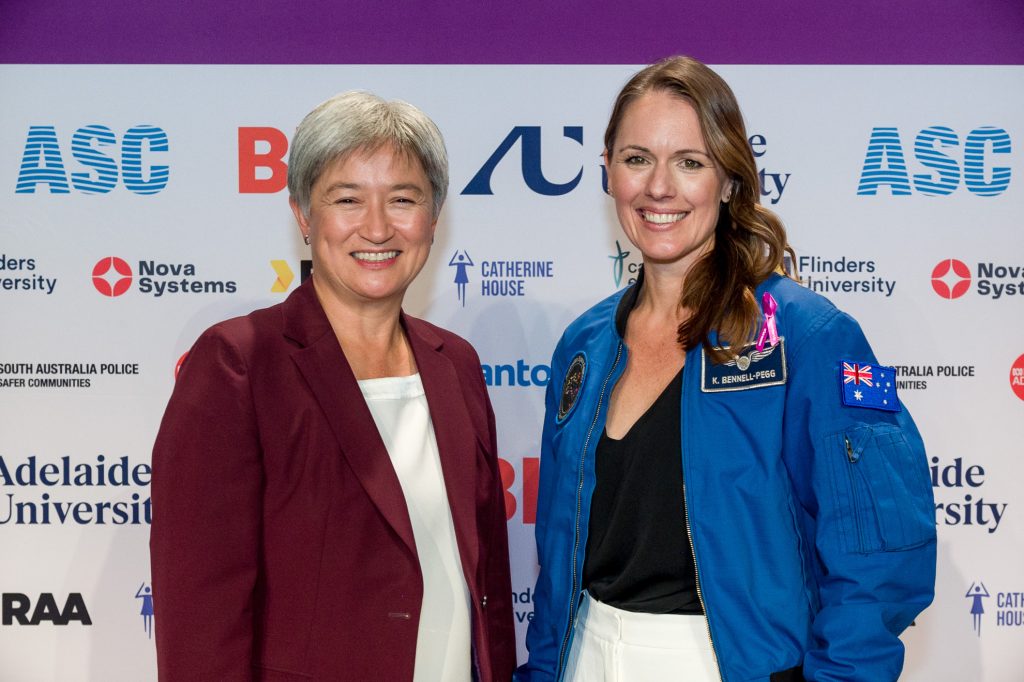
Senator Wong (left) and Katherine Bennell-Pegg (right) pictured at the event (source: Adelaide IWD Breakfast on Facebook)
Katherine’s long-held ambition to become an astronaut culminated in her selection for the European Space Agency’s astronaut program, where she was one of six successful candidates chosen from more than 22,000 applicants.
Speaking about her earlier career as a space engineer, Katherine said, “I was often the only woman in the room. Most of the time I didn’t notice, unless I really noticed. It was at those times that I had to learn to find my own voice…. I had to figure out what I wanted and ask for it.”
This experience in a male-dominated STEM sector resonated strongly with Bhutanese scholar Tshewang Peldon, who was one of only a handful of women among several hundred men studying engineering during her undergraduate degree in India.
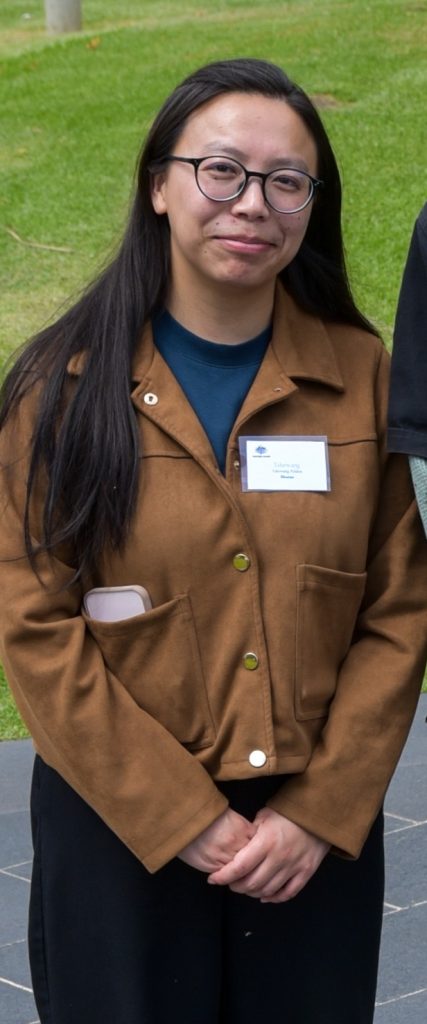
Bhutanese scholar Tshewang Peldon
“I learned that when you are in the minority, you are more visible,” Katherine said. “Whether you like it or not, you are noticed; so perform. Take that as an opportunity to shine.”
For Sri Lankan scholar Sankha Liyanaarachchige, the message resonated with his own lived experience as a person with disability. He reflected on how visibility can become a platform for challenging perceptions and creating change, drawing on his experience of riding a tandem bicycle 650 km from Sri Lanka’s northernmost point to its southern tip over nine days to advocate that disability did not mean inability.
“I personally recognise that for minorities, it is important to use your visibility to society,” Sankha said. “As Katherine explained, we should take advantage of the increased visibility as a great opportunity to represent our identity and talent to society.”
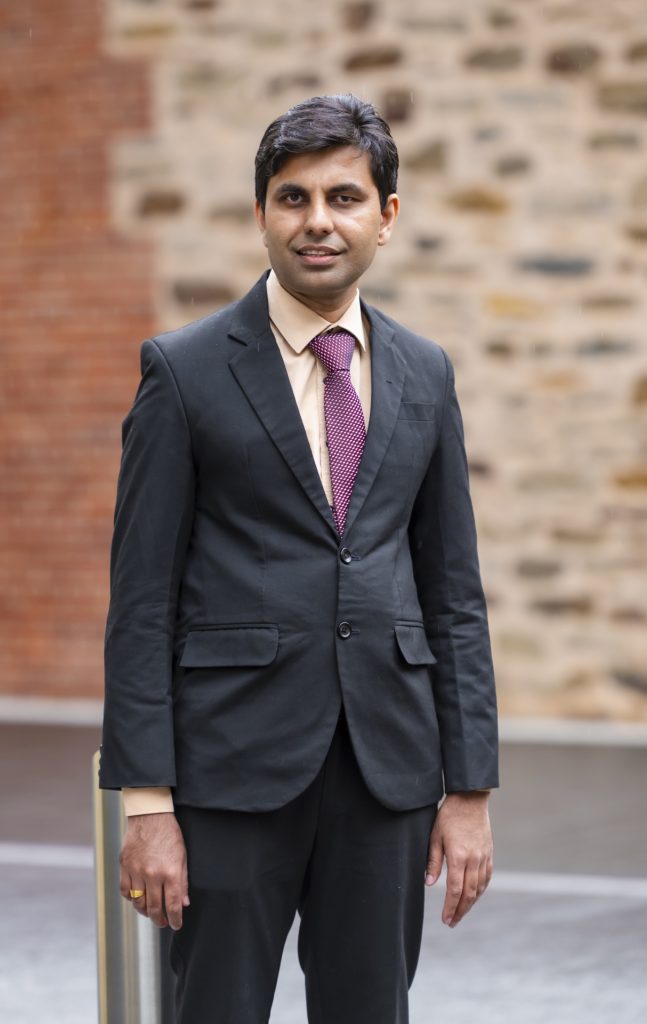
Sri Lankan scholar Sankha Liyanaarachchige
Reflecting on the challenges she faced along the way, Katherine spoke about structural barriers linked to gender, from medical baselines developed primarily around male bodies to research that failed to include enough women to be statistically significant. Her story highlighted how challenging entrenched norms can open doors—not only for individuals, but for those who follow.
Highlighting the importance of representation, Katherine shared the story of a friend whose four-year old daughter had refused to wear an astronaut costume because she believed only boys could become astronauts. After seeing a photo of Katherine in her spacesuit during training, the child readily put on her own costume.
The story resonated with Nepali scholar Rubina Bishunke, reminding her of a moment when a primary school aged girl approached her and said, “One day I want to be like you.”
“Katherine’s story about her friend’s daughter made me rethink the narratives that are created, whose voices we listen to, and how those narratives make people feel,” Rubina said.
“Women from disadvantaged and marginalised groups, like myself, look for role models. Their presence, even in simple ways, can become stepping stones towards resilience, because inclusion is strength and we need to keep looking forward, not backward.”
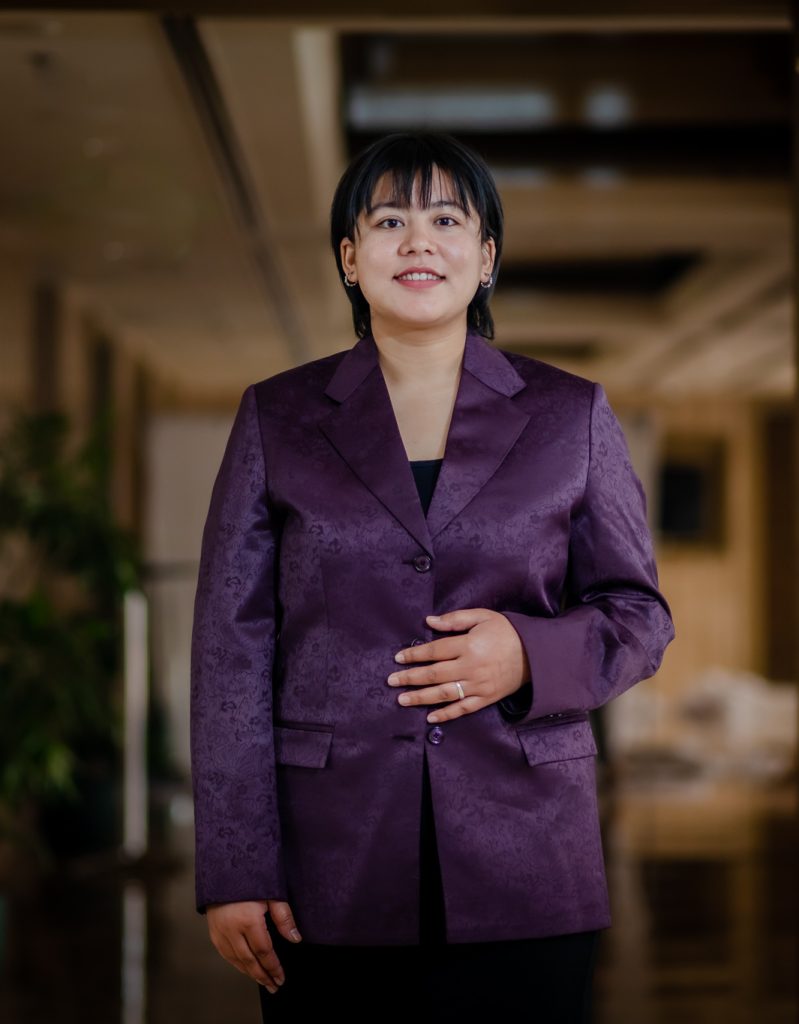
Nepali scholar Rubina Bishunke
The event concluded with remarks from Alexis McKay, Chair of the Adelaide International Women’s Day Breakfast Committee, who referenced research by organisational psychologist Dr Sunita Shah exploring why people comply, even when doing so works against their own interests. “From the time we are young, defiance in girls is often outlawed, in preference for polite, agreeable, grateful traits, but never disruptive”, she said. We often learn to smooth things over, to avoid upsetting anyone. By the time we have entered the workforce, many women have internalised a powerful rule, don’t rock the boat. Research shows that when one person defies an unfair norm, it doesn’t just change the moment, it changes the behaviour and everyone watching; it gives people permission to act on what they know to be right.”
The idea that defiance can sometimes be necessary, rather than unquestioned compliance, was a key takeaway for Nepali scholar Aprajita Jha.
“Defiance with a purpose is definitely something I will keep in mind,” Aprajita said. “Often, we don’t realise the long-term positive impact of challenging the norms set in our communities and what is normally expected of women. I am encouraged to keep meaningfully defying those expectations and instead pursue the causes I believe in.”
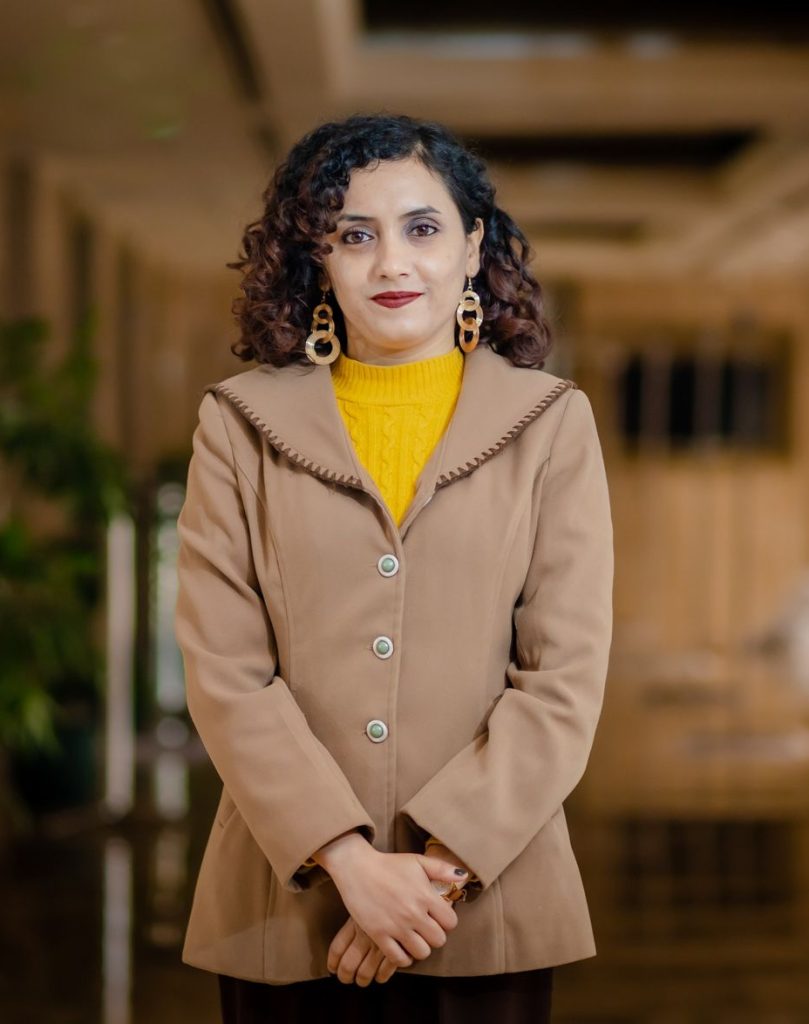
Nepali scholar Aprajita Jha
Reflecting on the broader discussion, Mongolian scholar Myagmarsuren Surenragchaa observed how women’s participation can shift across different levels of society.
“The event offered an interesting perspective on women’s participation. One point that stood out to me was how participation changes at different levels. In my home country, Mongolia, gender equality is relatively strong at the early stages—for example, in school attendance. However, at higher levels, such as decision-making positions, women’s participation decreases.”
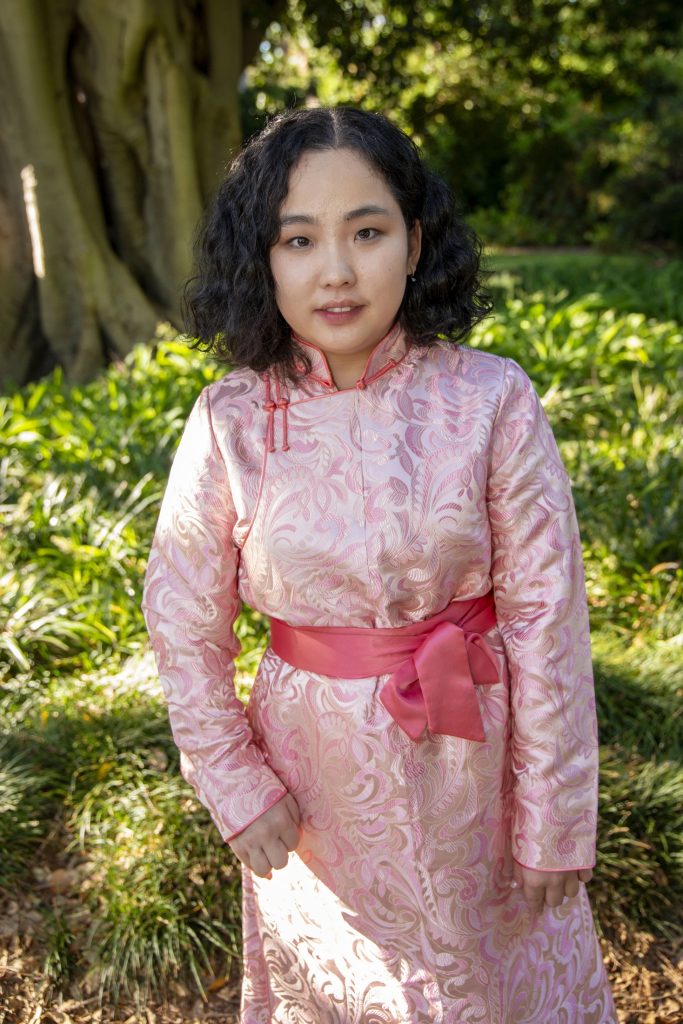
Mongolian scholar Myagmarsuren Surenragchaa
For fellow Mongolian scholar Nyamtsetseg Gantulga, the breakfast prompted a moment of personal reflection.
“Listening to the speakers, especially Katherine Bennell-Pegg, was very powerful. Her story deeply moved me and reminded me why leadership and courage are so important, particularly for women from countries like mine. I had been suffering from a lack of confidence and certainty due to some new challenges, but Katherine’s speech helped me reconnect with my inner motivation and purpose.
“After the event, I spent some quiet time reflecting on the experience and thinking about my own path and responsibilities as a woman and scholar from Mongolia. It was a very valuable moment of self-reflection,” said Nyamtsetseg.
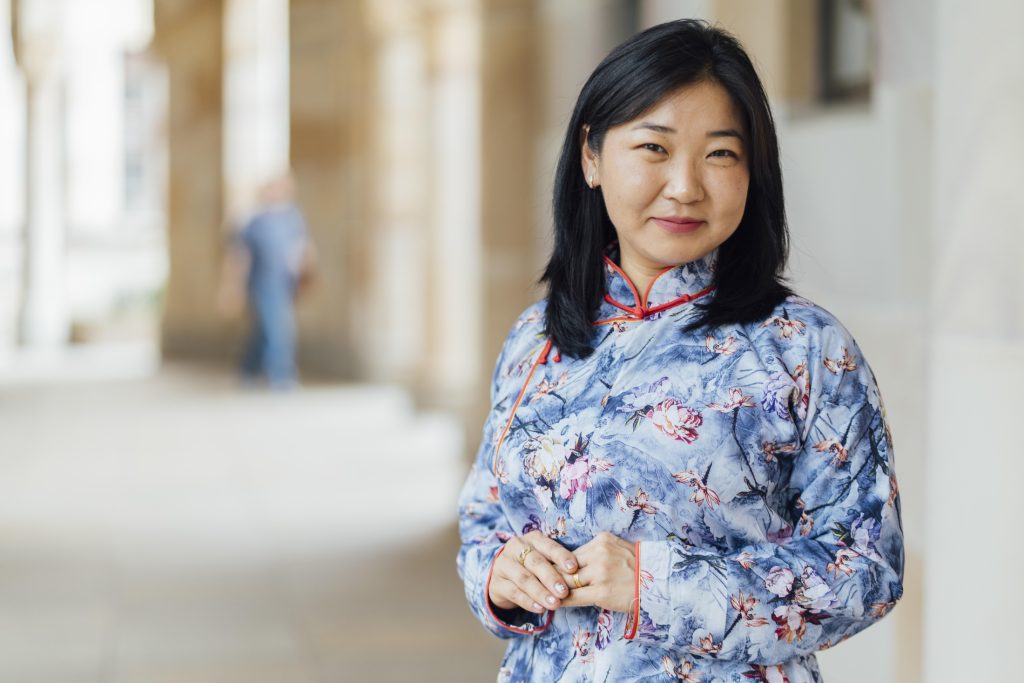
Mongolian scholar Nyamtsetseg Gantulga
The conversations and stories shared throughout the breakfast highlighted how representation and principled leadership can shift systems, not just perceptions. For Australia Awards scholars, the event served as a timely reminder of their potential to influence change in their communities and beyond.
All speeches from the breakfast can be viewed here on YouTube.