Mongolian scholars strengthen sense of purpose and leadership at Scholars Symposiums
Posted: 17 December 2025
From October to November, 23 Mongolian Australia Awards scholars participated in four Scholars Symposiums across Australia. These events, which had the theme of From Learning to Leading: Make an Impact, were designed to help scholars develop the skills they need to be changemakers after completing their Scholarships.
Each symposium began with an address from a representative of the Australian Department of Foreign Affairs and Trade (DFAT). Speaking at the Sydney Symposium, Crispin Conroy, the State Director of DFAT’s New South Wales State Office, said, “The granting of an Australia Award marks a recognition of potential. We are pleased to support activities like this Symposium as one way to help you build on that potential and become changemakers for sustainable development—truly taking the step from learning to leading.”
Delivering opening remarks in Brisbane on behalf of the scholar cohort, Mongolian scholar Nyamtsetseg Gantulga said, “Since my arrival in Brisbane a year ago, this journey has been truly life-changing—like planting a seed that has grown through challenges and learning, shaping both my academic and personal growth.”
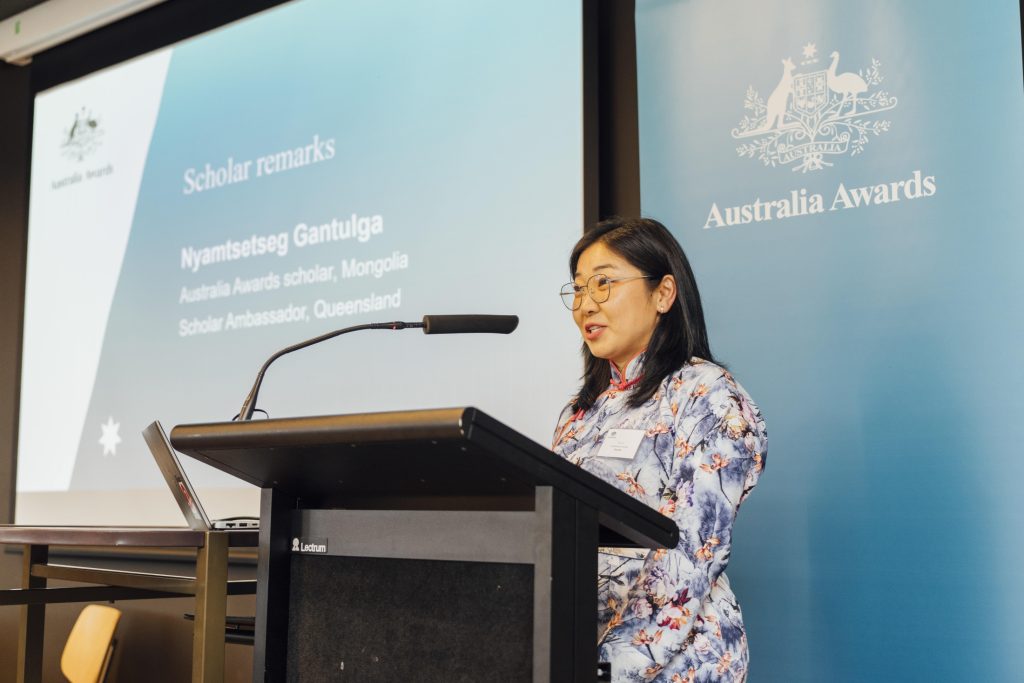
Nyamtsetseg Gantulga delivering opening remarks in Brisbane.
A highlight of each symposium was a panel of expert speakers drawn from the Australian Government, the diplomatic or consular corps, and the development sector. Panel members spoke about a variety of subjects relating to leadership, including the importance of values for leaders, their tips for networking and advice on advocating for change. These speakers included:
- Senator Charlotte Walker, the youngest person elected to Australia’s Senate, in Adelaide
- Paul Stephens, the State Director of DFAT’s Victoria State Office, in Melbourne
- Professor Susan Harris Rimmer, Director of the Griffith University Policy Innovation Hub, in Brisbane
- Nayomi Kannangara, CEO of the International Women’s Development Agency and an Australia Awards alumna herself, in Melbourne.
The afternoon of the first day of each symposium was dedicated to leadership or communications training, designed to assist scholars to put into action what they had heard during the opening remarks and panel discussion in the morning.
The second day of the symposiums saw scholars consider their Reintegration Plans and whether they needed to update them in light of their time in Australia and what they had learnt on the first day of the symposiums. Mongolian scholar Bilguun Chuluuntsetseg said, “Reflecting on my Reintegration Plan was very meaningful, reminding me of what truly matters and what I am supposed to do.”
Scholars also had the opportunity to provide their peers with an overview of their Reintegration Plan and outline how their studies and professional development activities in Australia had helped them to implement their plans. In Brisbane, Mongolian scholar Oyuntugs Tegsheebaatar shared how she intends to apply the knowledge she has gained studying a Master of Environmental Management at the University of Queensland to benefit Mongolia on her return.
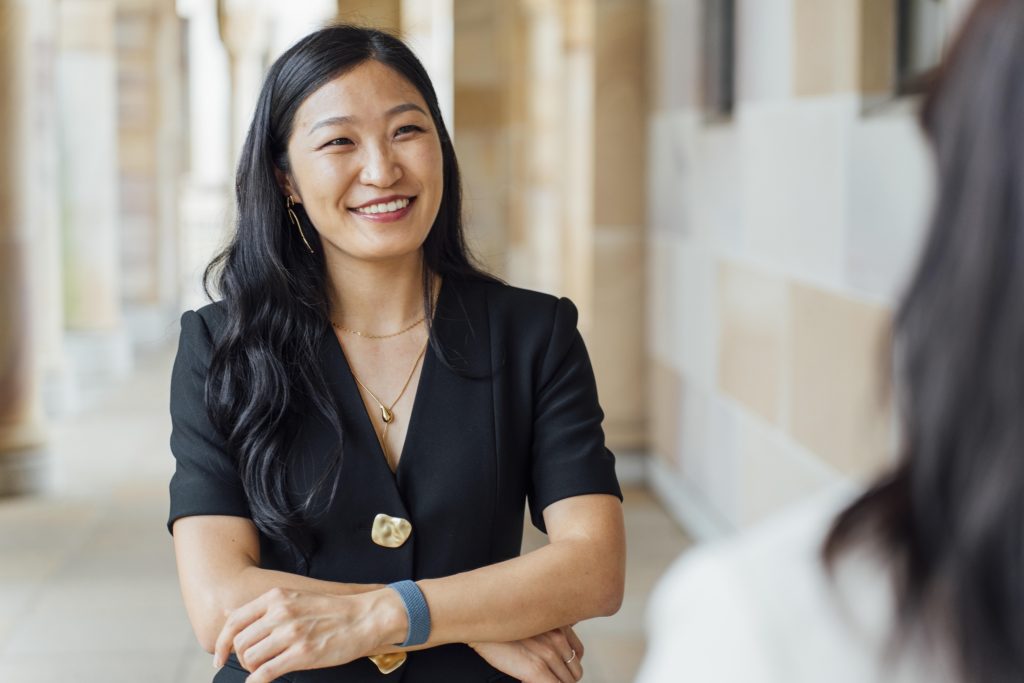
Oyuntugs Tegsheebaatar ahead of sharing her DILP in Brisbane.
To finish the symposiums, scholars engaged in cultural activities with First Nations Australians. These activities included having an art lesson from Indigenous teachers in Brisbane, Melbourne and Sydney; viewing Indigenous art in in Adelaide; and learning to throw a boomerang in Brisbane. Reflecting on her experience in Melbourne, Bilguun Chuluuntsetseg said, “The Indigenous painting activity was brilliant, as it helped me reflect on my past and imagine my future.”
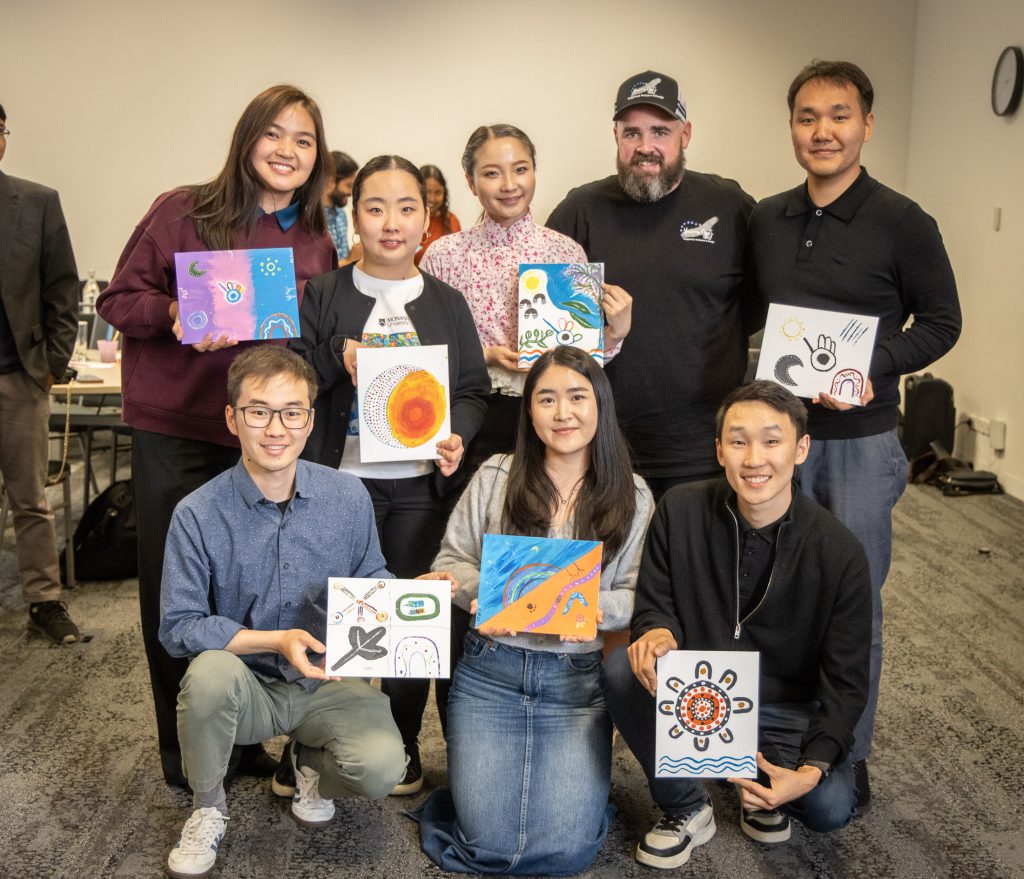
Mongolian scholars in Melbourne with Indigenous artist Rhys Jeffs.
For many scholars, the most valuable aspect of the events was the chance to network with other scholars from across South Asia and Mongolia.
“A highlight of the event was the opportunity to build genuine connections and exchange ideas with fellow scholars who share similar goals and aspirations,” said Nyamtsetseg Gantulga. “The Symposium’s structure and content were comprehensive and well-designed, creating the perfect balance between learning, reflection and networking. It truly strengthened my sense of purpose and leadership for future community impact.”
Mongolian scholar Solongo Erdenebat said, “Participating in the Scholars Symposium helped me become more confident in my leadership and networking skills, which are important to me now and in my future career.”
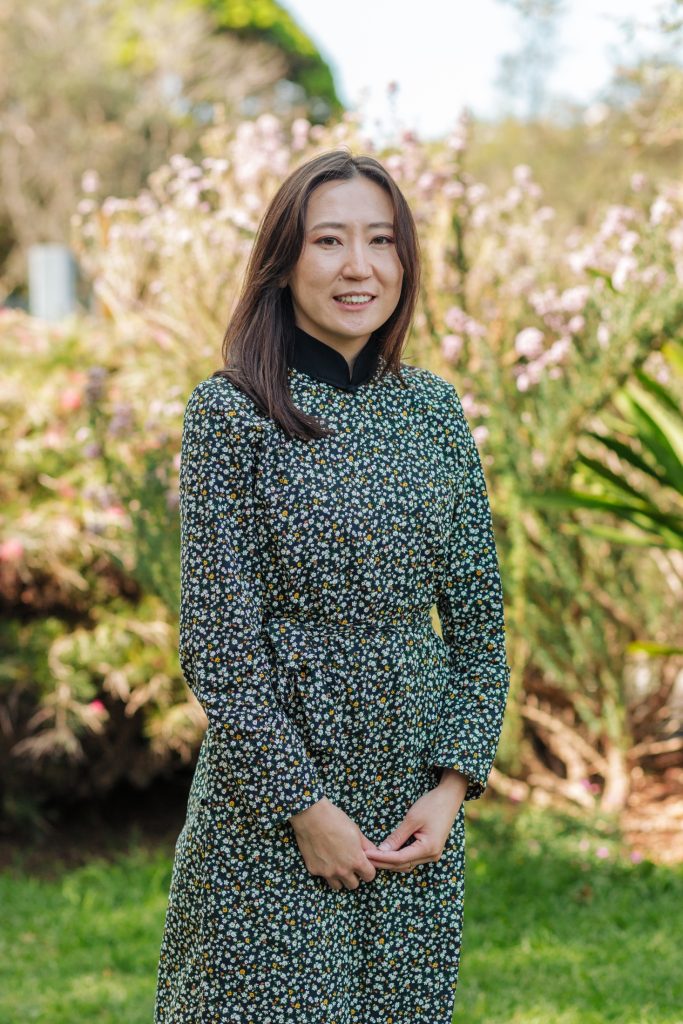
Solongo Erdenebat in Sydney ahead of the Symposium.
Summing up the views of many participants, Mongolian scholar Biligt Davaasuren said, “I’m leaving the Symposium with a clearer sense of my leadership identity, a stronger regional network across South Asia and Mongolia, and fresh motivation to contribute more intentionally when I return home.”