

South Asian and Mongolian scholars connect with First Nations cultures ahead of NAIDOC Week
Posted: 7 July 2026
Ahead of NAIDOC Week 2026 (5–12 July), Australia Awards scholars from South Asia and Mongolia have been learning first-hand about Australia’s First Nations peoples through a series of cultural learning experiences across Australia.
Scholars from Bangladesh, Bhutan, Maldives, Mongolia, Nepal, Pakistan and Sri Lanka participated in activities designed to deepen their understanding of Aboriginal and Torres Strait Islander cultures, histories and knowledge systems.
A highlight was a cultural immersion on Adnyamathanha Country in South Australia’s Ikara-Flinders Ranges National Park. Guided by John Solar, a Yura man and Adnyamathanha cultural educator, scholars explored sacred sites, heard Yura Muda (creation stories), learnt about traditional uses of plants, and gained insights into the relationship between Country, culture and environmental stewardship.
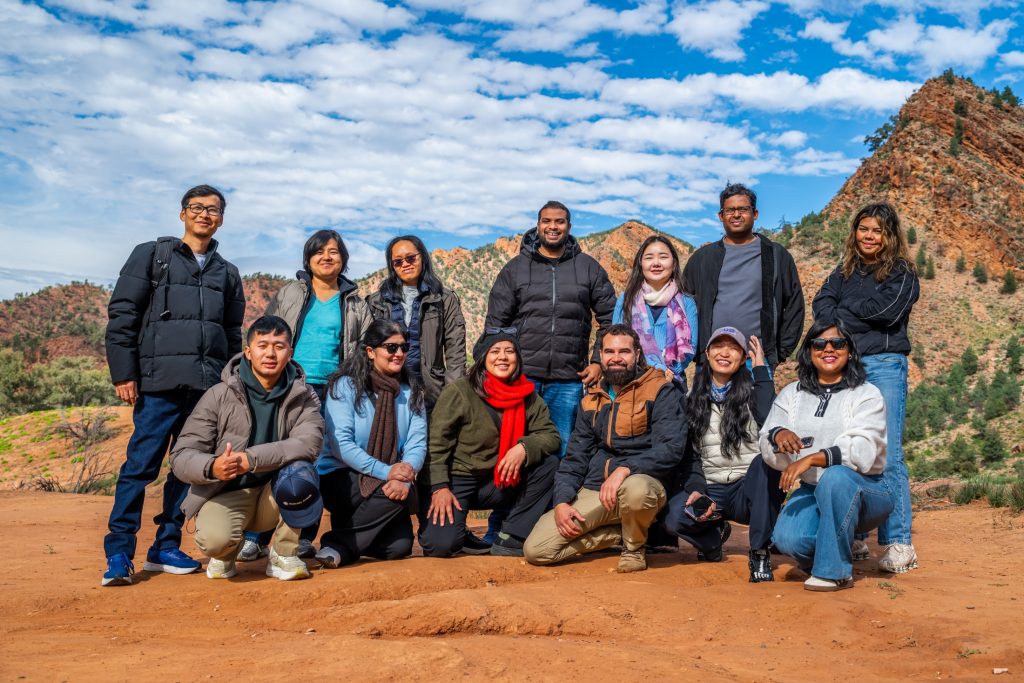
Scholars from South Asia, Mongolia and Brunei with Adnyamathanha guide John Solar (front row, third from right) and his niece Bridgette Treloar-Walker (back row, right).
Many scholars reflected on the similarities between the knowledge systems of First Nations Australians and those of their own communities.
“As a member of the Zackhchin ethnic group in western Mongolia, I was raised in a nomadic family where stories, traditions and values were passed down orally across generations,” says Mongolian scholar Suvd-Erdene Narmandakh. “Listening to John share creation stories brought back memories of my grandmother, who frequently recounted stories about our family, homeland and traditions. I recognised that, despite the geographical distance between our cultures, both communities preserve knowledge through storytelling, respect for elders and connection to land.”
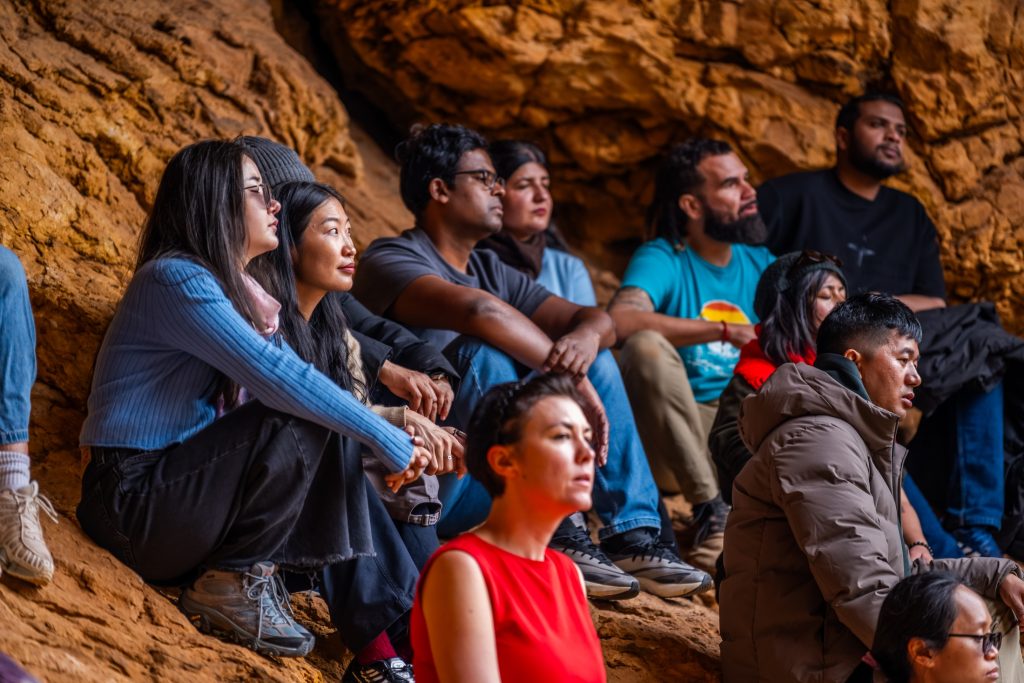
Adnyamathanha guide John leads scholars and Australia Awards – South Asia & Mongolia Indigenous Engagement Adviser Alice Tamang (front, in red dress) in a reflective exercise in a cave.
For Nepali scholar Rita Baramu, who is an indigenous woman, the experience was deeply personal.
“This tour created a space for healing through the stories of similar values and resilience shared by the Adnyamathanha people and Aboriginal communities in Australia,” she says. “Listening to John share their histories, cultural practices and value systems, I found many points of connection with my own experiences and those of my community.”
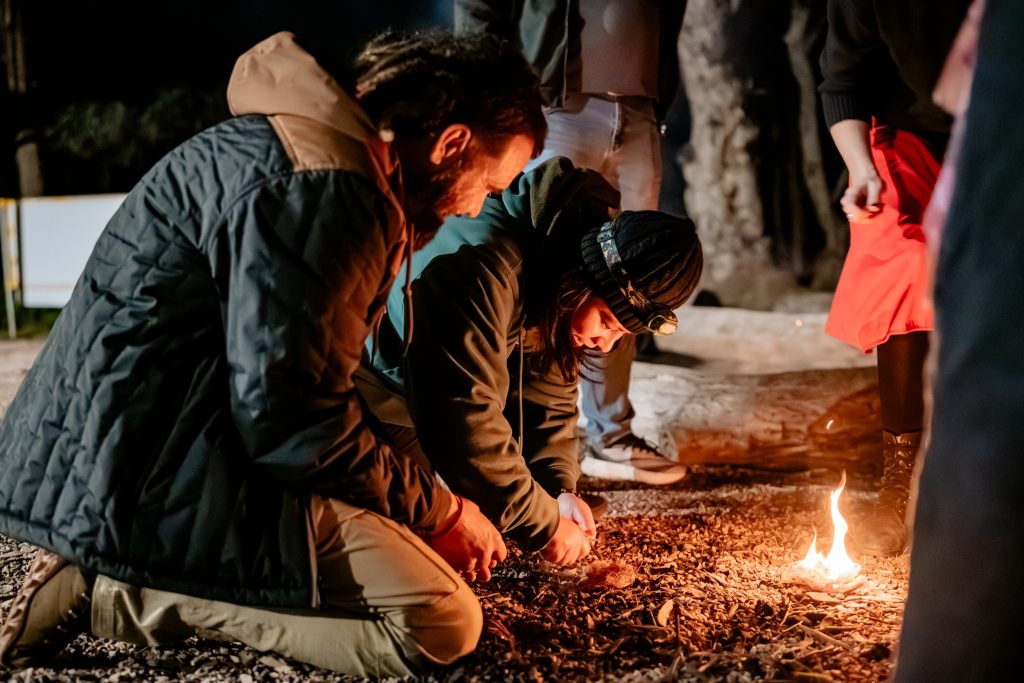
Adnyamathanha guide John shows Nepali scholar Rubina Bishnuke how to make fire.
In June, scholars also participated in online weaving workshops led by Ronnie Jordan, a Pitta Pitta Wangkamahdla woman, artist and cultural facilitator. Through hands-on practice, scholars learnt about the cultural significance of weaving, traditional ecological knowledge, sustainable use of natural materials, and the role of weaving in storytelling, identity and connection to Country.
The workshops prompted many scholars to reflect on similar traditions in their own countries.
For Bangladeshi scholar Juliana Shetara, the experience highlighted shared values across cultures.
“Learning about Indigenous weaving traditions reminded me of the weaving practices in my home country, Bangladesh, where natural fibres are also used to create beautiful handmade items,” she says. “While the techniques and cultural meanings differ across traditions, I was struck by the shared values of craftsmanship, patience, and a deep connection to nature.”
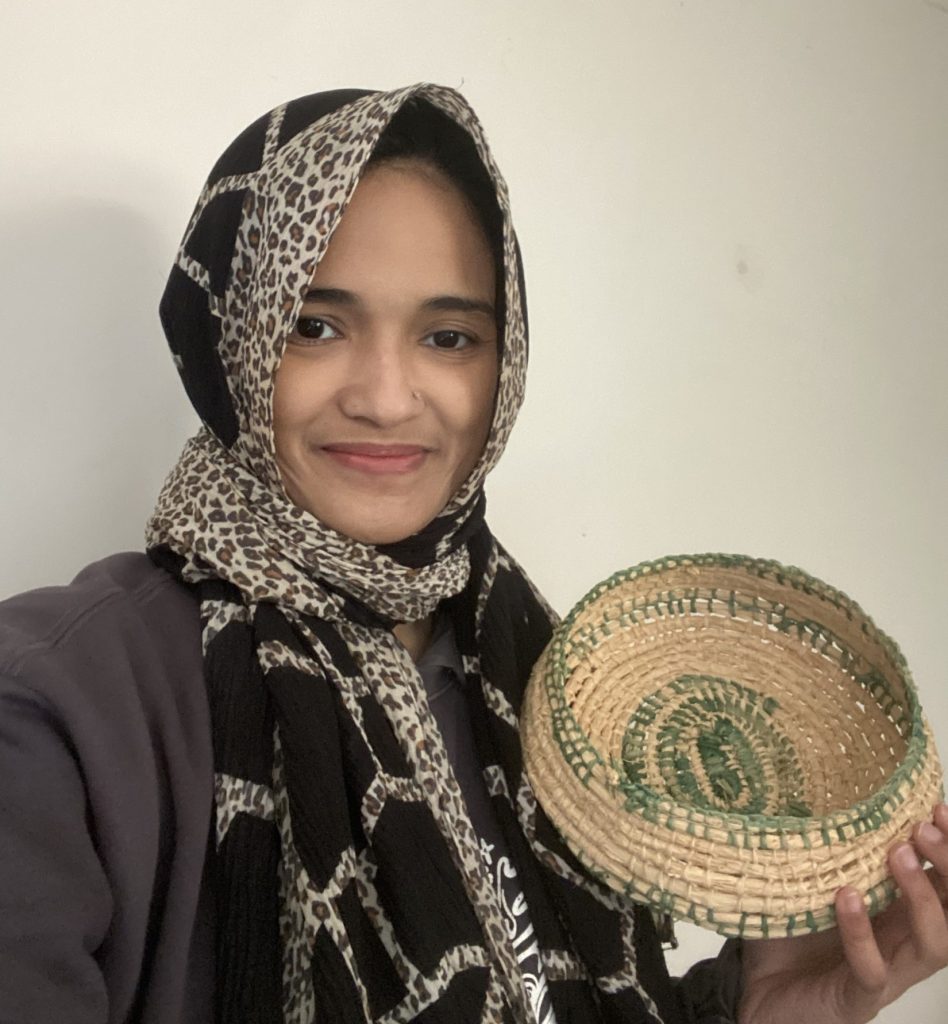
Bangladeshi scholar Juliana Shetara with the basket she created during the weaving workshop under the guidance of Pitta Pitta Wangkamahdla woman Ronnie Jordan.
Scholars also attended Aboriginal Cultural Connection Workshops hosted by the North & West Melbourne Neighbourhood Centre in collaboration with Yarn Strong Sista. Through storytelling, conversation and creative activities, participants learnt more about Aboriginal cultures and concluded the workshops with an ochre-inspired art activity guided by artist Annette Sax, a proud Taungurung woman from the Eastern Kulin Nation.
As NAIDOC Week approaches, scholars’ reflections highlight how cultural learning can foster deeper understanding, respect and connection across cultures and countries. Through experiences on Country, creative practice and shared conversations, scholars gained valuable insights into First Nations knowledge systems while finding meaningful connections with their own histories, communities and traditions.
Read the country stories to learn more about how scholars from Bangladesh, Bhutan, Maldives, Mongolia, Nepal, Pakistan and Sri Lanka engaged with First Nations cultures and reflected on their experiences ahead of NAIDOC Week: