

Regional Short Course advances gender responsive climate action
Posted: 25 May 2026
Earlier this year, 24 policy-makers from Bangladesh, Bhutan, India, Maldives, Mongolia, Nepal, Pakistan and Sri Lanka completed a Regional Short Course on Gender-Responsive Interventions for Climate Adaptation and Mitigation for Policy-Makers from South Asia and Mongolia. Delivered by Griffith University, the Australia Awards Short Course offered a comprehensive learning journey that combined academic expertise, practical fieldwork and applied project development.
Climate change exacerbates existing inequities for women and girls across every sphere—from household and community levels to national systems, including security and social protection. As highlighted by Senator the Hon Penny Wong, Australia’s Minister for Foreign Affairs, in February this year, “As climate and humanitarian crises continue to intensify, women and children are 14 times more likely to die in a natural disaster, and four times more likely to be displaced.” Conversely, reducing gender inequities enables women to participate in sustainable development, which has positive outcomes for the environment.
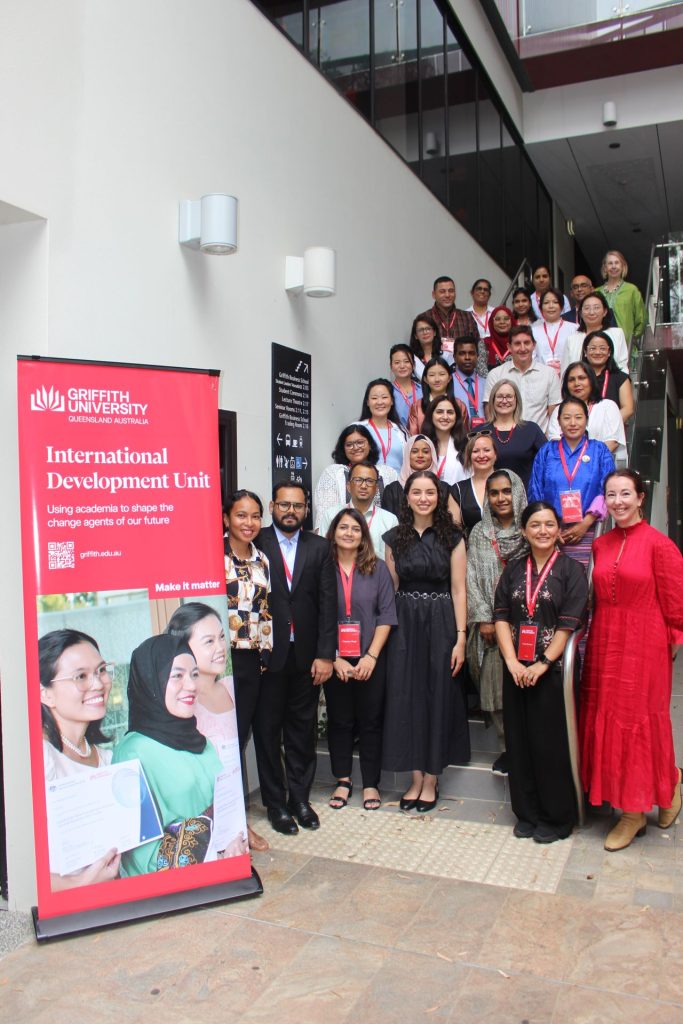
Participants welcomed at Griffith University.
Gender equality and climate change are both core priorities of Australia’s international development program, and this Short Course contributed to Australia’s partnerships with countries in South Asia and Mongolia by supporting those working on climate policy to implement gender-responsive climate action.
At a global level, the course reflected international development priorities, including Sustainable Development Goals 5 and 13, the gender mainstreaming mandates of the Green Climate Fund and Adaptation Fund, and the United Nations Framework Convention on Climate Change’s Gender Action Plan. Additionally, it reinforced commitments under the Sendai Framework for Disaster Risk Reduction and advanced UN Women’s regional agenda on gender and climate resilience.
The course was designed to strengthen participants’ ability to assess gendered climate impacts across sectors, their understanding of the role of finance and the private sector in supporting gender‑responsive climate adaptation and mitigation, and their ability to analyse climate policies and financing mechanisms for alignment with gender equality principles.
The course commenced in December 2025 with online preliminary activities. These introduced participants to gender-responsive climate policy frameworks and set the foundation for deeper engagement. Participants also examined national climate policies and action plans across South Asia and Mongolia, alongside global donor priorities. The course emphasised analysis of the gendered impacts of climate change in agriculture, water, energy and disaster risk reduction.
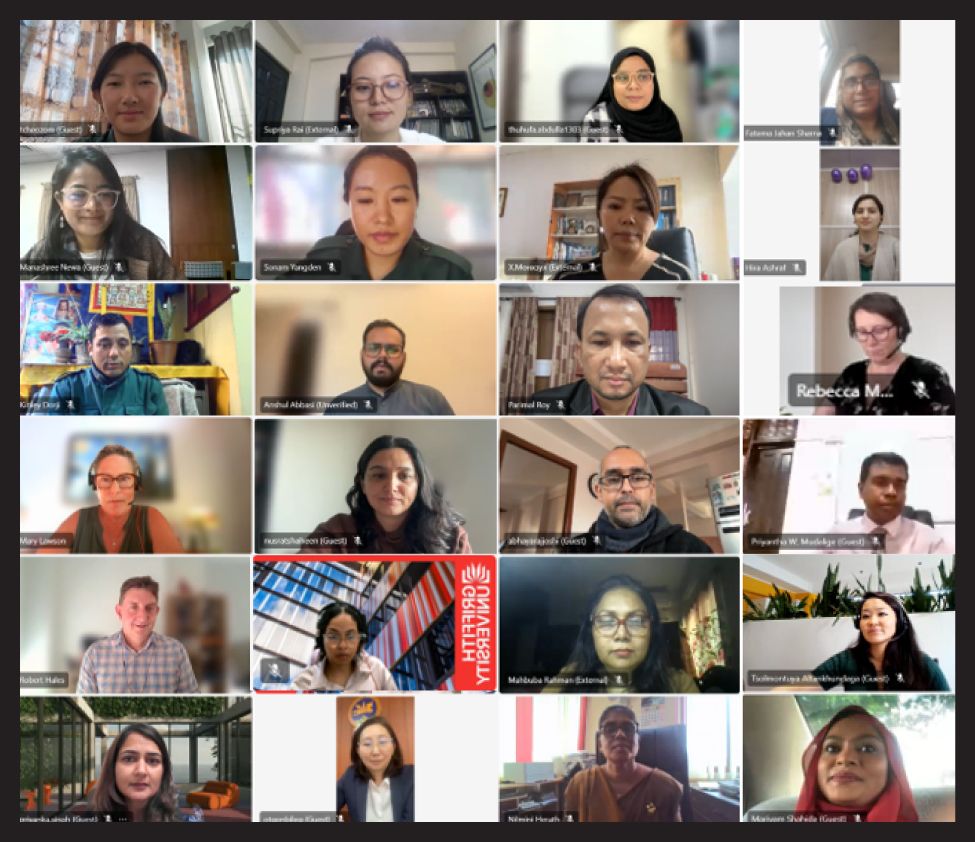
Participants engaged in the preliminary online learning activities.
In February 2026, participants travelled to Australia for two weeks of practical learning. They engaged with Australian experts in climate policy and in gender equality, disability and social inclusion (GEDSI), gaining applied insights and exposure to inclusive governance practices.
In the first week, participants began their in-Australia activities at Griffith University in Brisbane. They engaged in dynamic presentations, interactive workshops and discussions on gender‑responsive climate policy, laying the foundation for the course. A highlight of the week was a field visit to Murwillumbah, where local leaders showcased community‑led adaptation and disaster risk reduction. Melanie Bloor at Resilient Uki demonstrated grassroots leadership in gender‑informed adaptation, while Katrina Semple from Murwillumbah Community Organised Resilience provided insights into flood recovery and resilience initiatives. The visit also included discussions with senior members of the NSW State Emergency Service, who highlighted inclusive emergency services, pathways for women and the importance of community trust in disaster response.
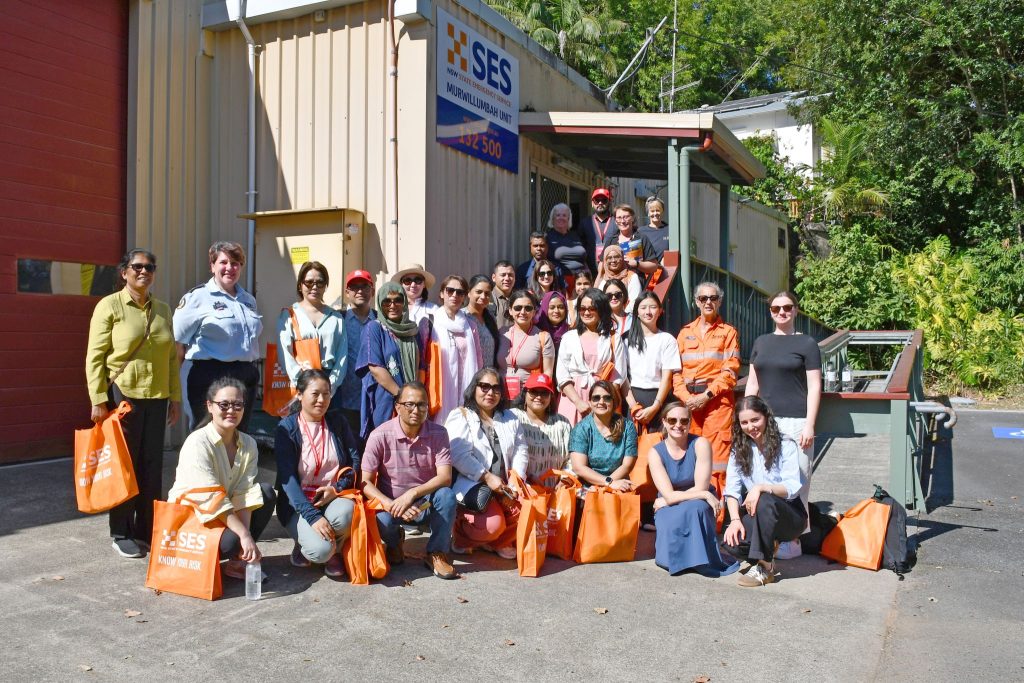
Participants visiting the NSW State Emergency Service in Murwillumbah.
The second week took participants to Canberra, where they engaged with national agencies at the forefront of climate adaptation and mitigation. Representatives from the Department of Climate Change, Energy, the Environment and Water provided insights into Australia’s National Climate Risk Assessment, National Adaptation Plan and Net Zero Plan, with particular attention to how gender integration and First Nations perspectives are incorporated into policy processes. Officials from the Department of Foreign Affairs and Trade discussed Australia’s international policy commitments and program approaches to gender‑responsive and inclusive climate change initiatives in South Asia and Mongolia.
The course concluded in April 2026 with a three‑day online workshop facilitated by the course leaders alongside sector experts. This final stage focused on applied learning, with participants reviewing key insights and showcasing innovative Return-to-Work Plans developed throughout the course. The workshop emphasised peer learning, collaboration and practical application, ensuring that participants returned home with actionable strategies to advance gender‑responsive climate interventions.
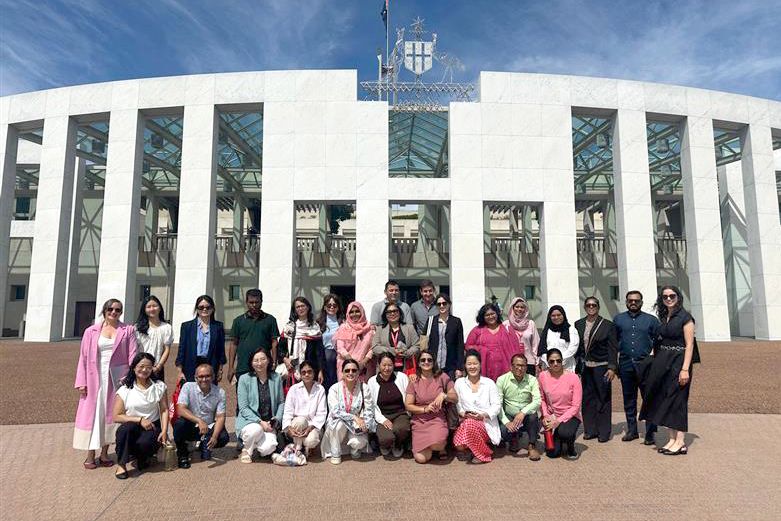
Participants photographed in front of the Parliament House in Canberra.
Reflecting on her experience, participant Ananya Chakraborty from India said, “I come back richer in experience, connections and shared values from my South Asian and Mongolian colleagues on the urgency to address climate change and its impacts on people, nature and climate.”
Bangladeshi participant Mahbuba Rahman said, “Climate challenges are shared, solutions must be deeply local. Listening to stories from different contexts made it clear that while our geographies differ, our commitment to building resilient communities connects us.”
Participant Nusrat Shaheen from Pakistan said, “Climate change is not gender neutral. And policy responses shouldn’t be either! … Learning alongside professionals from across the region highlighted a shared challenge: Climate risks cut across borders, but solutions must be designed for context, culture, and communities. What shifted most for me was not just understanding gender and climate linkages but learning how to operationalise them.”
In a survey conducted after the Short Course, most participants reported being ‘very satisfied’ with the course, and all reported they had been able to establish linkages with fellow participants that they intend to maintain.
All photographs in this article are credited to Griffith University.