

Alumnus applying Australian insights to shape Mongolia’s energy future
Posted: 17 June 2026
Bat-Ireedui (Ireedui) Nyamdash, an Australia Awards alumnus from Mongolia, began his career as an international relations manager at a company that provides professional drilling services for the mining, agriculture, energy and construction industries. Working with a range of clients across these different fields, he learnt a lot about industry needs and the unique requirements necessary to complete tasks successfully. “Water and energy are the fundamental resources of any project,” he says. A desire to improve efficiency and sustainability by staying up to date with cutting-edge technologies led him to complete an Australia Awards Short Course on Mongolian Energy Sector Development in 2023. We recently caught up with him to learn more about his Short Course experience and how it has helped to shape his career trajectory and broaden his industry knowledge.
Ireedui recalls the course vividly. He describes himself as “passionate about learning about technology constantly”, and says that the Short Course was “a great opportunity for the participants to experience Australia’s outstanding achievements in the renewable energy sector”.
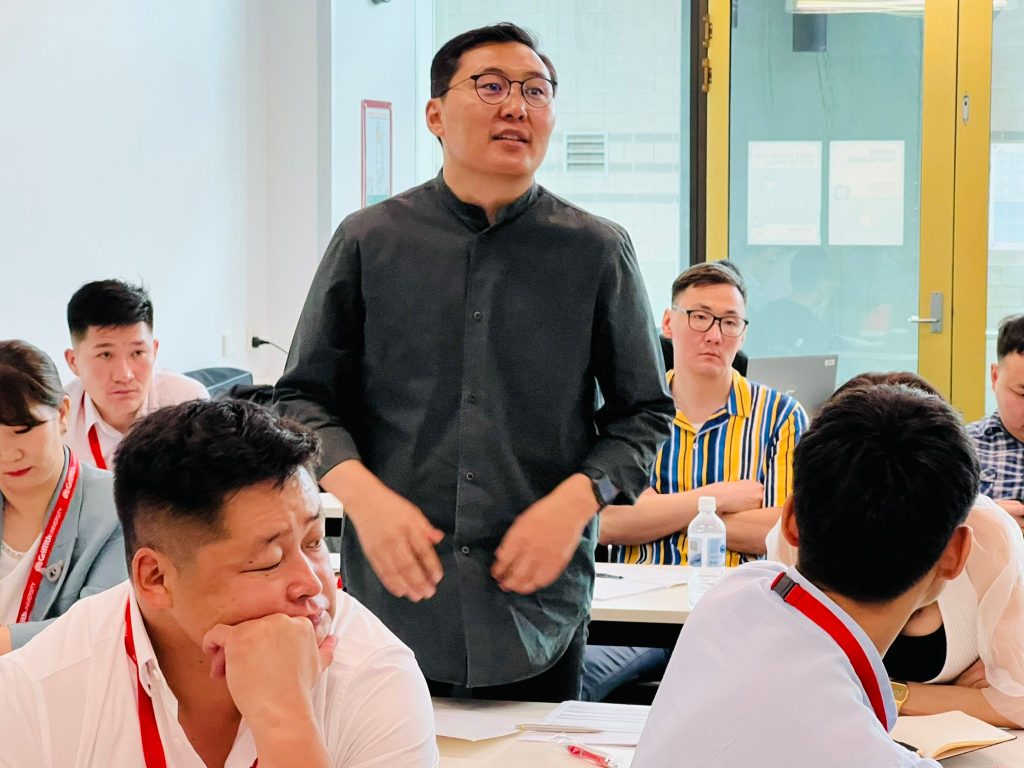
Ireedui (sitting behind the participant standing) participating in the Short Course lessons.
The Short Course was delivered by Griffith University, and involved two weeks of learning in Brisbane and Canberra. Activities consisted of presentations, networking events, and site visits to wind and solar farms and the impressive Snowy Mountains Scheme of pumped hydro-stations in New South Wales (the largest public works engineering scheme ever undertaken in Australia). “Collectively, these experiences helped me enhance my understanding of the importance of renewable energy, evaluate Mongolia’s current energy landscape, and consider pathways for future planning,” Ireedui says.
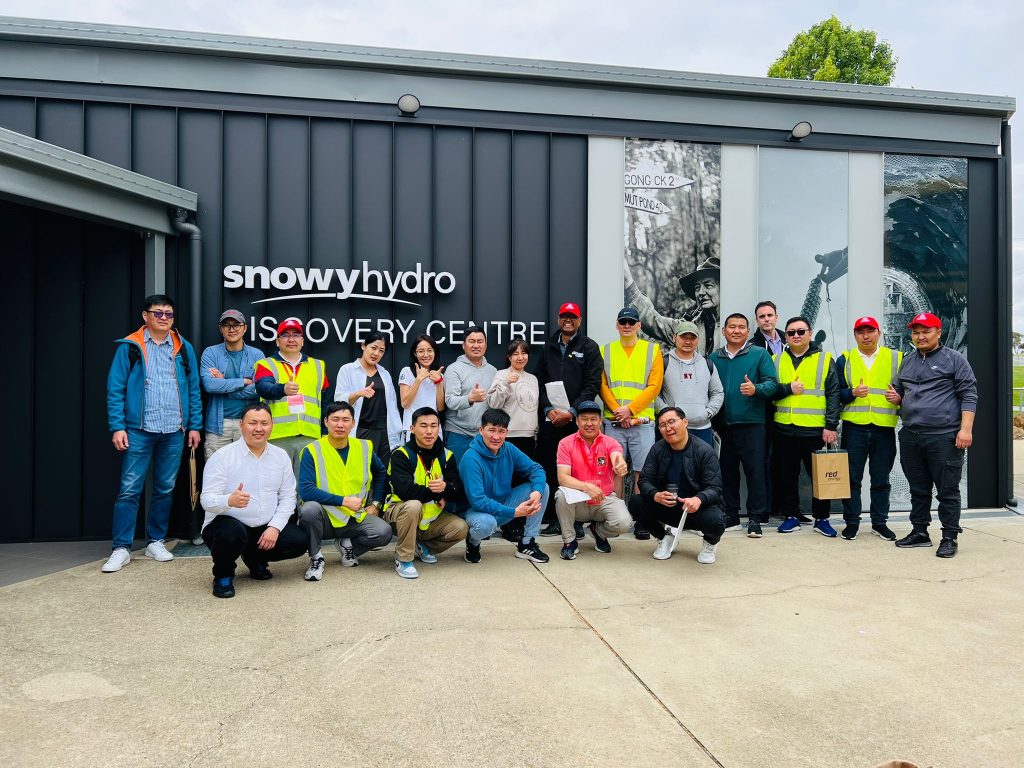
Ireedui (back row standing, seventh from right) with other Short Course participants visiting the Snowy Mountains Scheme.
Ireedui participated in the Short Course as part of a group of 20 professionals representing both the public and private sectors of Mongolia’s energy industry. “All of us had the same vision,” he says, which was “to make our contributions to the development of the Mongolian energy sector.” While in Australia, they met many professionals and industry experts. “It was fun to learn from all of those great people,” he says, adding that he has since been able to apply the knowledge he learnt to his own work back in Mongolia.
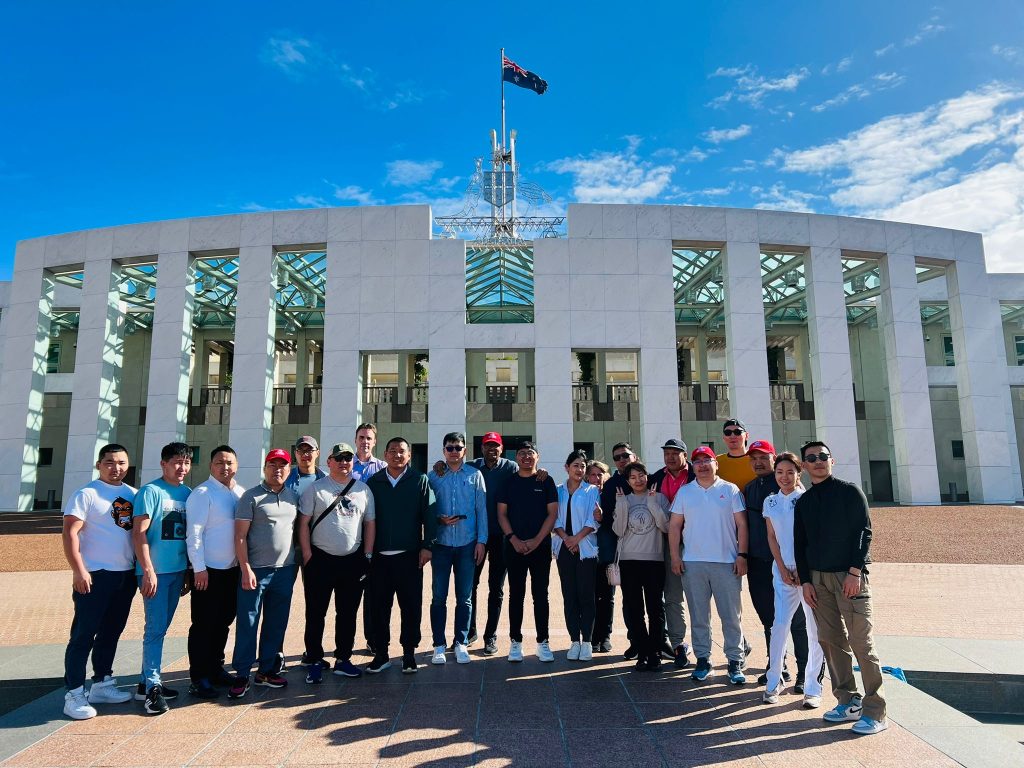
Ireedui (fourth from right) photographed with other Short Course participants in front of Parliament House in Canberra.
In fact, Ireedui is proud to share that participating in the Short Course has led him to implement multiple and ongoing actions back home. Based on his takeaways from the Short Course, he initiated installation of a photovoltaic system on the rooftop of his company building, which is now generating electricity for everyday use. His company is also planning to soon power its factory plant with a renewable energy system to improve cost-effectiveness and sustainability of its daily operations.
In addition, beyond these specific localised examples, his participation in the Short Course prompted his company to prioritise providing energy-efficient and environmentally-friendly products and solutions to its clients.
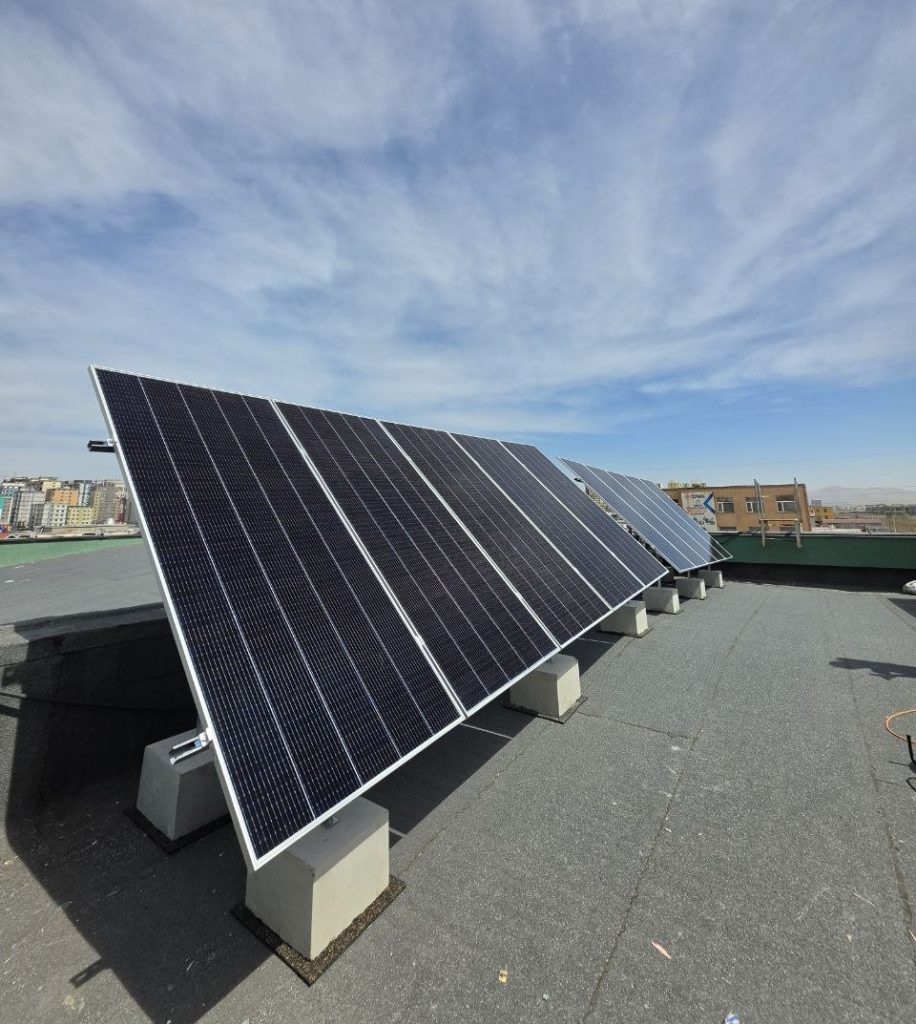
The photovoltaic system installed on Ireedui’s company rooftop.
Given the work that Ireedui does and this year’s United Nations Environment Programme World Environment Day theme of #NowForClimate, we asked him if he had a message he would like to share in parting. “It’s important for individuals and organisations to shift into green technologies, such as installing renewable energy systems and utilising electric consumer goods,” he says. He points to Bill Gates’ book How to Avoid a Climate Disaster, which states the importance of reducing greenhouse emissions to net zero by 2050 and explains that this goal can be achieved through technology breakthroughs, smart government policies and individual initiatives. “With these small steps,” Ireedui says, “we all together can create a better future for the younger generations.”
Photographs featured in the content of this story are credited to Griffith University.