

Alumni put impact in focus through regional storytelling competition
Posted: 6 August 2026
From improving patient care in Bangladesh to supporting women with limb loss in Pakistan, Australia Awards alumni are using their skills, knowledge and networks to create practical change in their communities. These stories were at the centre of the Alumni Impact Storytelling Competition, launched by Australia Awards – South Asia & Mongolia to mark 75 years of Australian Government scholarships in the Indo-Pacific.
Alumni were invited to submit written stories, photographs, captions and visual narratives showing how their Australia Awards experience has contributed to development impact in their home countries.
More than 70 entries were received from across South Asia and Mongolia, exceeding expectations and demonstrating the breadth of alumni achievements across the region.
The winners were announced at an online event on 29 July, which also recognised entrants from across the region and celebrated the role alumni play in driving development outcomes in their communities.
Farah Anjum Sonia of Bangladesh won the Written Storytelling Competition for a story that connected scientific research with human-centred impact. Drawing on her studies at the University of New South Wales, she explored how evidence-based interventions, including calming music, can improve the blood donation experience by reducing donor anxiety.
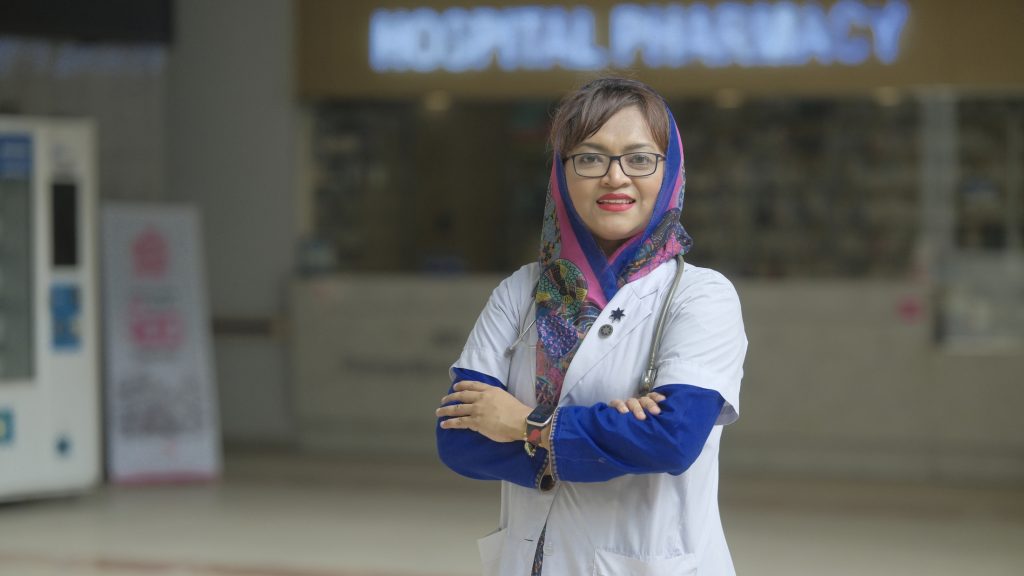
Farah photographed at her hospital.
Zarqa Khan of Pakistan won the Visual Storytelling Competition for her powerful visual narrative about women living with limb loss in Pakistan. Her entry combined photographs, visual data and personal stories to show how she was supporting women affected by agricultural injuries through AI-powered prosthetic limbs, psychosocial support and livelihood opportunities.
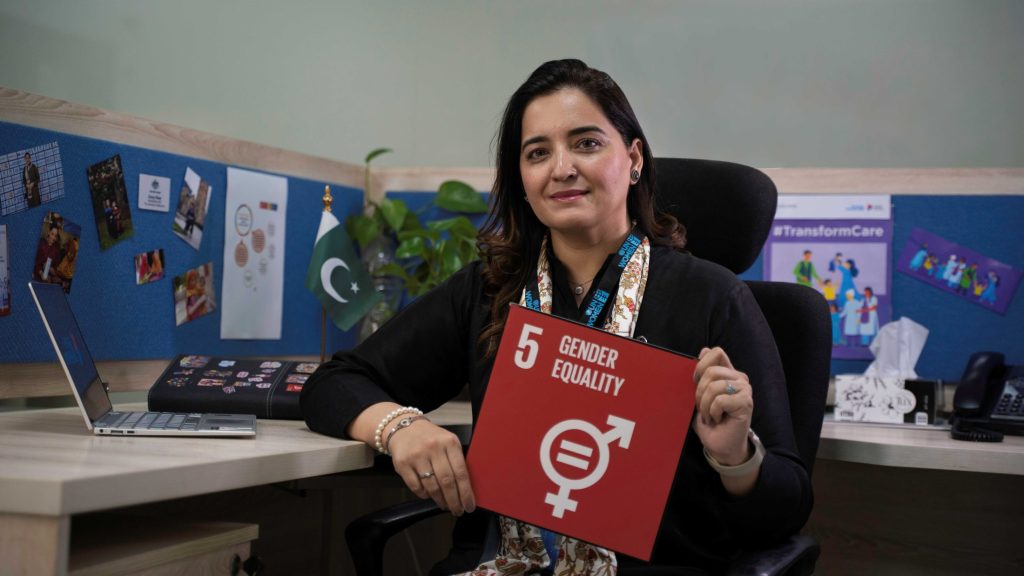
Zarqa photographed at her workplace.
Both winners shared reflections on their Australia Awards journey during the event. For Farah, storytelling is a way to make research more meaningful: research can explain what happened, while stories help explain why it matters. Zarqa reflected on her journey from rural Pakistan to becoming a development practitioner and highlighted how her Australia Awards Scholarship helped her to design and implement innovative programs supporting women with disabilities.
The judges also recognised several highly commended entries across both categories, reflecting the quality and diversity of submissions.
In the Written Storytelling Competition:
- Asfia Sultana of Bangladesh was recognised for her account of moving from a remote community to a senior leadership role in the infrastructure sector, with a focus on road safety, sustainable infrastructure and gender inclusion initiatives.
- Bikas Adhikari of Nepal was commended for showing how knowledge gained through an Australia Awards Short Course is helping to strengthen climate resilience and disaster preparedness in local communities.
- Saira Ayub of Pakistan was recognised for sharing her personal journey as a person with disability and her work advancing inclusive education and accessibility.
- Umme Kulsoom of Pakistan highlighted how her Australia Awards experience strengthened her contribution to development initiatives at national, regional and international levels.
In the Visual Storytelling Competition:
- Anju Pandit of Nepal was recognised for an entry that captured community engagement, local government partnerships and practical water solutions.
- Mian Muhammad Shah of Pakistan was recognised for his striking collection of images documenting improvements to schools, health facilities and community infrastructure in remote areas.
- Sadaf Jamil of Pakistan was highly commended for using evocative imagery to portray the people, places and experiences that shape her development work.
The judges also acknowledged a number of commended entries across both categories.
In the Written Storytelling Competition, commendations were awarded to:
- Abu Saleh Mohammad Obaidullah, Liza Fahmida and Md Kabir Hossain of Bangladesh
- Sonam Choden of Bhutan
- Kavitha Kasala of India
- Dolgormaa Bukhbat and Dr Enkhtuya Dagvadorj of Mongolia
- Sujata Tamang of Nepal
- Ikhtiar Ahmed Khoso, Farman Nisa, Hafiz Qaisar Yasin and Mehr Nigar of Pakistan
- Gayathri Kanakaratne, Ishan Rathnapala and Tuan Mohammed Rushdi Cassim of Sri Lanka
In the Visual Storytelling Competition, commendations were awarded to:
- Ahammad-Al-Muhaymin of Bangladesh
- Kavitha Kasala of India
- Aisulu Aibat of Mongolia
- Farwa Abbas of Pakistan
As part of the ongoing celebrations marking 75 years of Australian Government scholarships in the Indo-Pacific, Australia Awards – South Asia & Mongolia will publish selected competition entries on its website throughout the remainder of 2026, showcasing the diverse ways alumni are creating positive change across the region.